Cargo insurance is meant to secure businesses when things go wrong during shipping. It manages losses caused by damage, theft, or delays in transit. However, many companies are surprised to learn that cargo insurance can become invalid because of documentation errors. In many cases, the cargo is insured, but the claim is rejected due to simple paperwork mistakes. In global trade, paperwork matters just as much as packaging or transport. If documents are inaccurate, insurance protection may no longer apply.
Why Documentation Is So Important
Insurance companies depend on shipping documents to understand what is being moved, how valuable it is, and where it is going. These records act as legal proof during a claim. If the details do not match, insurers may refuse to pay. Even small differences between documents can raise red flags. When information looks inconsistent or unclear, insurers may assume the policy terms were not followed. This is why documentation errors are one of the most common reasons for denied cargo insurance claims.

How Proper Risk Assessment Supports Cargo Protection
Effective risk assessment helps businesses identify potential issues before shipping valuable goods globally. By understanding cargo type, transport conditions, destination requirements, & possible risks, companies can choose suitable insurance coverage and handling procedures. A proactive approach minimize unexpected losses & helps maintain smoother shipping operations.
Common Documentation Mistakes
One of the biggest issues is incorrect cargo value. If the value on the commercial invoice is lower or higher than the insured amount, insurers may treat it as misrepresentation. This often leads to partial payment or no payment at all. Another frequent problem is poor cargo description. Using vague names, wrong HS codes, or missing product details can confuse. If the insurer cannot clearly identify the goods, coverage may not apply.
Missing documents also create risk. A missing bill of lading, packing list, or insurance certificate can weaken a claim. Without complete paperwork, insurers may say there is not enough proof to approve compensation. Errors related to shipping routes or transport methods can also cause trouble. Some insurance policies only cover specific routes or modes of transport. If cargo is rerouted or stored temporarily without notice, coverage may be cancelled.
Customs Compliance and Insurance Risks
Cargo insurance is closely linked to customs compliance. When documents are wrong, shipments may face customs delays, penalties, or inspections. In many cases, insurance does not cover losses caused by regulatory breaches. This risk is higher for regulated goods such as aviation parts, medical devices, electronics, & machinery. These products require accurate classification, licenses, & approvals. Any mismatch between customs documents & insurance records increases the chance of claim rejection.
High-Value and Sensitive Cargo
For high-value shipments, documentation errors can be extremely costly. Luxury vehicles, aircraft components, & medical equipment often require special insurance terms. A small mistake can result in major financial loss.
Sensitive cargo also requires extra care. Items that are breakable or temperature-controlled must meet specific insurance conditions. If these conditions are not clearly documented, insurers may refuse coverage.
How Businesses Can Protect Their Insurance
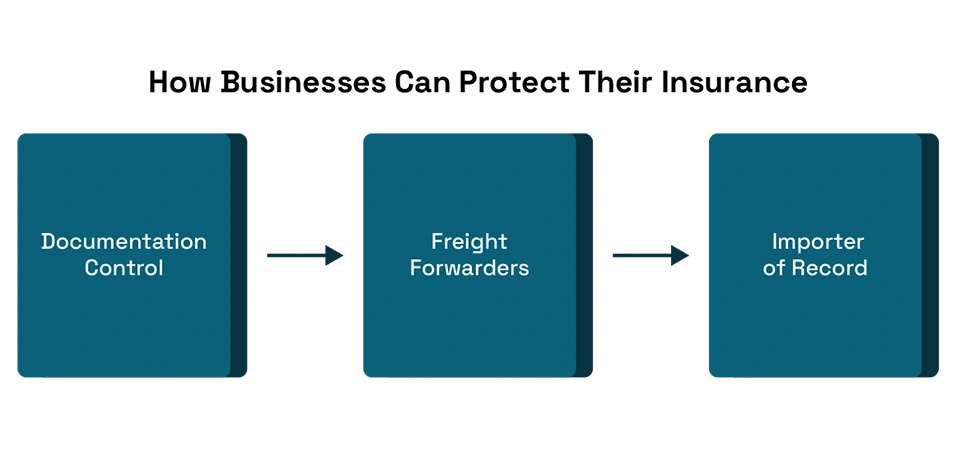
Strong documentation control is the first step. All shipping papers should be checked carefully before goods are dispatched. Consistency across invoices, packing lists, & insurance documents is difficult.
Working with experienced freight forwarders, customs brokers, & Importer of Record (IOR) providers helps minimize risk. These professionals understand regulations & ensure documents meet both customs & insurance requirements. Using digital documentation systems also helps. Automation minimizes manual errors & improves accuracy. It also makes it easier to update insurers if shipment details change. Clear communication with insurance providers is equally important. Any change in value, route, or management should be reported immediately to keep coverage valid.
 Training Makes a Difference
 Training Makes a Difference
Many documentation mistakes happen because teams are unaware of their impact. Regular training helps staff understand how paperwork affects insurance claims & financial risk. When teams know what matters, errors decrease. Businesses should also stay informed about country-specific trade rules, as insurance & customs requirements vary across regions.
Conclusion
Cargo insurance offers protection only when the paperwork is correct. Errors in documentation can make insurance policies invalid, even when goods are properly insured. In today’s difficult trade environment, accurate documentation is not optional. It is a business necessity. By improving internal checks, using digital tools, & working with experienced logistics partners, companies can protect their shipments, avoid claim disputes, & keep their supply chains moving easily.
Did You Know?
According to U.S. Customs and Border Protection (CBP), importers are responsible for ensuring that shipment information and required documents are accurate and complete. Incorrect documentation can lead to delays, compliance issues, or additional customs reviews during the import process.
FAQ
How can documentation errors invalidate cargo insurance?
Cargo insurance depends on accurate shipping documents. If information such as cargo value, description, or route is incorrect or inconsistent, insurers may reject claims or cancel coverage.
Which documents are most important for cargo insurance validity?
Key documents include the commercial invoice, bill of lading, packing list, insurance certificate, and certificate of origin. Any mismatch or missing document can weaken an insurance claim.
Does incorrect cargo valuation affect insurance claims?
Yes. If the declared cargo value does not match the insured value, insurers may treat it as misrepresentation, leading to partial payment or complete claim denial.
Can customs compliance issues impact cargo insurance?
Yes. Customs violations caused by incorrect documentation can result in delays, fines, or shipment holds. In many cases, insurance does not cover losses caused by regulatory non-compliance.
How can businesses prevent cargo insurance from becoming invalid?
Businesses can reduce risk by reviewing documents carefully, using digital documentation tools, and working with experienced freight forwarders, customs brokers, or Importer of Record (IOR) service providers.