Introduction
The quick growth of electric vehicles has created issues that cannot be excluded, which occur with EV batteries at the end of their usable life. As officials push for clean shipment and manufacturers grow production, EV battery reuse has become a necessary continuity priority. Beyond environmental issues, the recycling ecosystem depends massively on effective logistics, complete logistics, and well-planned supply chain management. From cross-border shipment to customs clearance and warehousing solutions for import and export goods, logistics plays a vital role in making EV battery recycling both economically applicable and responsible.
knowing about Electric Vehicle Battery Lifecycles
EV batteries mainly follow a step-by-step cycle, starting with raw good extraction, battery manufacturing, vehicle usage, and finally end-of-life processing. Once battery performance drops below automotive standards, the battery does not immediately become waste. Also, it enters a difficult phase where transportation and warehousing decisions determine whether it is recycled, repurposed, or safely taken apart. During this phase, import-export documentation, correct categorization, and approval with international freight services regulations become necessary. Managing these lifecycles effectively requires coordinated supply chain optimization to ensure batteries move safely and efficiently across regions.
Why is logistics important in EV battery recycling?
Logistics plays a critical role in EV battery recycling because used batteries are heavy, hazardous, and require specialized handling during collection, transport, and storage. Providers must follow strict safety regulations, use approved packaging, and ensure batteries reach certified recycling facilities without damage or leakage. Efficient logistics systems also help reduce costs, improve turnaround times, and support the growing circular economy for electric vehicles.
EV Battery Recycling Technologies and Processes
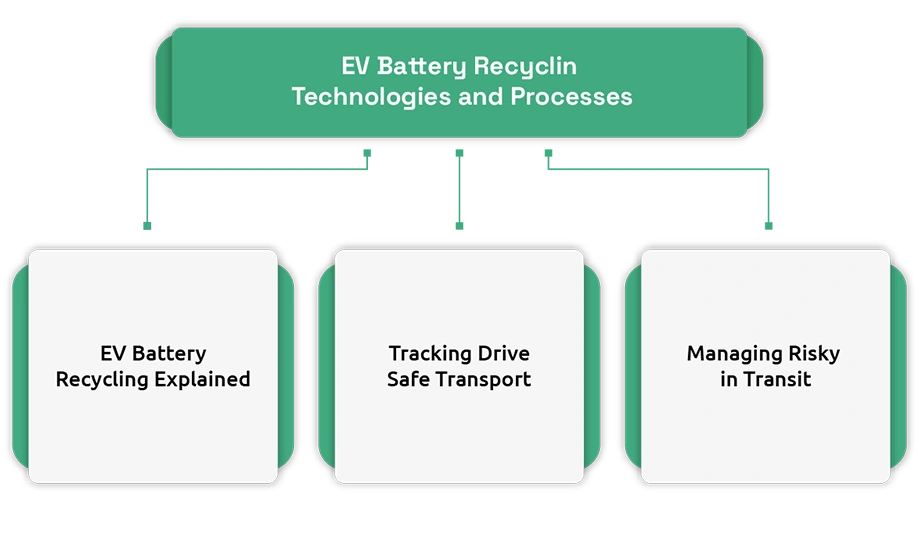
Modern electric vehicle battery reuse depends on advanced processes such as breakdown, wet chemical processing to extract valuable goods such as lithium, cobalt, and nickel. These recycling technologies depend on predictable inbound material flow, which showcases the importance of real-time shipment tracking and controlled transportation and warehousing. Since used batteries are categorized as risky goods in many regions, customs clearance procedures, import duties and tariffs, and usage according to Incoterms such as Delivered Duty Paid service must be carefully planned. Any delay or process breakdowns in logistics can increase costs and interrupt recycling work.
Logistics Key to Supercharging EV Battery Recycling
Shipment works as the support of electric vehicle battery recycling by connecting collection points, recycling systems, and secondary trades. Effective logistics confirms that batteries are transported safely using special packaging, complete carriers, and secure warehousing solutions. International freight services allow cross-border shipment of end-of-life batteries, while IOR services support regulatory approval when recycling systems are located in different countries. Clear import export documentation and transparent customs clearance processes reduce issues and help recyclers maintain a continuous processing size. Also, supply chain management supported by real-time shipment tracking improves visibility, reduces losses, and increases working dependability.
Challenges and Benefits in Second-Life EV Battery Repurposing
Second-life battery reusing presents both logistical challenges and huge opportunities. Batteries that are no longer suitable for vehicles can be reused in energy storage systems, renewable combinations, and backup power approaches. Also, transporting mainly damaged batteries requires strong safety guidelines, last-mile delivery services, and secure transportation and warehousing infrastructure. Differences in regulations, Incoterms interpretations, and import duties and tariffs across countries can make cross-border shipments difficult. Also, improved supply chain optimization and better warehousing solutions for import and export goods create opportunities for cost reduction and faster deployment of second-life applications. As the global system develops, simplified customs clearance and systematic documentation will further unlock this trade.
Conclusion
EV battery recycling is no longer a future issue but a present-day necessity driven by the global change toward electric mobility. While recycling technologies continue to advance, the success of this industry depends largely on how effectively batteries move through the supply chain. From international freight services and Delivered Duty Paid service methods to customs clearance, import-export documentation, and real-time shipment tracking, logistics determines both flexibility and sustainability. By improving supply chain management, investing in special transportation and warehousing, and managing regulatory challenges, the EV battery recycling ecosystem can change logistics issues into long-term business and sustainability prospects.
DID YOU KNOW?
Although relatively few EV batteries have reached the end of their useful life to date, most current recycling processes handle manufacturing waste. It is estimated that by 2030, more than 1.2 million EV batteries will be retired annually, and by 2040, this number will exceed 14 million per year.
FAQs:
Q1: What is EV battery recycling, and why is it important?
EV battery recycling involves recovering valuable materials like lithium, cobalt, and nickel from used electric vehicle batteries. It reduces environmental impact, supports sustainability, and ensures resources are efficiently reused.
Q2: How does logistics impact EV battery recycling?
Logistics ensures safe transportation, warehousing, and supply chain management of batteries, enabling smooth recycling operations, cross-border shipments, and regulatory compliance.
Q3: What are the main challenges in second-life battery repurposing?
Challenges include transporting partially degraded batteries safely, navigating varying regulations across countries, ensuring proper documentation, and optimizing storage and delivery infrastructure.
Q4: What technologies are used in EV battery recycling?
Common recycling technologies include mechanical shredding, wet chemical processing, and hydrometallurgical methods, which extract reusable materials while following safety protocols.
Q5: How can companies improve EV battery recycling efficiency?
Companies can invest in real-time shipment tracking, secure warehousing, optimized supply chain management, and streamlined customs clearance to reduce costs and improve turnaround times.