Introduction
In 2025, the healthcare industry will be more based on than ever on the timely use of modern medical equipment, from diagnostic imaging systems to life-saving surgical devices. As global sourcing increases, healthcare providers are looking for shipping methods that reduce risk, reduce official load, and confirm uninterrupted healthcare services. One union solutions gaining huge preference is the Delivered Duty Paid service, commonly known as DDP delivery. This complete approach simplifies international freight services by covering transportation, customs clearance, and import duties and tariffs under a single responsibility, making it specifically suitable for the sensitive and high-value nature of medical equipment shipments.
DDP Delivery for Medical Equipment
Delivered Duty Paid service delivery for medical equipment provides a simplified shipping experience where the seller or logistics partner manages the complete import-export documentation process, including customs clearance and payment of applicable duties. Medical devices frequently require strict regulatory approval, correct HS code categorization, and correct documentation to avoid delays at borders. Under a DDP method, healthcare providers are protected from these complexities. This is specifically valuable for hospitals and medical systems that shortage internal skills in supply chain management, warehousing, or international trade approval, allowing them to focus on healthcare work for shipping requirements.

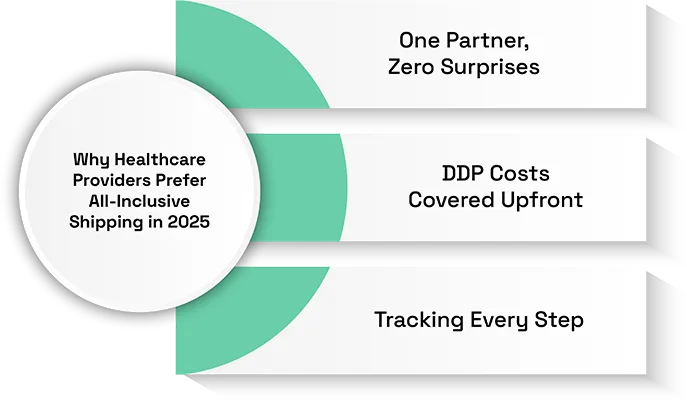
Why Healthcare Providers Prefer All-Inclusive Shipping in 2025
Healthcare logistics suppliers are increasingly choosing complete shipping because it provides dependability and cost clarity. Delivered Duty Paid service provides the final shipping cost is taken in advance, reducing unwanted fees related to import fees, customs inspections, or last-minute documentation issues. In 2025, when global supply chains remain exposed to supply interruptions, this consistency is necessary. All-inclusive shipping also reduces dependency on many sellers for transportation and warehousing, customs brokerage, and last-mile delivery services. Also, a single accountable partner oversees international freight services, real-time shipment tracking, and final delivery, confirming medical equipment arrives safely, completely, and on schedule.
Ensuring Fast and Reliable Medical Equipment Imports with DDP
DDP shipping makes medical equipment imports easier by handling transport, import duties, and customs clearance in one complete service. It helps hospitals and healthcare providers receive important equipment without unnecessary delays. Strong healthcare logistics and a proper handled global supply chain improve delivery speed & reduce paperwork. This also lowers shipping risks, keeps costs clear, and ensures medical equipment reaches its destination safely and on time. Businesses can plan better and avoid unexpected problems during international shipping.
Why Healthcare Logistics is More Critical Than Ever
It becomes more difficult due to quick technological innovation, shorter equipment life cycles, and increasing cross-border major acquisitions. Medical equipment is frequently fragile, valuable, and ontime, requiring special transportation and warehousing solutions. Delays in customs clearance or mishandling of import-export documentation can directly affect healthcare results. In this environment, DDP shipping supports supply chain optimization by reducing shipping time uncertainty and reducing transitions across the supply chain. Integrated warehousing solutions for import and export goods, combined with controlled transportation, help to ensure equipment integrity while confirming approval with global regulations.
How to Choose the Right Healthcare Logistics Providers
Selecting the correct healthcare logistics provider is necessary for successfully implementing DDP delivery. Providers should show proven expertise in managing medical equipment, including proficiency with customs clearance processes, regulatory requirements, and IOR services where applicable for delivery. A strong partner will provide complete transportation and warehousing, supported by real-time shipment tracking to provide visibility throughout the journey. Also, experience in international freight services and last-mile delivery services confirms smooth shipment from the manufacturing system to healthcare sites. Rather than focusing only on price, healthcare organizations should show a provider’s ability to manage risk, maintain approval, and support long-term supply chain management objectives.
Conclusion
As healthcare systems continue to globalize in 2025, the demand for reliable, transparent, and compliant shipping solutions will only grow. DDP delivery for medical equipment has grown as a preferred method because it simplifies global trade, reduces official strain, and ensures cost certainty. By combining customs clearance, import duties and tariffs, transportation, and warehousing under one complete service, DDP allows healthcare providers to focus on what matters most: delivering quality patient care. Working with the right logistics expert changes shipping from a possible issue into a major advantage, supporting the dependability and efficiency of modern healthcare supply chains.
DID YOU KNOW?
The medical supply distribution services market, valued at $63.4 billion in 2025, is expected to grow at a compound annual growth rate of 10.7% and reach $158.2 billion by 2024.
FAQs:
What is DDP delivery in medical equipment shipping?
DDP (Delivered Duty Paid) is a shipping method where the seller or logistics provider manages transportation, customs clearance, and payment of duties, ensuring smooth delivery to healthcare facilities.
Why is DDP delivery preferred by healthcare providers?
It reduces risk, ensures cost transparency, and guarantees the timely delivery of sensitive and high-value medical equipment, letting healthcare staff focus on patient care.
How does DDP delivery handle customs and import regulations?
The logistics provider manages all regulatory approvals, HS code classification, and documentation, minimizing delays at borders and ensuring compliance with international trade laws.
What should healthcare organizations look for in a DDP logistics provider?
Proven expertise in medical equipment handling, customs clearance, regulatory compliance, real-time tracking, and end-to-end international shipping support are key factors.
Can DDP shipping reduce supply chain disruptions?
Yes. By consolidating transportation, customs, duties, and warehousing, DDP delivery reduces delays, enhances predictability, and protects the integrity of critical medical devices.