
Insight
The aviation industry cannot accept anything less than perfect equipment quality and absolute safety. The sector faces increasing problems from gray market products because they come from unauthorized distribution routes. Acquiring these seemingly affordable goods exposes companies to major safety and operational efficiency hazards. The following blog investigates gray market aviation equipment imports and their associated risks and provides solutions for businesses to reduce such threats effectively.
Ensuring compliance with aviation regulations is critical when sourcing aircraft parts and equipment. Gray market imports often bypass proper certification, documentation, and quality checks. This makes it difficult for operators to guarantee reliability and regulatory approval. Understanding these risks helps businesses protect both flight safety and long-term operational stability.
What is the Gray Market in Aviation Equipment Imports?
The unauthorized distribution of goods, which occurs through unapproved importation and unauthorized distribution without the manufacturer or authorized dealer’s blessing, falls under the definition of gray market activity. The unauthorized distribution of aviation components, parts, and advanced avionics occurs through unstable channels within aviation equipment schemes. The goods pursued by businesses who want to save costs are available at reduced prices. Lower prices usually contain unanticipated dangers that accompany such deals. Operational delays, legal troubles, and severe financial losses occur when using these goods since they present risks of poor quality combined with no warranty, noncompliance with regulatory standards, and potential safety hazards.
You should know what gray market goods are when dealing with the purchase or supply of aviation equipment. These products are distributed by sellers who have not been endorsed by the manufacturer. Therefore, when grey market products get included in the supply chain, it raises significant safety and legal issues. A car bought on the grey market may seem reasonable, but it can make you face issues related to safety, official rules or trustworthiness. This shows that you should be familiar with your equipment’s history and select only those purchased from reliable sources.
Common Practices in the Gray Market
The unauthorized aviation goods trade succeeds by finding logistical and supply chain management weaknesses, enabling unlicensed aviation goods sales. Harmonizing this practice involves parallel importing unauthorized sellers bringing goods from areas of lower pricing for resale into territories where they should remain officially unavailable. This unauthorized selling method avoids established distribution pathways and regularly leads to the destruction of original manufacturer-set pricing terms and quality standards. Excess stock liquidation occurs when distributors select unauthorized dealers to purchase unsold items and overstocks. Unauthoritarian dealers purchase and distribute these goods through unregulated market channels, offering reduced prices while neglecting standard warranty guarantees. Unauthorized distribution channels increase the grey market when specific dealer-targeted equipment ends up in the possession of unauthorized sellers. Legally regulated checks become bypassed in this process, which introduces the risk of delivering substandard, non-compliant equipment while endangering market safety and reliability.
These practices can lead to a flooded market of gray market aviation equipment, making it harder for businesses to distinguish between legitimate and potentially unsafe equipment.
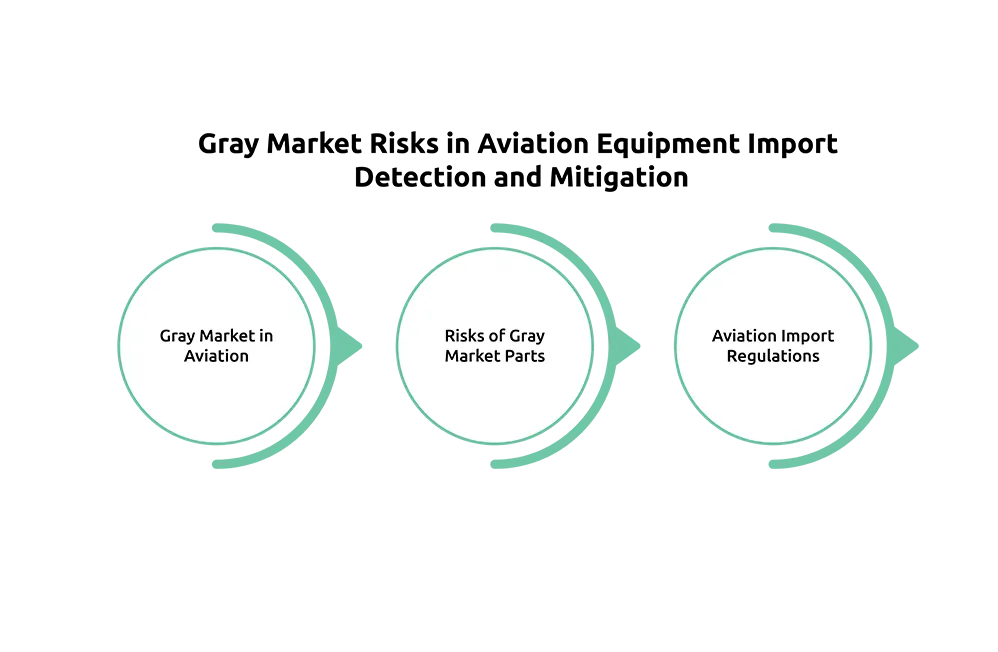
Sources of Gray Market Aviation Equipment
Several methods enable gray market aviation equipment to access supply chains but lack complete origin tracking and certification verification. Manufacturers do not grant permission when goods are purchased in one country for resale in another country, which results in parallel imports. The grey market receives its inventory mainly through two channels: excess inventory that was not sold and parallel import of goods from one country to another without manufacturer consent. Independent sellers operate in the market by purchasing aviation equipment through numerous channels before avoiding standard distribution routes. Verifying safety standards for business operations becomes complicated due to these methods, which creates significant risks when companies import unclear equipment from the gray market.
Risks Associated with Gray Market Aviation Equipment
The financial advantages of gray market transactions fail to justify their numerous dangers because aviation safety depends on them. The absence of critical testing requires serious attention since gray market goods create risks that harm equipment reliability and put passengers and crew members at safety hazards. The lack of valid warranty and maintenance support is a major challenge with gray market items since businesses acquire no remedy against failed components. The situation results in operational interruptions despite using freight forwarding support. Security vulnerabilities represent a major threat to systems since goods from the gray market might lack necessary air cargo and 3-phase power system compliance standards, resulting in operational risks and cybersecurity threats. Using gray market equipment damages the reputation of companies. A company faces financial penalties and license withdrawals for noncompliance with safety standards and HTS harmonized tariff codes that damage its market standing and profit margin.

Identifying Gray Market Aviation Equipment
Detecting gray market aviation equipment can help prevent the risks already discussed. The following methods indicate how to identify potential issues:
Price Discrepancies:
Identifying gray market goods starts with high price differences between official channels and unofficial reseller networks. False pricing below market prices often reveals that the equipment comes from unauthorized distributors since unauthorized distributors cannot access manufacturer agreements.
Packaging and Documentation:
Any authorized equipment shipment can be identified through its proper documentation system, which provides complete compliance certificates with technical manuals. The documentation supplied with gray market goods frequently lacks essential or forged official documentation. Any unusual appearance or illegitimate paperwork in the packaging should lead you to validate the authenticity of the goods.
Supplier Verification:
A reliable supplier maintains complete records together with established manufacturer agreements for their suppliers. Do not engage with suppliers whose legitimacy or importer of record numbers cannot be validated.
Procurement Policies and Training:
Developing strict procurement policies and thorough training will effectively decrease gray market risks. Education of procurement staff should focus on identifying suspicious activity while procurement staff must confirm the importer of record for all purchases.
Mitigation Strategies
Numerous strategies exist to defend your organization from gray market aviation equipment importation risks.
Use Certified Dealers and Suppliers:
Companies should do business exclusively with authorized value-added resellers and certified distributors—your selection of suppliers who authorize and distribute quality tools that meet all necessary standards.
Partner with Customs Brokers:
A trusted partnership with customs brokers enables you to meet all local import requirements and verify equipment quality for import standards. Your shipments will clear customs without issues through their help with DAP Incoterms and HTS harmonized tariff processing.
Adopt Robust Supply Chain Management:
Rigorous supply chain implementation enables tracking of every good beginning at the source and culminating in its delivery. Identifying gray market equipment becomes possible through this system before it becomes problematic.
Work with Professional Freight Forwarders:
The freight forwarding services must use established professionals as your freight forwarding providers. The current complexities of international trade require professional freight forwarders who offer air forwarding and cargo forward services and European shipment management to help businesses avoid gray market goods.
Conclusion
The unlicensed trade of aviation equipment represents a major obstacle that affects airline industry companies. The attractive prices of gray market products cannot outweigh their well-established threats to safety and warranty validity, negatively impacting company reputations. Companies can minimize risks by creating solid operating procedures from supply procurement to supplier addition services and Importer of Record programs. One Union Solutions extends specialized services to businesses that need freight forwarding management logistics support and international regulation compliance for aviation equipment importation.
Did You Know?
Aviation industry urges steps to prevent unapproved parts from airplane use — Reuters report on industry efforts to stop unapproved/forged components from entering supply chains.
FAQs
What is the gray market in aviation equipment?
Ans: The gray market refers to aviation equipment that is imported or sold through unauthorized channels. These products are not supplied by approved manufacturers or distributors and are often offered at lower prices.
How can I identify gray market aviation equipment?
Ans: Gray market equipment often comes with unusually low prices, missing or incorrect documents, and suppliers with little or no credibility. A legitimate Importer of Record (IOR) should always be involved in the import process.
What risks come with using gray market aviation equipment?
Ans: The main risks include poor product quality, reliability issues, lack of warranty support, security risks, and damage to a company’s reputation. These issues can affect flight safety and disrupt aviation operations.
What is an importer of record?
Ans: An Importer of Record (IOR) is the legal entity responsible for ensuring that imported goods meet all customs regulations. The IOR also handles duties, taxes, and provides the required identification numbers to authorities.
How can I avoid gray market products in my supply chain?
Ans: To avoid gray market products, always buy from authorized distributors, work with reliable customs brokers, and follow strong supply chain management practices.