The idea that a microchip, something as small as that, can upend the whole world car market is wild beyond belief, yet that is what has happened. The chip shortage has been upending the process of building, shipping, and selling vehicles in recent years, and the businesses and consumers affected have been experiencing new pains and difficult decisions.
Recent numbers really show the scale of the problem. According to data, more than 9.5 million vehicles were cut from production in 2021 alone because there just weren’t enough chips to go around. The following year, another 3 million vehicles never made it off the assembly line. Even as things started improving in 2023, production losses still reached over half a million cars in just the first half of the year.
In the meantime, chips within every automobile are becoming more expensive than ever. The arrangement at the start of the pandemic (approximately, the cost was $ 500 per car) is estimated to surge to 1,400 by 2028. In India, the production of passenger vehicles went down by over 12% in 2022, and consumers were taking months to get their hands on a popular model. Car makers around the planet have had to reconsider how they handle supply chains, the stock they take, and what goes into a new vehicle.
Why Are Chips So Crucial to Automobiles?
Chips are the silent heroes within any contemporary automobile. We can call it the modern vehicles, computers on wheels. It’s the small chips that will make it all work. They manage high-priority systems such as airbags, brakes, and engine performance. Still, they also engage in more common comforts such as climate control, touchscreens, and even your door locking and the movements of your mirrors. Thousands of these chips are cooperating in the background of some cars.
The chips assist cars in being more efficient and driver-friendly with advanced sensors, and significantly advance new technology, such as electric motors and self-driving systems. In case they do not have enough chips to distribute, not just the excess is slowed down, but even car factories sometimes need to stop. With the increasing levels of car intelligence, the presence and use of chips is gaining momentum; in other words, the chips are becoming the pulse of any new car on the road.

How Did the Shortage Begin?
The trouble started when the pandemic hit. Carmakers, bracing for a downturn, slashed their chip orders. Meanwhile, everyone stuck at home started buying more gadgets, soaking up chip supplies. By the time car demand bounced back, chipmakers were already booked solid by tech companies. Throw in trade disputes, natural disasters, and new tariffs, and suddenly the whole supply chain was a mess. The result? Slower production, longer waits, and higher prices for just about everyone.
The biggest impact has been delays. In some areas, people wait months or even up to a year for the car they want. Automakers are focusing on their most popular and profitable models and reducing production of others. Some cars are even shipped without certain features to keep deliveries going. Prices have gone up a lot, with used cars rising nearly 40% at the worst of the shortage, and new car discounts are now harder to find.
Imports | Exports | Changes in World Trade | Advantages
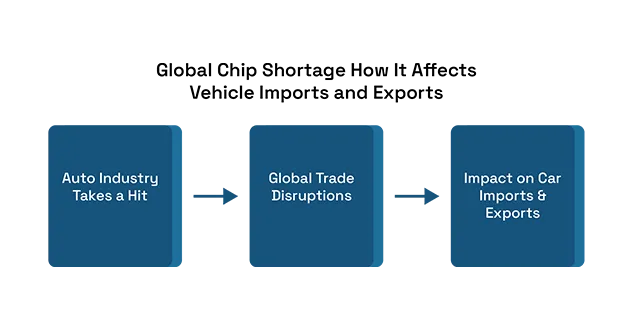
Global automobile trade has become uncertain due to the chip shortage. There are longer and uncertain lead times on the side of exporters and importers researching to develop enough vehicles. Other manufacturers focus on the top-end models or cars with fewer electronics, postpone launches, or offer fewer choices. It has affected countries that depend on imports the most, with lowered options and increasing delays in buyer acquisition.
This needs an adaptable, intelligent way to get through it. A good logistics partner can be transformational, providing end-to-end global management, customs clearance, warehousing, & real-time tracking services. It is advantageous to have a specialist knowledgeable about HS codes and customs documentation to prevent costly delays.
Flexible shipping terms such as DDP and DAP can make it less demanding to deal with duties and taxes, and bundling shipments and negotiating the cost can effectively control the cost. Good connections into areas with major logistics centers and the capacity to surge shipping zones are also necessary to be competitive. Businesses can also stay skillful with digital tools and improved forecasting.
The Industry Adaptation Guidelines
The shortage of chips has indeed shifted the industry in such a manner that carmakers have to shift their approach to the business. The times when companies keep their inventories low due to the so-called just-in-time deliveries are gone. It is no longer a primary concern as to whether there are backup plans in place, whether extra chips are in stock, whether suppliers are multiple or just a single one, and even alliances between customers and suppliers, such as the chip manufacturers, to secure a constant supply of the same. Automakers are also streamlining the chips they opt to use, which means they can easily mix up in case of a glitch in the supply chain.
Meanwhile, the industry is becoming more intelligent regarding how it conceives and constructs cars. Companies are also moving towards making cars more pliable, where different chips or modules may be replaced when necessary. They are also improving relations with suppliers, mastering digital tools to become more advanced in signifying issues, and even sometimes creating their own chips. All these transformations imply that even though problems tend to emerge, automakers are much more prepared nowadays to be surprised and make vehicles come out of the assembly line.
Conclusion
A worldwide shortage of chips has truly disrupted the automotive sector, and everybody, including the producers, suppliers, and the supply chain crew, has had to bounce up and reconsider ways of doing things. The past methods are out, and no one can afford to go by business as usual. It is time to develop more powerful, more flexible supply chains and be able to acquire whatever twists on their tail the next one might have.
We are at One Union Solutions and understand how challenging these times may be. That is why we are directly by our clients’ side, assisting them to be swift and ready. Doing the difficult customs paperwork, locating the most efficient shipping routes, and ensuring you have visibility into your shipments through every step of the way, we focus on getting your business moving, even when the world feels uncertain. We do this by combining practical experience and clever, creative answers so that you can save time and money, and so that your cars end up where they are supposed to be, at the right time.
Did You Know,
According to official data, more than 9.5 million vehicles were eliminated from world production in 2021 due to the chip deficit. By 2028, the average auto content of semiconductors is anticipated to increase almost three times the semiconductor presence in 2020.
FAQs
Why did the chip shortage affect the auto industry so much?
Cars need thousands of specialized chips, and there aren’t easy replacements when supply runs out.
How long are current wait times for new vehicles?
Depending on the model and location, buyers may wait from a few weeks to several months.
Are car prices still increasing?
Yes. Limited supply and steady demand have raised prices for both new and used cars, with fewer discounts available.
How are automakers handling the shortage?
They are diversifying suppliers, investing in local chip production, and sometimes shipping cars with fewer features.
Is the chip shortage over?
The situation is improving, but risks like trade tensions and high demand for advanced chips mean the industry remains cautious.