
Insight
The automotive revolution of electric vehicles is reshaping industries and the habits of consumers. Yet, the transportation of batteries and the associated equipment across international borders proves to be quite complicated. A combination of short supplies of raw materials and new tariffs and policy updates presents a web of difficulties challenging companies operating in this space. Delays that can halt the production schedules and budgets of those shipping advanced technology, medical devices, aviation systems, and automotive components can occur when shipping services are not completed promptly. Understanding and planning something that is in store can make a huge difference.
The obstacles in the EV battery supply chain take numerous shapes.Supplies can abruptly be diverted and sourced in different locations where and how geopolitics dictate the ban of exports or alteration of trade agreements. There is an extra dimension in tariffs and changing trade policies that can influence anything, including customs duties and the classification under the Harmonized System Code (HS code) and calculations of tariffs under the Harmonized Tariff System (HTS). Incoterms is also important to know whether the delivery is via DDP (Delivery Duty Paid) or DAP (Delivered at Place) contract, as this may be problematic if you face unexpected expenses and disagreements.
Transportation of batteries is not simple paperwork. These are likely precarious goods, and there has to be special freight forwarding and logistics. It can make sense to select the appropriate service, optimize the routes, and find the least expensive post office box or ground delivery service in cases of smaller shipments so that costs are manageable. The process of online records and real-time visibility is already the industry standard. Real-time tracking and digital records are current requirement in the industry. Still, a well-informed customs broker can determine the difference between a shipment that will smoothly pass borders and one delayed by red tape.

The Global Battery Hubs
A few regions dominate the supply of batteries around the globe. China dominates the production of cells & the processing of raw materials. Still, the U.S. & Europe are trying to develop their capacity and minimize the need for imports. Rotterdam, Shanghai, Los Angeles, and Hamburg are some logistics centers that play important roles in transferring raw materials, finished batteries, and high-tech equipment globally. These hubs are well equipped with customs facilities and staff trained to handle sensitive or regulated shipments; thus, they are the keys to the chain.
These logistics hubs not only move materials efficiently but also ensure compliance with international trade rules. They provide secure storage, fast customs clearance, and proper handling of sensitive EV battery shipments. By connecting manufacturers, suppliers, and end markets, these centers reduce delays and costs in the supply chain. Their strategic locations near ports and airports make global distribution smoother and more reliable. Overall, these hubs are critical for supporting the growth and stability of the EV battery industry worldwide.
Numbers that are Behind the Supply Chain
Current market studies indicate that the battery market value in EVs will total over $69 billion in 2024, with the possibility of achieving the value of $115 billion in 2032. Lithium-ion battery demand will keep rising because of government subsidies, model expansions, and a global effort to reduce emissions. China is already producing approximately 75 percent of all lithium-ion batteries. In addition, it is the leader in the production of key ingredients. In the meantime, the U.S. and Europe are playing the game of keeping up, sinking money into new factories and local sourcing. The landscape is being developed by tariffs, local content regulations, and evolving trade regulations, and, as the sourcing scene evolves, compliance and intelligent sourcing are more vital than ever before.
How to Keep Your EV Battery Shipments Moving
Trade barriers in the EV battery supply chain are not hard to overcome; it just takes some planning and collaborating with professionals. An efficient logistics partner will assist in arranging the classification of your shipments, using the harmonized system code, and ensuring that all customs duties and Incoterms are used as transparently as possible. Flexible shipping modes such as DDP and DAP allow customs clearance and duties to be paid by the buyer now. It is now possible to track your shipment in real-time, and the documentation is now automated with digital tools.
Grouping shipments, pricing on bulk orders, & special handling, and warehouse storage to protect batteries can also save costs. Long-term resilience depends increasingly on the willingness to engage in sustainable sourcing, e.g., closely linked recycling and circular supply chains. A professional customs broker assists you in remaining in compliance with evolving trade regulations, and analytics and visibility tools of the supply chain make demand and inventory management forecasting and control more feasible. Such priorities as transparency, compliance, and flexibility ensure that your supply chain is in operation, even as regulations change.
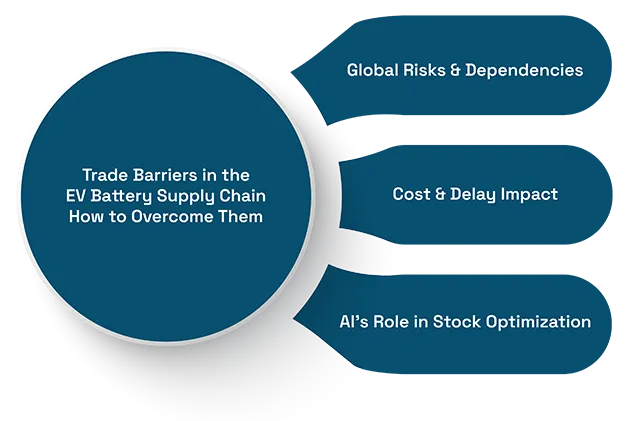
Main Service Benefits and Features
The benefits of a proactive strategy around the EV battery supply chain are that end-to-end freight forwarding and logistics services mean that your products will be properly classified under the harmonized system code, and with all customs. This part of the job will be well handled. Tracking goods in real time and using digital documentation helps minimize errors and delays in your supply. Expert customs brokerage services could guide you in avoiding fines and penalties.
Volumetric orders allow for the management of special warehousing, different tariffs, and other expenses by bundling together orders that have been shipped. Taking such sustainable sourcing initiatives as battery recycling & a circular supply chain is becoming important to meet green goals and satisfy regulations. Full visibility of the supply chain & special avenues of clear communication will help you to anticipate challenges and respond quickly to demand fluctuations and policy changes. Paying attention to compliance, flexibility, and sustainability, you can stay on par with shipping your EV batteries and prepare them for the future.
Conclusion
Numerous challenges await its EV battery supply chain. Nevertheless, these will be coped with when planned and accompanied by the help of the right people. At One Union Solutions, we take customers through every step of the process, arranging the logistical requirements, ensuring compliance, and taking care of sustainable sourcing so that your equipment arrives when needed and in good condition. We believe in building effective & efficient supply chains that will enable your business to be at the forefront in this rapidly evolving world.
Did You Know,
By 2024, China had manufactured approximately 75% of the lithium-ion batteries in the world. In contrast, the U.S. only had 10 percent of global battery capacity. Such a gap is more evidence of the importance of supply chain diversification and local investment, as the future of electric vehicles is presented in it.
FAQs
Why is the EV battery supply chain so complex?
EV batteries require rare raw materials, face strict regulations, and are affected by changing trade rules, making the supply chain challenging.
How can companies reduce delays in EV battery shipments?
Using correct HS codes, working with customs experts, and consolidating shipments can reduce delays and speed up delivery.
Why is recycling important for EV batteries?
Recycling reduces the need for new raw materials, lowers environmental impact, and helps meet sustainability and legal requirements.
What role do logistics providers play in the EV battery supply chain?
Freight forwarders and customs brokers help track shipments, ensure regulatory compliance, and manage smooth transportation.
How can companies stay prepared for new trade rules affecting EV batteries?
Monitoring tariffs, classification codes, environmental rules, and Incoterms, while partnering with experienced logistics providers, helps prevent delays and extra costs.