Overview
Germany has long been one of the most developed manufacturing economies in the world, with exports getting support from its industrial growth. After a period of global economic slowdown and trade disruptions, Germany’s manufacturing exports are now seeing a huge rebound as global demand begins to recover in global trade. Industries such as IT equipment, aviation components, medical technology, and automotive manufacturing are seeing renewed orders from global trades. This recovery is not only improving Germany’s local economy but also benefiting global import–export businesses that depend on systematic trade systems and effective cross-border shipments.
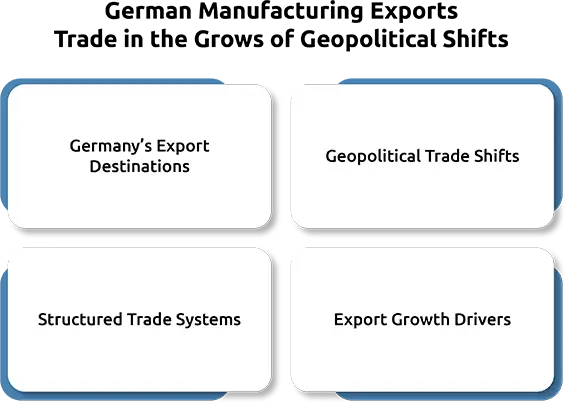
German Manufacturing Exports Trade in the Grows of Geopolitical Shifts
Germany’s manufacturing sector accepted these challenges by expanding export destinations and increasing partnerships across multiple regions. For global traders, structured trade systems remain important in simplifying smooth shipments. Trade programs such as the generalized system of preferences (GSP) help to grow trade by providing tariff advantages to eligible countries, increasing across the border shipments in global trade. Also, globally known Incoterms such as DAP and DAPs help define delivery responsibilities between buyers and sellers, confirming clarity in global shipping responsibilities. In the United States, the HTS Harmonized Tariff Schedule provides further categorization information for imports and shows the applicable duties and regulations.
Key Details on the German Manufacturing Exports Recovery
Germany’s export recovery is being driven by multiple industries that depend heavily on global demand.
Automotive Sector Driving Export Growth
Germany’s automotive sector continues to be a major export contributor to growth. Demand for electric vehicles, autonomous technologies, and EV vehicles has increased hugely across global trade. As manufacturers grow production, effective Supply chain optimization and advanced Inventory and order management systems help organizations manage large volumes of global shipments and maintain consistent product availability.
Aviation Industry Expansion
The aviation industry is another sector seeing export growth. Many aviation companies depend on International freight services to ship aircraft parts effectively between the production hub and international customers. Businesses frequently depend on exporter of record services to confirm that export documentation, licensing, and approval requirements are managed correctly. Also, importing countries may require an Importer of Record Service to manage local regulatory problems.
Medical Technology and Healthcare Equipment
Germany’s medical technology sector is globally recognized for producing new diagnostic equipment and medical devices. Hospitals and healthcare providers across the world depend on dependable delivery and strict regulatory agreements when importing medical equipment. This makes Customs clearance processes mainly important for shipping in Germany. Medical devices must meet strong import regulations and documentation standards before entering global trade.
IT and Advanced Industrial Technologies
Germany’s IT and industrial automation sectors are benefiting from the global growth toward digital transformation and smart manufacturing. For these high-value products, organizations frequently work with specialized trade intermediaries to confirm approval and efficiency. A common question in global trade is whether a freight forwarder can be an exporter of record, which depends on regulatory agreements between trading partners in Germany. Also, many companies ask whether a customs broker can handle both import and export documentation.
Emerging Benefits for Germany’s Manufacturing Exports: Shipments Global Demand Recovers
The recovery in global demand is creating many economic benefits for Germany’s manufacturing ecosystem.
- As export activity grows, German manufacturers are creating stronger relationships with global distributors, suppliers, and technology partners. These partnerships help create a stable supply chain that supports long-term international trade growth in Germany.
- Organizations are also investing heavily in digital systems that improve working efficiency. Advanced tracking tools, digital documentation sources, and automated trade approval solutions help reduce officials’ load while improving shipment visibility and coordination.
- For companies involved in international trade terms, Germany’s export rebound creates new opportunities. Businesses that specialize in trade documentation, approval solutions, logistics management, and cross-border supply can benefit from the growing demand for experts import–export support in shipments.
Conclusion
Germany’s manufacturing export recovery shows the growth of its industrial economy. As global demand continues to grow, industries such as automotive manufacturing, aviation technology, medical devices, and IT devices are increasing the country’s export growth. Organizations working in the import–export industry, Germany’s manufacturing rebound provides huge opportunities to improve global trade partnerships, expand working capabilities, and participate in the next phase of global industrial growth in Germany.
DID YOU KNOW?
After repeatedly cutting its forecast to 0.8 percent last autumn, Germany’s leading financial institutions have forecast growth of just 0.1 percent for this year.
FAQs:
1. Why are Germany’s manufacturing exports increasing again?
Germany’s manufacturing exports are growing due to the recovery of global demand, increased investments in electric vehicles, aviation equipment, medical devices, and advanced industrial technologies.
2. Which industries are driving Germany’s export recovery?
Major sectors driving export growth include automotive manufacturing, aviation components, medical technology, and IT equipment, all of which have strong global demand.
3. How does global demand affect Germany’s export performance?
When global demand increases, global buyers place more orders for German industrial products, leading to higher production levels and increased export shipments.
4. What role does logistics play in Germany’s export growth?
Efficient logistics, customs clearance processes, international freight services, and optimized supply chains help German manufacturers deliver products quickly and maintain strong global trade relationships.
5. Why is Germany important in global manufacturing trade?
Germany is one of the world’s leading industrial economies, known for high-quality engineering, advanced manufacturing technologies, and strong export-driven industries.