Introduction
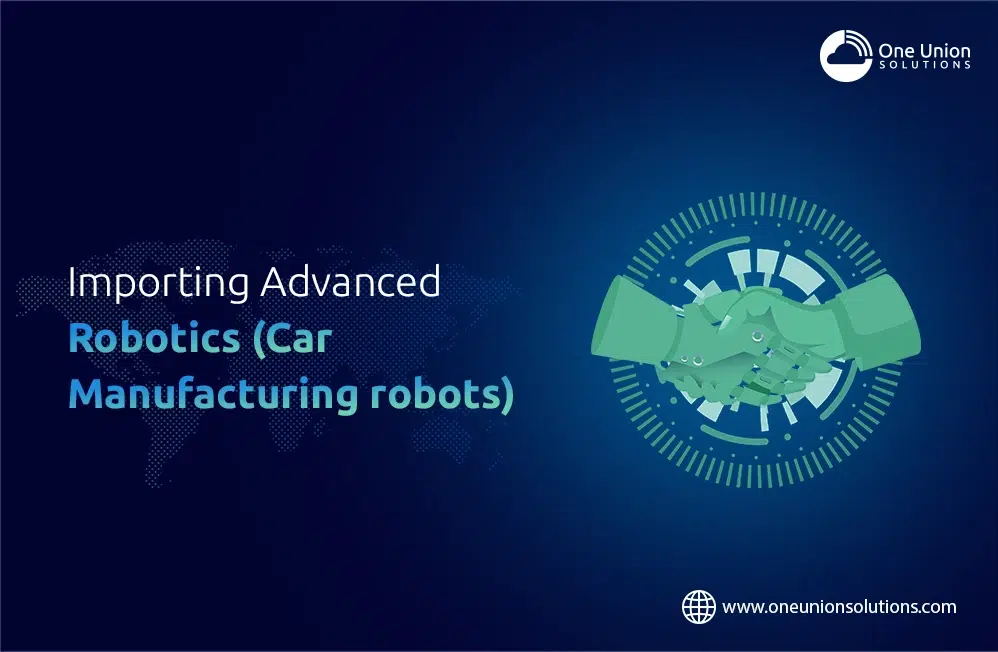
The automotive industry is experiencing a dramatic transformation due to a rapid surge in robotic technology adoption for manufacturing processes. Companies seek to maximize production capacities; importing these sophisticated machines is essential in modern production strategies.
The automotive industry is undergoing major changes as manufacturers increasingly adopt robotic technology in their production processes. To improve efficiency, precision, and output, companies are investing in advanced robotic machines. Importing this equipment has become a key part of modern automotive manufacturing, helping businesses meet growing production demands and stay competitive in a fast-evolving market.
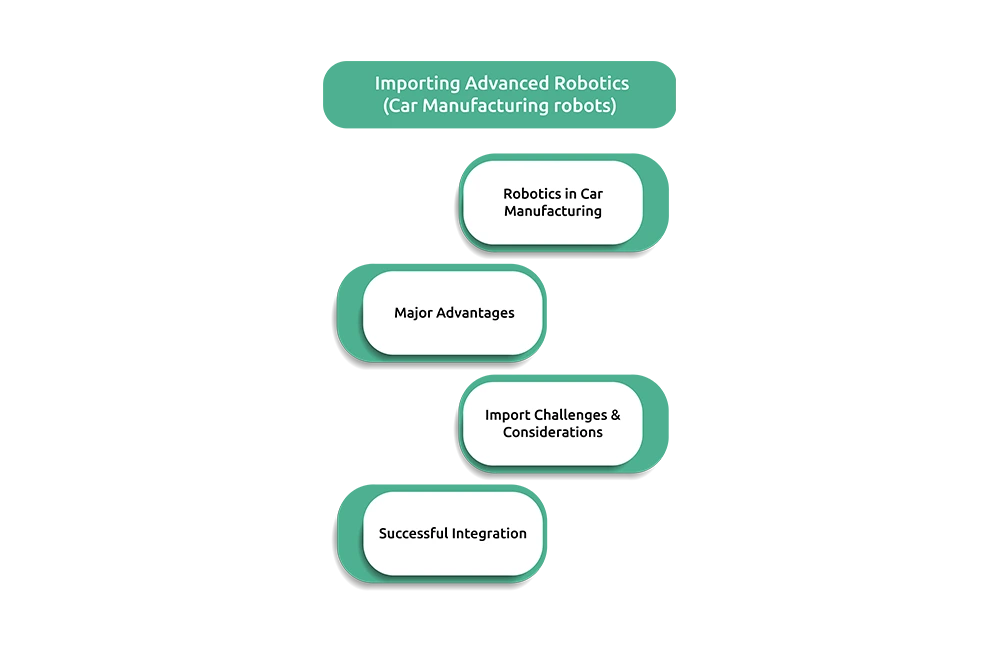
Advanced Robotics’ Role in Car Manufacturing
Robotics has proven themselves an invaluable tool in car manufacturing. Manufacturers can reduce production times by automating assembly, welding, and painting tasks for an improved production line using robotics systems while meeting market demands more swiftly and precisely.
Robotics’ impact on manufacturing processes is numerous and far-reaching. First and foremost, automation reduces human error to improve product quality while performing highly precise tasks – essential in an industry where even minor flaws can have catastrophic results. As a result, businesses can ensure that stringent quality standards are upheld and that customer satisfaction is ensured.
The implementation of robotics has far-reaching implications for operational efficiency. Traditional manufacturing methods involve time-consuming manual processes that take too much work to complete efficiently; by contrast, robotics can manage repetitive tasks much more quickly than humans could manage them – speeding up production rates while freeing human workers up for more intricate or value-adding actions.
Importance of IOR Services for Importing Robotics
Importing advanced robotics requires precise trade compliance, documentation accuracy, and a deep understanding of customs clearance regulations. This is where an experienced Importer of Record (IOR) plays a critical role. The IOR supports accurate customs documentation and import requirements, while shipping arrangements are aligned with Incoterms® 2020 and applicable DDP terms. With One Union Solutions managing your IOR and freight forwarding services, your robotics equipment moves in transit efficiently through global ports, minimizing customs delays and maintaining compliance with every regulatory checkpoint. This streamlined approach allows automotive manufacturers to focus on production while we handle the complexities of international logistics.
Partnering with an experienced IOR service provider can significantly simplify the complexities of importing robotics. Through such collaboration, all import documents are accurately filed and local laws adhered to – not simply for bureaucratic compliance but to preserve operational integrity and prevent delays that might otherwise incur costs. Effective international trade risk management is an essential aspect of importation. By identifying potential risks and devising mitigation strategies, manufacturers can navigate global supply chains more confidently while also helping prevent disruptions that might delay essential equipment arriving on time.
Logistics requires knowledge of Incoterms and international shipping agreements to import successfully. DAP (Delivered at Place) and DPU (Delivered at Place Unloaded) establish buyer and seller responsibilities regarding shipping costs and risks, eliminating potential disputes during importation processes. Knowing Incoterms helps all parties involved better understand their responsibilities, thus decreasing the chances of disagreement over importation decisions.
Automotive Industry Trend Analysis
Recent statistics demonstrate the seismic shift within the automotive sector due to increased automation and robotics usage. Manufacturers that have adopted advanced robotics have experienced noticeable productivity increases; according to studies, companies using robots in manufacturing processes may even reduce production time by up to 30% – providing crucial efficiency gains within an industry that needs swift responses to consumer preferences and market trends.
Additionally, the global industrial robot market is projected to experience rapid expansion over the coming years, reflecting an ever-increasing need for automation in automotive production facilities to stay competitive. Automotive manufacturers that invest in advanced robotics will better adapt to growing market conditions and customer preferences.
Hyperconverged infrastructure and robotics boost manufacturing capabilities, offering seamless integration of computing resources that enhance manufacturers’ data management, operational efficiency, and supply chain optimization. By taking advantage of these advances in manufacturing capabilities, manufacturers can streamline processes, reduce costs, optimize their supply chains & further expand manufacturing capabilities.
Advantages of Advanced Robotics in Manufacturing
Integrating advanced robotics into car production offers numerous benefits, enhancing various aspects of the production process.
Automation Increased Efficiency
One of the main advantages of automation is increased efficiency. Robots streamline manufacturing processes, resulting in faster production cycles and higher equipment output – an invaluable asset in an epoch where speed often plays an integral part in success. Another advantage of robotics is their increased precision. Automated systems are built to perform tasks with extreme accuracy, reducing errors and defects that might otherwise arise in tasks being performed by human employees. When quality matters so much in business operations, such levels of accuracy become essential in maintaining brand integrity and meeting customer satisfaction targets.
Cost Reduction
While robotics require an initial investment, their long-term cost-reduction benefits are significant. Manufacturers frequently report significant labor cost reduction and increased production efficiency savings, which more than compensate for any initial expenditures made for robotics. With faster production and lower defect rates, investment returns may come quicker than anticipated.
Safety Improvements
Robotics has made an important statement about its capacity to advance workplace safety. By automating hazardous tasks; manufacturers can reduce injuries while improving employee morale by eliminating exposure to potentially hazardous conditions, increasing retention rates, and keeping workers engaged with work.
How Are Robotics Imports Revolutionizing the Future of Car Manufacturing?
Importing advanced robots is changing car manufacturing by making production faster and better. Robots help in work like assembling and welding with fewer mistakes and better quality. They also help companies make more cars at lower cost. With robots, car makers can meet high demand and stay strong in the global market. This also helps keep workers safer by reducing risky tasks.
Why choose One Union Solutions?
Partnering with an established logistics provider such as One Union Solutions when importing advanced robotics is crucial. Their expertise in IOR management and freight forwarding ensures that your equipment arrives in perfect condition on schedule.
One Union Solutions offers tailored services designed to streamline the import process. Their focus on compliance with regulations and efficient logistics management allows manufacturers to focus on creating and producing high-quality equipment. At the same time, their expertise guides businesses through international trade complexities with confidence.
Conclusion
Adopting advanced robotics in car manufacturing is more than a trend; it represents a profound transformation revolutionizing the industry. Improving efficiency, precision, and safety robotics allows manufacturers to meet market demands effectively. Effective logistics management will be key to success in an evolving landscape.
For manufacturers looking toward the future, & investing in advanced robotics will be vital to remain competitive. Businesses can succeed in this complex and dynamic automotive market by capitalizing on automation capabilities and working closely with experienced logistics partners.
Did You Know?
The invention of the first industrial robot, Unimate, by George Devol in 1956, was then introduced by General Motors in 1961, marking the beginning of robotics in the automotive sector
FAQ
1. What industries benefit from importing industrial robots?
Industries like automotive, aviation, electronics, and manufacturing benefit the most from imported robotic systems.
2. Why is compliance important when importing robots?
Compliance ensures that all import rules, customs procedures, and safety standards are properly followed to avoid delays.
3. What challenges come with importing robotics equipment?
Challenges include customs rules, documentation requirements, transport handling, and compliance with import regulations.
4. Why do companies choose One Union Solutions for robotics imports?
Companies choose One Union Solutions for reliable support in customs clearance, documentation, and end-to-end import management.
5. Can One Union Solutions handle complex industrial imports?
Yes, One Union Solutions specializes in handling high-value and complex imports like robotics, IT equipment, and industrial machinery.