Overview
China’s global trade performance has started 2026 on a strong note, recording its biggest expansion in four years and showing new growth in global trade. Organizations working in global trade, specifically those connected to technology, aviation, medical equipment, and automotive manufacturing are major considerations in global trade. China’s export growth performance at the beginning of 2026 highlights the flexibility of its manufacturing industry and its ability to accept changing global trade control. The growth also shows how industrial variation and technological development continue to support the country’s role in global trade.
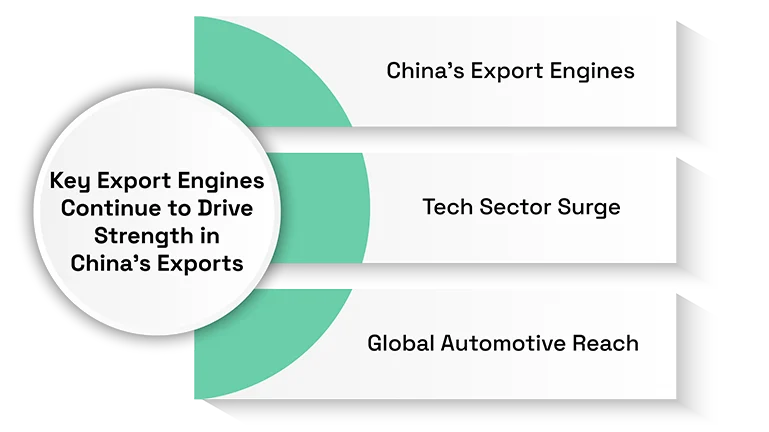
Key Export Engines Continue to Drive Strength in China’s Exports
Many sectors have played a vital role in growing China’s export growth in early 2026. The IT sector remains one of the strongest areas of export growth in China. Global demand for semiconductor equipment, networking hardware, and technological components continues to grow as businesses in cloud computing, artificial intelligence, and digital change systems. Chinese manufacturers have maintained complete manufacturing capacity, allowing them to supply electronic products to markets across Asia, Europe, and North America.
What caused China’s biggest export expansion in four years?
China’s biggest export expansion in four years was driven by strong overseas demand, competitive production costs, and growth in high-value sectors such as technology, electric vehicles, batteries, and renewable energy equipment. Efficient port operations and better logistics capacity may have also helped move goods faster to international markets.
Technology Manufacturing Expansion
Technology production has mostly supported export growth, specifically in areas such as electronics and industrial automation equipment. For organizations working in cross-border trade services, including exporter of record services and importer of record services, the growth in technology exports has increased demand for systematic documentation management, approval tracking, and inventory and order management across multiple markets.
Automotive and Electric Vehicle Momentum
China’s automotive industry has also played a major role in improving exports. Electric vehicles and advanced automotive components have gained global attention due to competitive pricing, technological innovation, and expanding international demand for strong logistics solutions. Automotive manufacturers are mainly growing into global markets, creating new opportunities for organizations required in International freight services and supply chain optimization of shipments.
Imports Also Grow in Positive Growth for China’s Trade Partners
While exports have received huge attention, imports have also shown strong growth in early 2026. This increase suggests improving local demand and an increasing industrial storage within China’s economy. Rising imports frequently show increased manufacturing activity, higher consumer demand, and expanding industrial production. The aviation and medical sectors are specifically improved by these developments. Aviation manufacturers depend on accurate components and specialized goods sourced globally, while the medical technology sector requires advanced equipment and medical devices to support healthcare growth. Businesses involved in global trade frequently depend on coordinated logistics systems, effective Customs clearance processes, and correct product categorizations under systems such as the HS code and the HTS Harmonized Tariff Schedule to confirm smooth shipment of goods across borders.

What’s the Major Reason for China’s Trade Growth Starts in 2026
Many factors explain why China’s trade performance has improved significantly at the start of 2026.
Strong Global Demand Recovery
One of the main growth reasons is the slow recovery of global demand. Many economies are increasing investments in infrastructure, manufacturing capacity, and semiconductors in these countries. This has created a demand for electronics, industrial machinery, and automotive technologies produced in China.
Industrial Guidelines and Manufacturing Capacity
China has continued investing heavily in modern manufacturing and automation production. This investment has improved the country’s industrial capabilities and allowed manufacturers to respond quickly to global demand changes in tariff wars between countries.
Export Efficiency in Global Trade
Businesses increasingly use digital sources and trade approval technologies to simplify documentation, track shipments, and manage regulatory requirements across different countries. Organizations frequently accept specialized tools such as the best trade compliance software for import export rules to maintain regulatory accuracy and reduce customs delays in global trade.
Conclusion
China’s strong start to trade in 2026 sees the flexibility and adaptability of its export-driven economy. The surge in both exports and imports shows new growth in global trade and shows growing demand for new manufacturing, technology goods, and industrial equipment. For businesses working in IT, aviation, medical technology, and automotive industries, the growth in China’s trade activity creates valuable opportunities to expand global operations and improve global partnerships. Also, organizations involved in import export businesses must remain attentive to regulatory approval, documentation management, and operational efficiency as trade growth increases for china exports.
DID YOU KNOW?
China’s exports grew 21.8% year-on-year in the first two months of 2026, up from 5.5% in 2025, much higher than market expectations.
FAQs:
1. Why did China’s trade grow strongly at the beginning of 2026?
China’s trade growth in early 2026 is mainly driven by rising global demand for electronics, industrial machinery, and electric vehicles. Increased manufacturing capacity, advanced technology production, and improved supply chain systems have also helped Chinese exporters.
2. Which industries are driving China’s export growth in 2026?
Major industries contributing to China’s export growth include technology manufacturing, semiconductor equipment, automotive and electric vehicles, industrial machinery, and networking hardware. These sectors continue to benefit from global digital transformation and infrastructure investments.
3. Why are China’s imports increasing along with exports?
China’s imports are rising because of stronger local demand, expanding industrial production, and the requirement for specialized components in sectors such as aviation and medical technology.
4. How do electric vehicles impact China’s export growth?
Electric vehicles play a major role in China’s export growth due to competitive pricing, technological innovation, and increasing global demand for sustainable transportation.
5. How does global trade approval affect China’s international shipments?
Global trade approval is important for smooth cross-border shipments. Businesses depend on accurate product classification, customs documentation, and digital trade compliance tools to reduce delays.