Cargo theft is a serious problem in today’s global trade. Every day, trucking and logistics companies lose money because goods are stolen during transport or in the warehouse. As supply chains become larger & more difficult, the risk of theft also increases. For organizations involved in import and export, especially in industries like IT, aviation, healthcare, & automotive, it is very important to understand cargo theft & take steps to prevent it.
Understanding Cargo Theft in Modern Logistics
Cargo theft means the illegal stealing of goods at any stage of the supply chain. It can happen during transportation, in warehouses, or even during customs clearance. As international logistics services and global freight forwarding continue to grow, goods travel through many countries and checkpoints, which increases the risk of theft.
High-value items like medical devices, IT equipment, and automotive parts are common targets for thieves. In cross-border shipping services, criminals usually take advantage of weak security, delays, or errors in documents. Gaps in customs compliance can also make it easier for theft to happen.
Why Cargo Theft Is Increasing
Cargo theft is increasing for many reasons. One major reason is the complexity of international trade rules, like Incoterms, DAP, and DAPs (Delivered at Place). When these terms are not clearly understood, it can create confusion about who is responsible for the shipment, making it easier for thieves to take advantage.
Another common problem is incorrect documentation. Mistakes in HS code or the HTS harmonized tariff schedule classification can delay shipments during customs clearance. When goods are delayed, they stay in one place longer, which increases the risk of theft. Poor tariff classification in the logistics and supply chain industry can also lead to compliance problems.
Lack of proper technology is another factor. Companies that do not use the best trade compliance software for import export rules or do not have strong inventory and order management systems are more likely to face fraud and theft.
Impact on Trucking and Logistics Companies
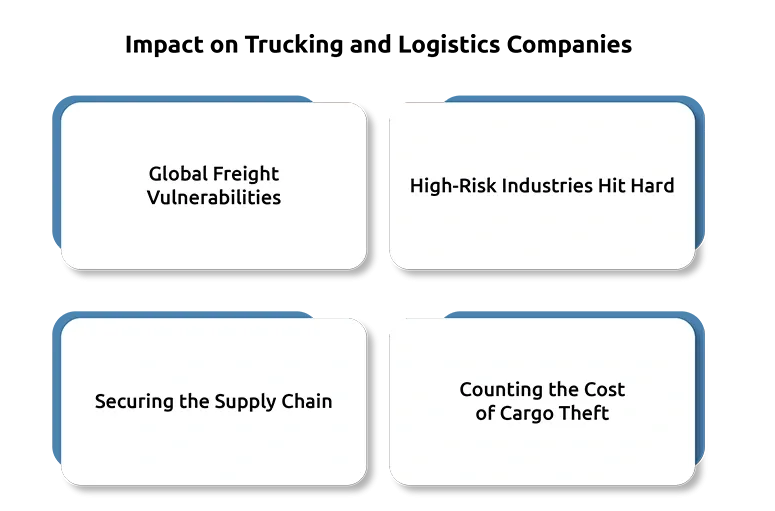
Cargo theft directly affects businesses by causing financial losses. Companies may lose the value of stolen goods, face higher insurance costs, & spend more on operations. For businesses that provide international freight services or work as exporter of record service providers, these incidents can also harm their reputation & reduce customer trust.
Cargo theft also creates operational problems. It can lead to shipment delays, missed delivery schedules, & overall supply chain issues. This is especially serious in industries like healthcare and aviation, where on-time delivery is very important.
In the automotive manufacturing supply chain, theft-related delays can even stop production lines. This shows how important it is to have a strong and well-planned supply chain system that focuses on security and risk management.
Common Methods Used in Cargo Theft
Cargo theft is not just about hijacking trucks anymore. Today, criminals use smarter & more advanced methods. For example, they may act as fake carriers or use identity theft and cyber fraud to steal goods. In some cases, they pretend to be real logistics providers offering importer of record services or transport services to gain access to shipments.
Another common method is targeting trucks or goods parked in unsafe areas. Unsecured parking spots and poorly managed warehouses make it easier for thieves to strike. Shipments that are delayed because of documentation errors, like problems in customs clearance or compliance checks, are at a higher risk of theft.
In global freight forwarding operations, poor communication between different parties can also create gaps. When there is a lack of coordination, it becomes easier for criminals to take advantage and steal cargo.
How to Prevent Cargo Theft
Preventing cargo theft needs a mix of good planning, the right technology, & strong compliance practices. One of the best steps is to use advanced tracking systems. These systems give real-time updates, so organizations always know where their shipments are.
Using the best trade compliance software for import export rules is also very important. It helps companies to keep documents correct, including proper HS code classification & following the HTS harmonized tariff schedule rules. This minimizes delays & lowers the risk of theft.
Working with reliable importer of record services & exporter of record services providers can make the process smoother. These experts manage customs rules and paperwork, which helps shipments move safely through customs with less risk.
Companies should also use safe inventory & order management systems. These systems help to track shipments at every stage, from storage to delivery. Also, careful route planning & selecting safer transit routes can greatly reduce the chances of theft.
For businesses involved in cross-border shipping services, understanding trade programs like the generalized system of preferences (GSP) can help to avoid delays and make shipping easier.
Finally, training employees about cargo security is very important. When businesses take a proactive approach to supply chain optimization, they can find weak areas early & improve overall safety.

Conclusion
Cargo theft is becoming a serious problem for trucking & logistics companies. It can cause money loss, delivery delays, & business disruptions. Industries like IT, aviation, healthcare, & automotive are all affected by this problem.
But organizations can minimize these risks by taking the right steps. Using proper customs compliance solutions, modern tracking systems, & reliable international logistics services can help keep shipments safe. When companies focus on security, accuracy, and smooth operations, they can build a stronger & more secure global supply chain.
Did you know?
Some thieves use signal jammers to block GPS tracking systems, making it harder to trace stolen trucks.
FAQs
- What is cargo theft?
Cargo theft is the illegal stealing of goods at any stage of the supply chain, including during transportation, storage, or customs clearance. - Why is cargo theft increasing?
Cargo theft is increasing due to complex trade regulations, incorrect documentation, lack of proper technology, and weak security in some parts of the supply chain. - Which industries are most affected by cargo theft?
Industries like IT, healthcare, aviation, and automotive are most affected because they often deal with high-value and sensitive goods. - What are the most common methods used in cargo theft?
Common methods include fake carriers, identity theft, cyber fraud, and targeting unsecured parking areas or warehouses. - How can companies prevent cargo theft?
Companies can prevent cargo theft by using advanced tracking systems, proper trade compliance software, secure inventory management, and working with reliable logistics partners.