Insight
The aviation sector has suffered substantial changes because of Brexit in the UK and European industries. Due to modern customs regulations and evolving trade barriers, which restructured supply chain dynamics, importers must react swiftly. This blog dives into how Brexit altered aviation supply chain operations while explaining the measures importers must execute for seamless functionality, regulatory adherence, & risk reduction.
Delays in customs clearance now directly impact aircraft maintenance schedules & operational efficiency. Importers must carefully manage duties, VAT, & Incoterms to avoid unexpected costs. Technology, automation, & experienced logistics partners play an important role in minimizing disruptions. With the right strategies in place, aviation businesses can maintain stable & compliant supply chains despite the challenges of Brexit.
The Uncertainty of Brexit’s Impact on the Supply Chain
Brexit actively continues to affect how aviation supply chains perform their operations. The withdrawal of the UK from the EU led to a complicated trade system across borders for businesses operating in the UK. The lack of clarity about Brexit resulted in delivery delays combined with drawn-out customs regulations that disrupted all sections of supply chains.
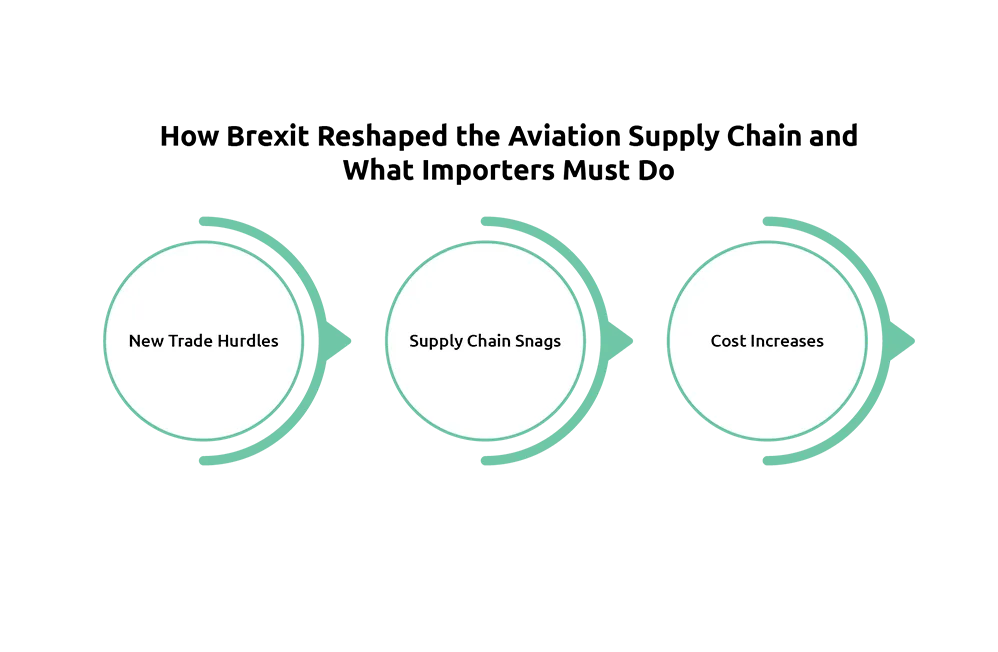
The aviation sector maintained easy regulatory barriers to component movements between UK territory and European Union member states until Brexit took effect. Customs declarations, together with tariffs and other import/export requirements, have substantially increased the complexity of this process after Brexit took effect. The latest changes have driven up business expenses, especially for operations that rely on just-in-time supply system networks.
Supply chain activities now face challenges due to regulation changes, which brought about import tariffs and new customs duty clearance procedures. The awareness of current changes in aviation component import rules helps importers prevent superfluous expenses and logistical delays.

Day-to-Day Brexit Impact on the Aviation Supply Chain
Private businesses operating in the aviation sector that maintain cross-border supply chains deal with multiple Brexit-related problems daily.
The imposition of Brexit-related import tariffs and customs duties now adds expenses for businesses importing aviation parts from the EU into UK territory or vice versa. Additional customs procedures and administrative requirements are responsible for prolonging the procedure and adding unnecessary complexity.
Customs clearance activities performed at the UK-EU border intensify administrative workload requirements. Importers must verify all required documentation, such as correct HS codes and customs declarations, to prevent delays and fines.
The UK’s new international trade policies force importers to handle frameworks different from those of EU regulations. When moving products from Northern Ireland into other UK regions, the Northern Ireland Protocol changes customs rules and supply chain management patterns in Great Britain.
Border shipments require experienced workers for successful movement. Brexit has limited free workforce mobility, creating critical supply chain worker shortages, specifically among truck drivers and warehouse staff members.
Several businesses adopted new supply chain management approaches due to the disturbances that Brexit produced throughout their supply chain systems. Freeports and neighboring areas replaced some companies’ operations to prevent increased tariffs from hitting their operations.
The Brexit impact on aviation extends beyond border delays—it has reshaped the industry’s logistics planning, customs protocols, and financial operations. As aviation companies are adapting to the complexities of post-Brexit trade, the link between Brexit and supply chain resilience becomes more critical than ever. Increased tariffs, regulatory divergence, and shifting trade agreements have not only disrupted component flows but have also raised the cost of cross-border financing.
How to Mitigate the Impact of Brexit on the Aviation Supply Chain
Several methods exist to lessen the adverse consequences Brexit has on aviation supply chain operations. Markets should utilize these specific steps to enhance their importing operations:
1. Leverage Freeports
Businesses searching for efficient import solutions can benefit from the designated freeport system. Freeports near ports and airports give goods customs duty and VAT exemptions during storage until retailers sell them. Businesses that use freeports can store aviation parts within these designated areas and lower their tariff costs while sustaining stock
2. Use Delivery Duty Paid (DDP) Terms
Delivery Duty Paid (DDP) terms allow the seller to take responsibility for customs clearance at the destination. This includes the customs duties, import taxes, and additional charges that may apply. Under DDP, the importer can avoid the risk of customs clearance delays or the uncertainty of fluctuating import tariffs.
3. Centralize Customs Processing
Companies must concentrate their customs processing primarily through digital platforms because new trade regulations have become too complex. Digital customs processing provides transparent compliance assurance & quickens the clearance process, lowering the possibility of expensive delays and revenue penalties. The successful completion of customs clearance depends heavily on using precise documents for all formalities, such as invoices, customs declarations, and HS code classifications.
4. Strengthen Supplier Relationships
Strong supplier connections now retain essential value for businesses to handle supply chain interruptions that became evident after Brexit. Importing requires importers to develop comprehensive business relationships with their suppliers for prompt delivery and to minimize border regulations and tariff costs. Successful business partnerships will establish stability for operations after Brexit takes effect.
Conclusion
The aviation supply chain has experienced apparent effects from Brexit, including higher operation costs, complicated regulations, and disruptions to daily business functions. Importers can reduce Brexit’s challenges through strategic moves that include operating from freeports with centralization of customs processing and technology investments.
Knowledge about post-Brexit international trade policy & regulations and logistics developments enables businesses to carry on efficiently in the new world following Brexit. One Union Solutions remains devoted to aiding aviation supply chain clients by providing support that enhances operational transparency and compliance readiness in their business processes.
Did You Know,
The 20% extension of border clearance times at UK ports, alongside rising costs and delays for 63% of companies, results directly from Brexit’s new tariffs and customs obligations. Companies that invest in digital customs solutions & supply chain diversity shorten their customs procedures times by approximately 25%.
FAQs
Why did customs checks increase for aviation imports after Brexit?
Ans: After Brexit, the UK left the EU customs union, which means aviation parts entering the country must go through full customs checks. This has added more paperwork, inspections, and clearance steps, leading to longer processing times and higher compliance costs.
How do Incoterms influence responsibility for Brexit-related charges?
Ans: Incoterms clearly define who is responsible for paying duties, taxes, and handling customs formalities. Choosing the right Incoterm helps businesses avoid confusion, unexpected fees, and shipment delays caused by post-Brexit regulations.
What advantages do free trade zones offer to aviation importers?
Ans: Free trade zones allow aviation components to be stored, assembled, or modified without immediately paying customs duties. This gives businesses more control over cash flow and helps manage costs when dealing with Brexit-related trade barriers.
Why is digital documentation important for post-Brexit aviation imports?
Ans: Digital documentation reduces manual errors and speeds up customs submissions. Electronic records help importers respond quickly to inspections and ensure smoother coordination with border authorities.
What staffing changes are needed in aviation logistics after Brexit?
Ans: Aviation importers must hire or train professionals who understand customs rules, trade compliance, and international logistics. A skilled workforce helps businesses adapt to regulatory changes and maintain efficient supply chain operations.