
Introduction
The rise of electric aviation marks one of the biggest changes in modern logistics, mainly as urban hubs push toward cleaner mobility. eVTOL aircraft, once viewed as a long-term trade, are now central to discussions on future logistics, sustainable mobility stations, and fast urban air travel. As manufacturers across the world grow to local production and scale global supply chains, the process of importing eVTOL parts has become difficult. Businesses must guide Import export documentation, changes in Incoterms, Import duties and tariffs, and live shipment tracking technologies to support a correct schedule. If you’re importing battery systems, electric propulsion units, sensors, or carbon-composite airframes, organizations frequently depend on IOR services to meet Importer of Record responsibilities and maintain an agreement with the HTS harmonized tariff schedule.
Understanding eVTOL Technology
Electric Vertical Takeoff and Landing technology represents a major leap in aviation engineering. These aircraft use electric aircraft as well as fuel-based engines, allowing quieter work, lower emissions, and reduced working costs. The advanced parts used in eVTOLs, from compact lithium battery packs to small combination systems, frequently cross various borders during production. This makes an understanding of HS code necessary, as miscategorizations can increase duties, delay cargo, or even cause regulatory penalties. Many organizations prefer using Incoterms such as DAP or Delivered Duty Paid service when shipping sensitive aviation parts, mainly when working between Exporter of Record definition guidelines and IOR responsibilities become necessary. Since these parts frequently move through supply chains, logistics providers must confirm real-time visibility, such as DAPs arrangements, bonded warehousing, temperature-controlled storage, and complete delivery services to final hubs.

How Can Businesses Prepare for Cross-Border eVTOL Component Imports?
As global production of eVTOL aircraft improve, businesses need structured import planning to keep projects on schedule. This involves selecting trusted suppliers, identifying product details, creating correct customs documentation, & understanding destination-country import requirements. Working with experienced logistics and compliance partners also helps minimize shipping delays, improve supply chain visibility, & support the safe movement of valuable aviation components across global markets.
The Future of Electric Aircraft
Electric aircraft hold the possibility to change regional air travel. As cities invest in eVTOL stations and green logistics stations, eVTOLs provide a new method for smooth commuting. Some aircraft will serve city-to-airport transfers, while others may support medical device logistics or mid-range cargo works. To meet this demand, suppliers must work with International freight services capable of managing delicate avionics and aircraft modules while maintaining strong approval with aviation import guidelines. Because the global supply chain for eVTOL parts ranges from the U.S., Europe, Japan, and Southeast Asia, organizations increasingly use supply chain optimization plans to avoid issues.
What is the Future of Aircraft for eVTOL?
It will be shaped by autonomous navigation, lower working costs, and safer electric mobility. eVTOLs will work not only as air taxis but also as cargo transporters. Importing these advanced components will require a deeper knowledge of harmonized tariffs, safety certifications, and global sourcing agreements. Organizations may increasingly depend on DAP or DDP shipping methods depending on whether they want the seller or buyer to manage customs, duties, and Importer of Record responsibilities. Governments are also improving trade regulations to attract manufacturers and investors, improving logistics systems, and growing the approval of EV aviation technologies.
Global Market Opportunities for Electric Aircraft
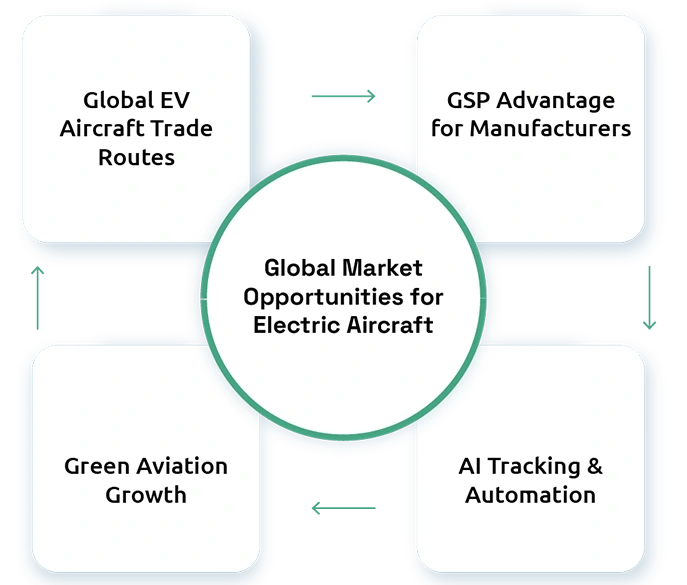
The global trade is growing across North America, Europe, the Middle East, and Asia. As nations support green aviation, new shipping routes for eVTOL parts are opening every year. Companies sourcing aircraft systems or control system electronics frequently depend on International freight services that provide clear tariffs, faster clearances, and smooth multimodal connections. Countries involved in the generalized system of preferences (GSP) may benefit from reduced Import duties and tariffs, improving affordability for manufacturers. Supply chain improvement is becoming a major specialty that businesses use advanced analytics, automated Import export documentation systems, and AI-driven tracking to minimize delays.
Conclusion
Electric aviation is moving into a scalable industry. For organizations importing eVTOL components, success will depend on trade agreements, selecting the right Incoterms, and working with IOR and EOR partners who understand aviation-grade requirements. As global trade opens and supply chains evolve, electric aircraft will not only redefine mobility but also create an advanced cross-border ecosystem changed by logistics approach, regulatory clarity, and continuous innovation.
DID YOU KNOW?
The U.S. Federal Aviation Administration (FAA) is developing Advanced Air Mobility (AAM) infrastructure and eVTOL integration programs to support the safe adoption of electric aircraft. The FAA’s eVTOL Integration Pilot Program aims to test real-world operations and collect data to help establish future aviation standards.
FAQs:
What is eVTOL technology, and why is it important for urban air travel?
eVTOL (Electric Vertical Takeoff and Landing) aircraft use electric propulsion for quieter, low-emission flight. They enable new urban air mobility solutions, including air taxis, cargo, and medical transport.
What are the key challenges in importing eVTOL components?
Importing eVTOL parts involves managing customs duties, tariffs, Incoterms like DAP/DDP, IOR responsibilities, sensitive logistics, and compliance with aviation regulations.
Which Incoterms are commonly used for shipping eVTOL parts internationally?
DAP (Delivered at Place) and DDP (Delivered Duty Paid) are widely used to define whether the seller or buyer handles duties, taxes, and customs documentation for sensitive aircraft components.
How can I ensure safe transport of sensitive eVTOL parts?
Use bonded warehousing, temperature-controlled storage, real-time shipment tracking, and work with logistics providers experienced in aviation-grade cargo handling.
What certifications are required for importing eVTOL components?
eVTOL components may require aviation safety certifications, technical approvals, and compliance documents depending on the destination country. Proper certification management helps avoid customs delays and supports smooth international imports