Introduction
Importing medical devices into India can be a difficult and highly regulated process, mainly for global manufacturers working across different Incoterms such as DAP and Delivered Duty Paid service structures. India’s regulatory environment places a strong focus on proper Import export documentation, agreement to the HTS Harmonized Tariff Schedule, and correct HS code classification to confirm product safety and approval. Without agreements, importers face delays, fees, and supply chain issues. This is why a safe CDSCO import license is necessary for any business looking to avoid regulatory issues, improve logistics, and confirm smooth shipment of medical devices through customs.
Who Can Apply for a CDSCO Import License?
A CDSCO import license can be applied for by any authorized organization involved in the importation of medical devices, manufacturers, Indian subsidiaries, distributors, or authorized brokers. These applicants must understand major Importer of Record responsibilities, because the IOR services provider is legally accountable for approval, Import duties and tariffs, product registration, and documentation accuracy. The Exporter of Record definition also becomes relevant when working oncross-border shipments, mainly when goods originate from countries that benefit from the Generalized System of Preferences (GSP), where tariff structures and eligibility conditions may differ. Confirming each step works with Indian regulations protects importers from delays and helps maintain smooth logistics planning.
Role of CDSCO in Import Licensing
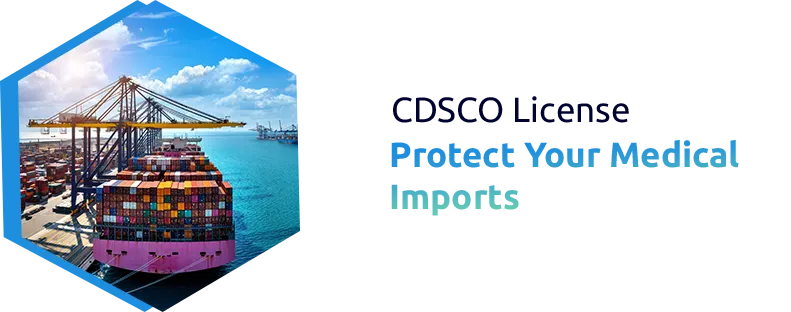
The Central Drugs Standard Control Organization (CDSCO) works as India’s main regulatory authority for medical devices. Its role includes evaluating device safety, verifying product standards, issuing registration certificates, and granting permits for importation. When a medical device enters India under DAP terms or through International freight services, the CDSCO license works as proof that the product meets all required quality and safety standards. This regulatory control safeguards patients, healthcare providers, and supply chain customers. It also works the import cycle with HTS and HS code classifications, helping customs accurately calculate Import duties and tariffs. Without this license, even perfectly documented shipments may be held at ports, mainly delaying last-mile delivery services.
Avoid Medical Device Compliance Mistakes in India
Many organizations underestimate the difficulties of the Indian approval systems. Misclassified goods, incomplete documentation, labeling, and incorrect HS code usage are common issues that stop the supply chain. Even when live shipment tracking systems show a timely shipment, customs may still withhold cargo if regulatory approvals are missing. Supply chain optimization becomes difficult when shipments are repeatedly flagged for corrections. A strong understanding of import regulations, harmonized tariff schedules, and CDSCO requirements confirms greater predictability in logistics work.
Mistake: Ignoring Evolving Quality Control Orders (QCO)
Today, a basic license is only half the battle. Indian customs now enforces strict Quality Control Orders (QCO) and mandatory UDI tracking for medical equipment. Even if you use DDP shipping, missing these technical labels or failing a digital audit will lead to immediate cargo detention.An Importer of Record (IOR) acts as your legal anchor, making sure every device complies with the latest government rules. They take the legal risk and manage local certifications so you don’t have to. Their oversight keeps your medical equipment moving through the port and into healthcare facilities, clearing out the paperwork and expensive storage fees that stop most shipments.
How One Union Solutions Helps You Get CDSCO Licensing in India
We specialize in simplifying the regulatory process for businesses importing medical devices into India. Their team supports documentation preparation, HS code validation, approval checks, and works with officials to confirm that every requirement is met effectively. They also support importers by managing Importer of Record responsibilities, overseeing Import duties and tariffs analyses, and confirming that products are classified according to the Harmonized Tariff Schedule. Through integrated International freight services, live shipment tracking, and simplified customs work, One Union Solutions safeguards the complete import stages from global dispatch to last-mile delivery services. Their expertise confirms that medical device shipments arrive smoothly and without regulatory issues.
Conclusion
A CDSCO import license is not just a formal requirement; it is the support of a secure, compliant, and effective medical device import strategy in India. In a market strongly increased by tariff schedules, logistics restrictions, and regulatory standards, proper licensing protects businesses from import issues and confirms uninterrupted supply to healthcare providers. By working with approval experts like One Union Solutions, importers can guide regulations confidently, improve their supply chain, and confirm each shipment reaches its destination without delays.
DID YOU KNOW?
The Central Drugs Standard Control Organisation (CDSCO) is India’s national regulatory body for cosmetics, pharmaceuticals and medical devices.
FAQs:
Q1 My product was previously unregulated. Do I need a license now?
Yes. As of 2026, India has completed its transition to a fully mandatory licensing rules. Almost all medical devices—including software (SaMD), AI diagnostic tools, and even basic surgical instruments—now require either a formal MD-15 Import License or a quick online registration
Q2: Can I handle the CDSCO application directly as a foreign manufacturer?
No. Foreign companies cannot apply directly to the CDSCO. You must appoint a local Indian Authorized Agent (IAA) who holds a valid wholesale drug license. They act as your legal bridge, managing everything from your SUGAM portal account to responding to government queries.
Q3: How long does the 2026 approval process take?
It depends on the risk. Low-risk items (Class A) can sometimes be approved instantly or within 1–3 months. However, complex or high-risk items (Class C & D) still take 6 to 9 months because they require a deep technical review and sometimes a clinical data waiver justification.
Q4: Is the license permanent, or do I need to renew it?
Licenses in 2026 are generally perpetual (they don’t expire), but there’s a catch: you must pay a retention fee every 5 years. If you miss this payment deadline, your license can be cancelled immediately, stopping your supply chain in its tracks.
Q5: What are the new 2026 labeling requirements I should know?
Labels are now more strictly monitored. You must include a Unique Device Identification (UDI) for better tracking. Additionally, if you outsource your deep clean, you are now required to list the cleaning Permit License Number directly on your product label.