Introduction
The global medical equipment logistics market experienced important changes throughout 2025 as healthcare systems globally adapted to changing trade environments, rising shipping costs, and new regulatory systems. The logistics of medical devices, diagnostic instruments, and critical healthcare technologies became a major focus of global supply chain services, requiring precise handling, temperature control, and agreement with international export regulations. With advancements in freight forwarding services, comprehensive import-export support, and customs clearance support, the medical equipment sector began exploring affordable and sustainable methods to meet growing global demand. Businesses also used HS Codes and HTS Harmonized Tariff classifications to confirm smoother cross-border approval and effective tariff management under the Generalized System of Preferences (GSP) systems.
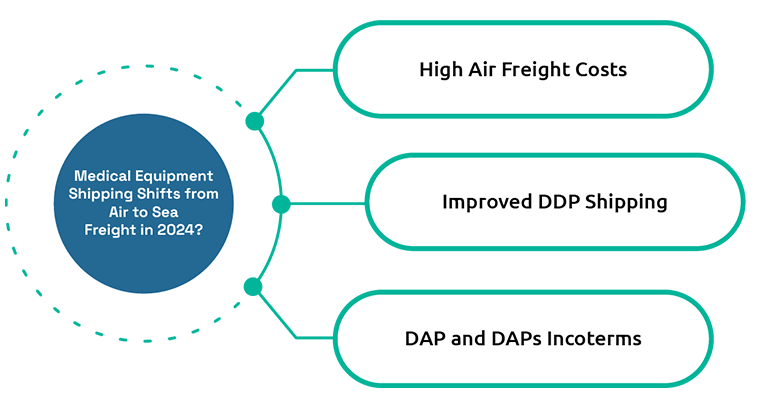
Medical Equipment Shipping Shifts from Air to Sea Freight in 2025?
In 2025, one of the fastest-growing logistics trends was the slow change of certain medical equipment shipments from air to sea freight. While air forwarding has long been the preferred method due to the urgent and sensitive nature of healthcare supplies, cost pressures and sustainability goals inspire manufacturers and cargo freight forwarders to reconsider their method of transport. Sea freight, supported by improved DDP shipping and Delivered Duty Paid logistics, became a viable option for non-urgent equipment such as imaging systems, diagnostic tools, and hospital tools. Through DAP (Delivered at Place) and DAPs (Delivered at Place Services) under modern Incoterms, importers could simplify complete delivery without compromising safety or agreement. The collaboration between importer of record services and exporter of record services confirmed that each transaction met export customs brokerage standards and worked with global trade facilitation.

Drivers for Continued Air Freight Reliance in 2025?
Despite the change toward sea transport, the medical industry continued to depend heavily on air freight for many reasons. Speed and temperature control remained non-negotiable for high-value goods such as critical diagnostic equipment. Air logistics provided unmatched agility in responding to health emergencies and global outbreaks, which made it indispensable. Freight forwarding companies providing international export regulations agreement and import export registration support confirmed that sensitive medical shipments met the highest safety standards. DDP services and importer of record services played a vital role in simplifying customs processes for urgent medical equipment, reducing clearance delays, and maintaining supply consistency. These logistics capabilities became part of a broader global trade facilitation initiative aimed at improving the resilience of healthcare supply chains.
Medical Equipment Shipping Global Impact in 2025?
The shift in shipping patterns had a measurable impact on the world’s logistics landscape. Ports with advanced medical cargo facilities saw increased activity, while major air hubs improved their cargo infrastructure for accurate healthcare logistics. Developing countries benefited through increased import-export business access under the Generalized System of Preferences, allowing for reduced tariffs on medical device imports. Exporter of record services confirmed approval with HS codes and HTS harmonized tariff documentation, while freight forwarding services and global supply chain services helped reduce lead times and improve inventory management. The global movement toward Delivered Duty Paid logistics reduced officials’ load for buyers, allowing smoother medical equipment distribution across borders. Also, this balance between air and sea transport created a more sustainable, cost-efficient, and compliant ecosystem for the healthcare industry.
Medical Device Industry Trends for 2025
device industry in 2025 was defined by innovation, sustainability, and logistics optimization. Automation in warehousing, predictive tracking, and IoT-allowed monitoring transformed how medical cargo was managed. Comprehensive import-export support became necessary for manufacturers expanding into emerging markets, with export register and import-export registration systems helping simplify approval. Growing collaboration between freight forwarding service providers, customs brokers, and importer of record services helped businesses navigate difficult Incoterms and tariff regulations. Many organizations adopted DAPs and DDP shipping methods to increase delivery flexibility while confirming regulatory consistency. These efforts showed a broader commitment to strengthening global trade facilitation and making healthcare logistics more transparent and effective.
Conclusions
The year 2025 marked a turning point in medical equipment logistics, with the industry weighing between air freight dependability and sea freight affordability. Supported by advanced logistics infrastructure, freight forwarding services, and an importer/exporter of record service, the industry demonstrated how innovation and agreement can coexist. Moving forward, global supply chain services and international export regulations will continue to define how the world manages critical medical equipment logistics, confirming entry, agreement, and efficiency remain top priorities.
DID YOU KNOW?
In a survey of medtech leaders, 63% of respondents agreed that digital therapeutics will have a major impact on the industry over the next 10 years. According to Frost & Sullivan, the US market for digital therapeutics is projected to grow at a compound annual growth rate of 29.8% between 2020 and 2025.
FAQs:
Q1. Why did medical equipment shipping shift from air to sea freight in 2025?
The shift occurred due to rising air freight costs and sustainability goals. Non-urgent medical equipment, like imaging systems and hospital tools, began moving via sea freight, supported by DDP and DAP logistics for cost-efficient and compliant delivery.
Q2. What factors drove continued air freight use in the medical sector?
Air freight remained essential for time-sensitive, high-value shipments such as vaccines and diagnostic devices. Its unmatched speed, temperature control, and reliability kept it vital for global healthcare logistics.
Q3. How did the Generalized System of Preferences (GSP) impact medical logistics in 2025?
The GSP enabled developing countries to import and export medical equipment at reduced tariffs, simplifying customs processes and encouraging global healthcare trade expansion.
Q4. What role did the importer and exporter of record services play in 2025?
Importer and exporter of record services ensured compliance with international export regulations, managed HS Code classification, and streamlined customs clearance for medical shipments across borders.
Q5. What were the key medical device industry trends in 2025?
Key trends included automation in warehousing, IoT-based tracking, predictive logistics, and growing reliance on freight forwarding services for end-to-end visibility and compliance.