
Insight
Despite the high availability of digital technology, paper-based documentation remains in use in many supply chains. Paper documentation slows down the processes, introduces errors, and raises costs. Delays in the entire supply chain can happen in the shipment of critical equipment, such as IT/data center equipment or medical devices, due to the time-consuming paperwork. Each extra day in service leads to storage charges and deadlines.
Trading organizations and governments worked harder to digitalize trade documents in 2024. The reason is that electronic filing, approvals, and licensing will assist in hastening the process of clearing with customs and improve accuracy and transparency between booking shipments and delivery. The changes will lead to convenience in the logistics and greater dependability among all the participants involved.
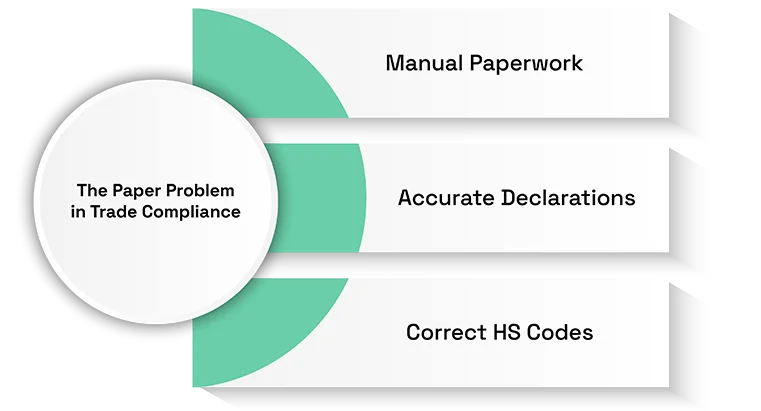
The Paper Problem in Trade Compliance
Trade compliance depends on precise paperwork, but manual forms are error-prone and slow. Customs duty management requires accurate declarations to avoid costly fines. Implementing correct HS code and hts code ensures shipments qualify for preferential tariffs under agreements like the Generalized System of Preferences. However, paper documents increase the risk of missed codes or omitted details.
Registration of import export and registration of import export licenses is tedious when manually done, which creates blockages, particularly when it comes to delicate shipments such as healthcare or aviation equipment. These delays trickle down the supply chain, impacting costs and loss of customer confidence.

What Challenges Do Businesses Face When Adopting Digital Trade Documentation?
Although digital documentation has improved trade efficiency, businesses may still face challenges during adoption. Different countries use different digital platforms, creating complications in system connection & data exchange. Companies may need to improve internal processes, train teams, & maintain data security while changing from paper-based workflows. Addressing these challenges helps organizations achieve smoother digital trade operations & better supply chain management.
How Digital Documentation Changed the Game in 2025
Digital documents replaced many paper forms and manual routines in 2025. Customs declarations, import export registrations, and license renewals became electronic processes. Systems now automatically check HS codes, ECCN classifications, and tariff data, flagging mistakes and speeding approvals. Digital customs paid proofs remove ambiguity on tax status and clearance permissions.
For sensitive cargo like automotive or medical equipment, this means significantly faster passage through border control. Digital tools provide a clear, real-time audit trail, boosting confidence for freight forwarder, customs brokers, and importer of record alike.
The Power of the Single Window System
The single window system centralizes the digital platform on which all trade documents and clearance procedures are realized. It connects the freight forwarder, customs broker, and the importer of record in a common environment. Such a connection allows for real-time information exchange, making clearance decisions instantly, and calculating duties easily. The most current information regarding shipment status, tariffs, and customs requirements is available to responsible parties. Single window platforms ensure the elimination of errors caused by duplicating documents and accelerate approvals by eliminating paperwork redundancy. Such a system is essential in the management of cargo that is sensitive to time, like IT equipment and medical equipment.
How Freight Forwarding Benefits from Digital Docs
Digital docs have transformed freight forwarding workflows. Without paper delays, clearing and forwarding become faster and more reliable. Freight forwarder benefit from automated document approval, reducing manual labor and mistakes. Air forwarding and ocean freight processes gain from immediate customs updates, enabling better scheduling of shipments. White glove logistics, required for fragile and high-value shipments, also improve since digital documentation assures all necessary permits and labels are accurate before transport. This reduces damage, delays, and improves customer satisfaction.
Importer of Record: Making It Easier
For the importer of record, digital systems simplify a traditionally complex role. Real-time updates and automation minimize errors in import documentation services and facilitate import export registration management. Proper digital records help ensure compliance with import taxes and customs duties, reducing the risk of hold-ups. Digital IOR services support quick clearance of specialized cargo, including IT servers and medical devices, minimizing costly downtime and keeping supply chains moving even during global trade fluctuations.
White Glove & Specialized Services
High-value shipments require white glove service to guarantee delicate handling. This premium care covers fragile item transportation, asset protection delivery, and onsite move and installation service. Digital documentation supports scheduling and regulatory compliance, guaranteeing smooth execution. White glove logistics uniquely preserves the condition and integrity of sensitive equipment, like healthcare devices or aviation components, earning high customer trust with reliable delivery and setup.
Accurate and Efficient Freight Calculations
Precise freight calculations prevent billing surprises. Digital tools help compute volumetric weight and chargeable weight with accuracy, essential for budgeting transportation costs. Air freight chargeable weight calculators and air cargo cost calculators assist freight forwarder and importer of record in forecasting expenses and optimizing package dimensions. Proper freight calculation is especially critical for shipments sensitive to container rates or subject to storage fees like demurrage and drayage.
The Future of Digital Trade & Contracting
Governments globally pushed hard for digital transformation in trade documentation in 2025. Single window systems and e-documentation initiatives accelerated customs clearance and improved compliance. This progress means fewer manual errors and shorter clearance times for delicate shipments. Better digital contracting and documentation help all parties manage high-value goods through complex international supply chains. The future points toward full digital integration, further simplifying logistics workflows for sensitive IT, healthcare, aviation, and automobile equipment.
Conclusion
Paper documentation rapidly appears as a tie-up to an otherwise digital supply chain. The introduction of digital documents and single window systems in 2025 significantly increased efficiency, transparency, and compliance. These tools can be helpful to all the members of the chain, such as freight forwarders, customs brokers, and importer of record. One Union Solutions uses these developments to offer sound logistics to deliver on essential deliveries. We guarantee faster shipments that are in compliance and safe. Adopting electronic processes is essential in consistently satisfying the increasing world expectations.
Did You Know,
According to a government trade report, investments of over $350 billion at the start of 2025 targeted digital infrastructure upgrades for supply chains, cutting clearance times by up to 40%, especially benefiting high-value equipment shipments.
FAQ’s
1. Can digital trade documents reduce customs delays?
Yes. Digital documents reduce manual errors, enhance document accuracy, & help customs approvals process shipments more efficiently.
2. Which industries benefit most from digital trade documentation?
Industries such as IT, healthcare devices, aviation, & automotive benefit across faster customs clearance and better regulatory compliance.
3. Are digital trade documents legally accepted for international shipping?
Many countries now accept electronic trade documents, though requirements vary depending on local customs rules.
4. How does a Single Window system support international trade?
It allows businesses to submit trade information through one digital platform, minimize duplicate paperwork, & improving coordination between government agencies.
5. How do digital trade documents improve supply chain visibility?
Digital trade documents provide real-time shipment updates, improve stakeholder communication, & help businesses track approvals, compliance, and delivery status.