Ocean freight remains the backbone of global trade, transporting commodities across continents and connecting distant markets. The cost of shipping products by water fluctuates due to various factors. Understanding these characteristics is critical for international trade businesses and individuals. In this detailed article, we’ll look at the five main elements that influence ocean freight pricing.
Energy Expenses Driving Maritime Logistics Costs
Shipping costs depend heavily on the energy consumed by ships. When energy prices rise, Freight becomes more expensive. Conversely, when energy prices fall, shipping costs may decrease albeit temporarily, however since these rates fluctuate constantly, effective planning becomes challenging. Under new regulations, ships are expected to utilize more environmentally friendly energy alternatives. While this is beneficial from an environmental perspective , it drives up operational costs, thereby making freight costs rise quite easily, consequently, businesses must exercise extreme caution in their financial planning.

Ways to Manage Ocean Freight Costs Effectively
Businesses can reduce shipping costs by implementing complete, freight planning & ocean freight management. Choosing the correct shipping method, making good use of container capacity, and preparing documents on time all supports to keep costs under control. Good logistics solutions increase delivery times & cost control. Smart planning saves money, reduces delays, & makes sure that global shipment runs smoothly and efficiently.
Monitoring freight costs and planning shipments advance can also help businesses save money. Working with professional logistics partners simplifies the shipment process. These methods help companies in handling ocean freight more effectively & improving overall supply chain performance.
Dynamics of Supply and Demand
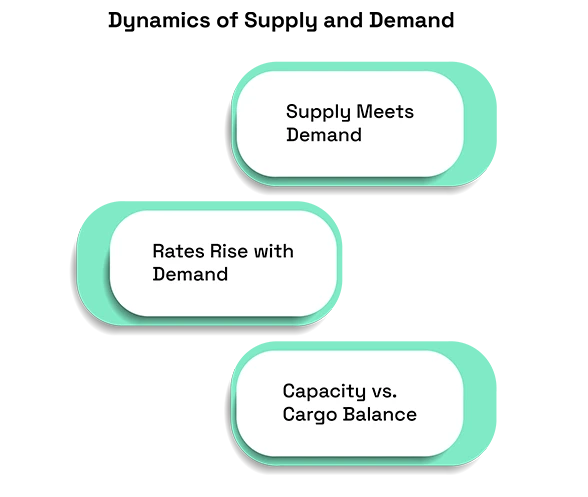
The basic economics of supply and demand are critical in establishing maritime freight prices. Rates tend to rise when demand for shipping space exceeds available capacity. Rates may fall during periods of oversupply as shipping companies compete for cargo to fill their cargo ships.
Seasonal variations and global economic situations also have a significant impact on demand. For example, during peak seasons such as the holiday season, demand for shipping increases, typically resulting in increased charges due to restricted capacity available.
The underlying economics of supply and demand have a significant impact on maritime freight rates. One Union Solutions understands how market variables can influence interest rates. Rates rise when demand exceeds available capacity. Rates may fall during periods of oversupply, affecting overall logistical costs.
Capacity and Utilisation of cargo ships
Ship size and availability have a considerable impact on freight charges. Larger cargo ships provide economies of scale, lowering costs per container and possibly lowering freight rates. If these cargo ships are underutilized as a result of decreasing cargo volumes, shipping corporations may hike tariffs to preserve profitability.
Furthermore, vessel availability is critical. Congestion at cargo ships, delays in loading/unloading, and unforeseen disruptions (such as the Suez Canal blockage) can diminish vessel availability, leading freight prices to rise due to increased demand for limited shipping space. The size and availability of cargo ships have a considerable impact on freight pricing.
Vessel availability plays a big role in freight costs. When ports are crowded, loading or unloading is delayed, or unexpected events happen—such as the Suez Canal blockage—fewer ships are available. When shipping space becomes limited and demand stays high, freight prices increase. The number and size of available cargo ships directly affect ocean freight rates.
Costs of Operations and Industry Regulations
Operational costs account for a sizable component of maritime freight pricing. The whole cost structure includes maintenance, labor, insurance, and compliance with tight industry requirements. Compliance with safety and environmental regulations, for example, involves investments that are ultimately reflected in freight rates.
Furthermore, geopolitical events and governmental shifts can disrupt trade routes or impose additional costs, influencing shipping rates. Tariffs, trade agreements, and penalties are also important factors in affecting the cost of shipping products across oceans.
Shipping rates are directly influenced by geopolitical events, policy changes, tariffs, and trade agreements.
Infrastructure and Technological Progress
Technological advancements and infrastructure upgrades have a direct impact on ocean freight pricing. Port efficiency, improved terminal facilities, and streamlined logistics operations minimize turnaround times and costs, potentially resulting in lower freight rates.
Similarly, improvements in port infrastructure, cargo handling systems, and logistics operations can influence shipping rates and improve overall supply chain efficiency.
How does infrastructure development impact ocean freight costs?
Infrastructure development, such as modern ports, advanced terminals, and efficient cargo handling systems, helps reduce loading and unloading time, which can lower overall shipping costs.
Better infrastructure also improves transport turnaround time and reduces congestion at the port, making global trade more efficient.
It supports smoother logistics operations and helps businesses manage shipping delays more effectively.
Conclusion:
Ocean freight rates are shaped by a wide range of economic, environmental, and geopolitical factors. Understanding these elements is essential for businesses to navigate the complexities of global trade and make informed decisions about logistics and supply chain management. As international trade dynamics continue to evolve, companies that rely on ocean shipping must stay updated on the forces driving these changes. Factors such as, global demand, port congestion, and trade regulations can all influence freight costs and shipping efficiency.
Did You Know:
Supported by technology and regulatory frameworks, offers a scalable solution to improve sustainability across global supply chains.
FAQs
1. What factors affect ocean freight costs?
Ocean freight costs are influenced by factors such as global demand, port congestion, shipping capacity, trade regulations, seasonal fluctuations, and supply chain disruptions. These factors can significantly impact freight rates and transit times.
2. How to reduce ocean freight cost?
Efficient packaging and container utilization can lead to significant cost savings in ocean freight shipping. Ensuring your goods are properly packaged and containerized reduces the risk of damage, preventing losses associated with cargo spoilage or insurance claims.
3. Why are ocean freight rates so high?
Ocean freight rates are high due to a combination of factors, including port congestion, container shortages, and longer transit routes. Additionally, GRIs by ocean carriers and geopolitical disruptions also contribute to the rising costs.
4. How to calculate ocean freight rates?
Calculating sea freight costs depends primarily on whether your shipment fills an entire container or shares space, known as actual weight or total volume (CBM). The basic calculation relies on assessing your cargo’s physical dimensions and weight to determine the total billable cost
5. How much is ocean freight per kg?
Ocean freight is usually not charged per kg for full containers; it is priced per container (FCL) or by volume (CBM) for shared shipments (LCL).
For LCL shipments, the cost can roughly range from $1 to $5 per kg, depending on route, cargo type, and shipping demand.