Introduction
As businesses increase their AI systems and data centers, there is an increasing demand for GPUs, AI servers, & high-performance computing (HPC) technology. But shipping and customs clearance are only two parts of importing this equipment. Before shipping, companies have to check GPU import compliance, export controls, customs regulations, product approvals, and required documents. Also, they have to verify any required licenses, destination country regulations, and the correct product classification. For GPUs, servers, & other expensive computer equipment, proper import compliance helps companies avoid common document problems and more efficiently schedule foreign shipments.
Why Importing GPUs and Advanced Computing Equipment Is Complex
Importing GPUs, AI servers, and cutting-edge computer equipment might be difficult because they are costly and may have severe trade rules. Depending on their destination, end user, & technical features, some advanced chips and computing systems can require export licenses or extra inspections. Countries also have different import laws. Before shipping, companies have to check import permits, product approvals, and local customs processes. They also have to check the goods value, country of origin, and correct HS code.
Customs inquiries, extra costs, or shipment delays may result from missing documents or incorrect product details. Due to export rules or the companies receiving the equipment, certain shipments may also be impacted by limitations. These problems could cause issues with planned delivery to data centers and other locations.
Companies may better plan foreign shipments, compile the required documents, and detect these needs early with proper GPU import compliance.
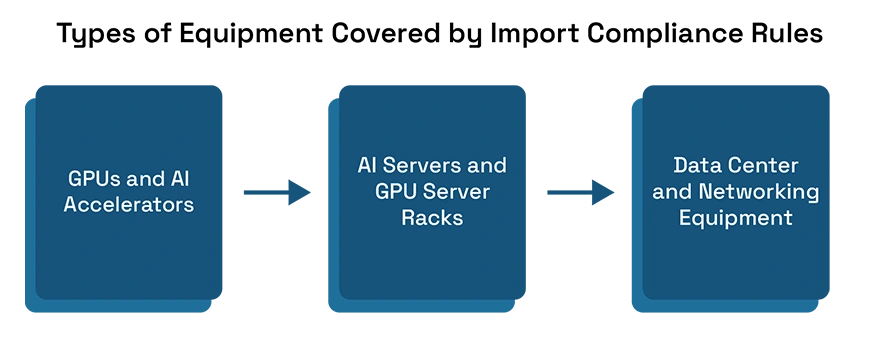
Types of Equipment Covered by Import Compliance Rules
Import compliance restrictions may apply to many types of equipment used in AI systems and data centers. The standards change based on the goods, its technical features, and the country from which it is being imported.
GPUs and AI Accelerators: GPUs and AI accelerators are used to train AI models, handle large amounts of data, and carry out machine learning tasks. Certain advanced computer processors may be sensitive to export controls or specific licensing demands. Before shipping, companies should check the product specifications & any applicable trade rules.
AI Servers and GPU Server Racks: AI servers contain the CPUs, memory, and other parts required to operate AI applications. GPU server racks connect together many computers to complete large processing tasks. Importers must check the correct customs classification, product value, shipping documents, & any other approvals for these systems.
Data Center and Networking Equipment: Data centers store and link servers using storage systems, switches, routers, firewalls, and fiber optic equipment. These products could have different HS codes and import regulations. Some networking equipment may also need local approvals, depending on its specifications and destination country.
Power and Liquid Cooling Equipment: AI servers require a reliable power source and proper cooling to function properly. UPS systems, power distribution units, cooling distribution units, & heat exchangers all help with the control of power and heat in data centers. Importers should examine customs laws, electrical safety requirements, and any product certifications required by the destination country.
HS Codes and Customs Classification for GPUs and Servers
Choosing the correct HS code for GPUs, servers, processors, and networking equipment is an important part of the import process. Depending on their destination, end user, & technical features, some advanced chips and computing systems can require export licenses or extra inspections.
The code is determined by the product’s type, features, and planned use. Customs officials use AI server customs classification to identify goods and apply the correct import costs. Businesses must provide detailed product details, technical details, country of origin, and calculated value.
Correct customs valuation of computer hardware helps identify the value used to calculate the proper duties and taxes. Incorrect codes or product data may cause tariff differences, customs issues, and shipment delays. When importing cutting-edge computer equipment, proper classification helps GPU customs clearance.

Importer of Record (IOR) for GPUs and Advanced Computing Equipment
The Importer of Record for AI servers handles import declarations, required documents, applicable tariffs and taxes, and local customs regulations. The IOR is different from a customs broker, who handles customs processes, a freight forwarder, who handles shipping, a consignee, who receives the shipment, & an end user, who uses the equipment.
IOR for data center equipment can help companies handle global import requirements. An IOR, however, cannot replace the need for an export license or product approval. Before shipping advanced computing equipment, these must be checked separately.
Common Import Compliance Challenges for GPUs and AI Servers
Importing GPUs and AI servers can be challenging when companies do not follow all customs and trade regulations. Using the wrong HS code or product description can result in incorrect duty calculations and customs requests. Missing export licenses or incorrect data about the final user and intended use may result in issues. Advanced computing equipment cannot be imported into some countries until certain product certificates are acquired. Inaccurate product value or country of origin information could result in further research. Delays may also result from problems between the shipment documents, packing list, and commercial invoice.
If the receiving company or destination country depends to trade restrictions, companies may be subject to further review. Delivery may be delayed by customs inspections or pending product approvals. Businesses may avoid common GPU import compliance issues by checking these standards and documents before to shipping.
Conclusion
Planning is required when importing AI servers and GPUs. Before shipping, companies should check export regulations, HS codes, documents, product approvals, and import procedures. These processes allow smooth data center projects and save delays. To help companies in handling import requirements and foreign shipments, One Union Solutions provides IOR and logistics services.
Did you know
The Data Center GPU Market is valued at USD 18.69 billion in 2025 and is projected to grow at a CAGR of 31.7% to reach USD 222.8 billion by 2034.
FAQ
What should companies check when importing AI equipment for a new data center?
Before shipping, they should verify import and export rules, equipment approvals, customs documents, power and cooling requirements, and final delivery plans.
Why should companies check import duties before shipping servers?
Checking customs and taxes early allows companies to better calculate the landing cost of equipment and plan their import expenses.
How can businesses reduce delays when importing GPU racks?
Before shipping, companies should verify rack dimensions, weight, product details, documents, import approvals, and delivery plans. This helps in avoiding typical planning issues.
Can companies change the destination of a GPU shipment after dispatch?
A change of location may require the use of new customs documents or additional export-control checks. Companies should double-check the rules before rerouting the shipment.
How can companies prepare for importing high-performance computing equipment?
Before shipping, they should identify the equipment, verify the IOR, provide proper documents, check export and import regulations, and plan transportation and delivery.