Introduction
High-Performance Computing HPC equipment, such as AI servers, GPU systems, storage systems, & HPC systems, plays an important role in modern technologies like AI, machine learning, cloud computing, & big data processing. As global demand for AI systems continues to grow, companies are increasingly required to move HPC equipment across countries for deployment in data centers.
However, shipping HPC equipment globally is not simple. Even minor mistakes in documentation or compliance can result in delays, penalties, or shipment rejection. For AI companies & data center operators, understanding the complete shipping process is important for smooth global operations.
Why High-Performance Computing Equipment Is Critical for AI Infrastructure
Advanced computing systems are designed to process large-scale datasets & perform complex measurements at high speed. They are widely used in AI model training, scientific research, financial modeling, & cloud computing environments. AI companies rely on HPC systems to train large AI & machine learning models faster, process real-time data analytics, support cloud-based applications & services, & improve computing accuracy & performance. As AI adoption increases globally, the demand for HPC hardware continues to rise, making global shipping an important part of global AI infrastructure development.
Why HPC Equipment Shipping Is More Complex Than Standard IT Hardware
Transporting HPC equipment is more complex than standard electronics due to its high value & strict regulatory designation. These systems are considered high-value technology, sensitive data center systems, & sometimes dual-use technology used for both commercial & research purposes. HPC hardware also requires specialized packaging to protect from vibration, heat, & moisture during transit. Real-time tracking & secure logistics management are often necessary due to the high cost of equipment. Customs clearance processes are more detailed compared to standard IT hardware shipments. Therefore, proper compliance planning is important to ensure smooth global shipping.
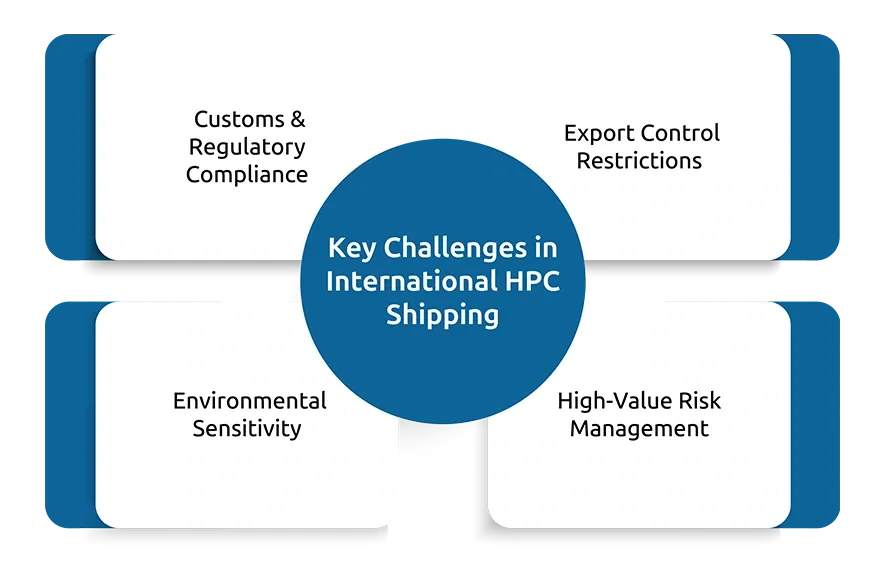
Key Challenges in International HPC Shipping
Customs & Regulatory Compliance
Each country has specific import rules, duties, and documentation requirements for high-end computing equipment.
Export Control Restrictions
Some HPC components fall under controlled technology rules requiring special approval before shipment.
Environmental Sensitivity
Temperature, humidity, & vibration can damage GPUs, CPUs, & memory systems during transit.
High-Value Risk Management
Due to high cost, HPC shipments require insurance, tracking, & secure handling guidelines.
Because of this, many countries impose strict export control rules, import licenses, & customs inspection on HPC shipments.
Best Shipping Methods for HPC Equipment
Air Freight
Air freight is the rapidly option for shipping HPC equipment, with transit times of 2–7 days. It is ideal for urgent AI systems deployments & high-value hardware, offering faster delivery & reduced transit risks.
Sea Freight
Sea freight is a cost-effective solution for large or bulk HPC shipments. Transit typically takes 20–40 days and requires strong, secure packaging to secure sensitive equipment during transport.
Hybrid Logistics Model
Hybrid logistics combines air & sea freight to balance speed & cost. It is commonly used for large-scale HPC & data center deployments that require a flexible shipping solution
Packaging Standards for Safe HPC Transport
Proper packaging is important to protect high-performance computing HPC equipment during global transportation. Sensitive components should be secured using ESD safe packaging materials & protective wooden crates to reduce the risk of damage from vibration or impact. Moisture & humidity protection helps prevent environmental damage, while real-time monitoring & tracking sensors allow businesses to monitor shipment conditions & location during transit, making sure of safe & reliable delivery.

Customs Compliance & Required Documents
Successful global transportation of HPC equipment depends on accurate customs compliance & complete documentation. Businesses should prepare important documents such as a trade Invoice, Packing List, or the air freight documents, export & import permits, HS Code grouping, & an End-User documentation. These documents help customs rules verify the shipment & ensure it meets local import rules. Incorrect paperwork can lead to customs delays, extra charges, fines, or even shipment rejection, making proper documentation an important part of the shipping process.
Importance of Importer of Record (IOR) in HPC Shipping
An Importer of Record IOR plays a vital role in the global shipping of high-performance computing HPC equipment by making sure that shipments follow local customs regulations & import requirements. The IOR is responsible for handling customs documentation, securing necessary permits, & handling required duties & taxes on behalf of the importer. Using an IOR helps businesses reduce customs delays, maintain compliance with import laws, simplify cross-border logistics, & support the timely deployment of AI systems & data center equipment across global markets.
Conclusion
Shipping high-performance computing equipment globally requires careful planning, regulatory compliance, & secure logistics execution. From customs documentation to packaging & shipping, every step plays a critical role in ensuring safe delivery of high-value AI infrastructure.
One Union Solutions provides end-to-end logistics support, including DDP, IOR, and EOR services, helping organizations ship HPC equipment globally in a safe, compliant, & effective manner.
Did You Know?
In 2025–2026, global freight demand continues to rise due to rapid growth in AI infrastructure, cloud computing, and high-performance computing (HPC) deployments, increasing pressure on international logistics networks.
FAQ
What is the safest way to ship HPC equipment internationally?
Air freight is the more secure option for shipping high-value HPC equipment because it reduces transportation time & managing risks. Using ESD-safe packaging & real-time tracking provides additional protection during the shipment.
Why is HPC shipping more complex than normal IT equipment?
HPC equipment is highly valuable, sensitive, & may be subject to export control rules & strict customs requirements. It also requires secure packaging, accurate documentation, & careful management during global transport.
How long does international HPC shipping take?
Air freight generally takes 2–7 days, while sea freight usually requires 20–40 days, depending on the destination and customs clearance. Transit times may also vary based on shipping routes & shipping demand.
What documents are required for HPC shipping?
Common documents include a trade invoice, packing list, shipping documents, HS code details, & any required import or export licenses. Accurate documentation helps make sure of smooth customs clearance & reduced unnecessary delays.
How does an Importer of Record help in HPC shipping?
An Importer of Record manages customs documentation, legal adherence, & applicable duties on behalf of the importer. This helps businesses simplify global transportation & reduce customs-related delays.