Global Demand for AI Servers
The rapid growth of artificial intelligence is increasing demand for high-performance servers, GPUs and supporting networking equipment across data centres worldwide. Businesses are expanding computing capacity to support AI training, inference and large-scale data processing, creating new demand for specialised IT infrastructure. This growth is also changing international equipment logistics, as high-value AI hardware must move across borders with careful planning for transportation, customs clearance, trade controls and final delivery.
Why does AI infrastructure create new logistics needs?
AI servers are based on powerful processors, GPUs, memory, storage and high speed networking components. A single deployment may involve multiple servers, racks, switches and supporting equipment arriving from different manufacturing locations.
This creates a logistics requirement that is different from shipping ordinary office IT equipment. deliveries can involve high-value hardware which needs controlled managing , detailed documentation and managed delivery to a specific data center location.
The logistics plan may also need to account for rack dimensions, equipment weight, loading restrictions and site-access requirements. When several units are being deployed together, delivery sequencing becomes important because the receiving facility may have limited unloading, storage or installation capacity.
Supply Chains Are Becoming More Geographically Distributed
AI hardware supply chains often cross several countries before equipment reaches the final data centre. Components can be manufactured in one market, assembled in another and distributed through regional logistics hubs before reaching the final customer.
This creates more customs and documentation touchpoints. Each movement can involve different import requirements, product classifications, country-of-origin considerations and commercial documents.
For businesses managing international AI deployments, visibility across the complete shipment route is therefore important.
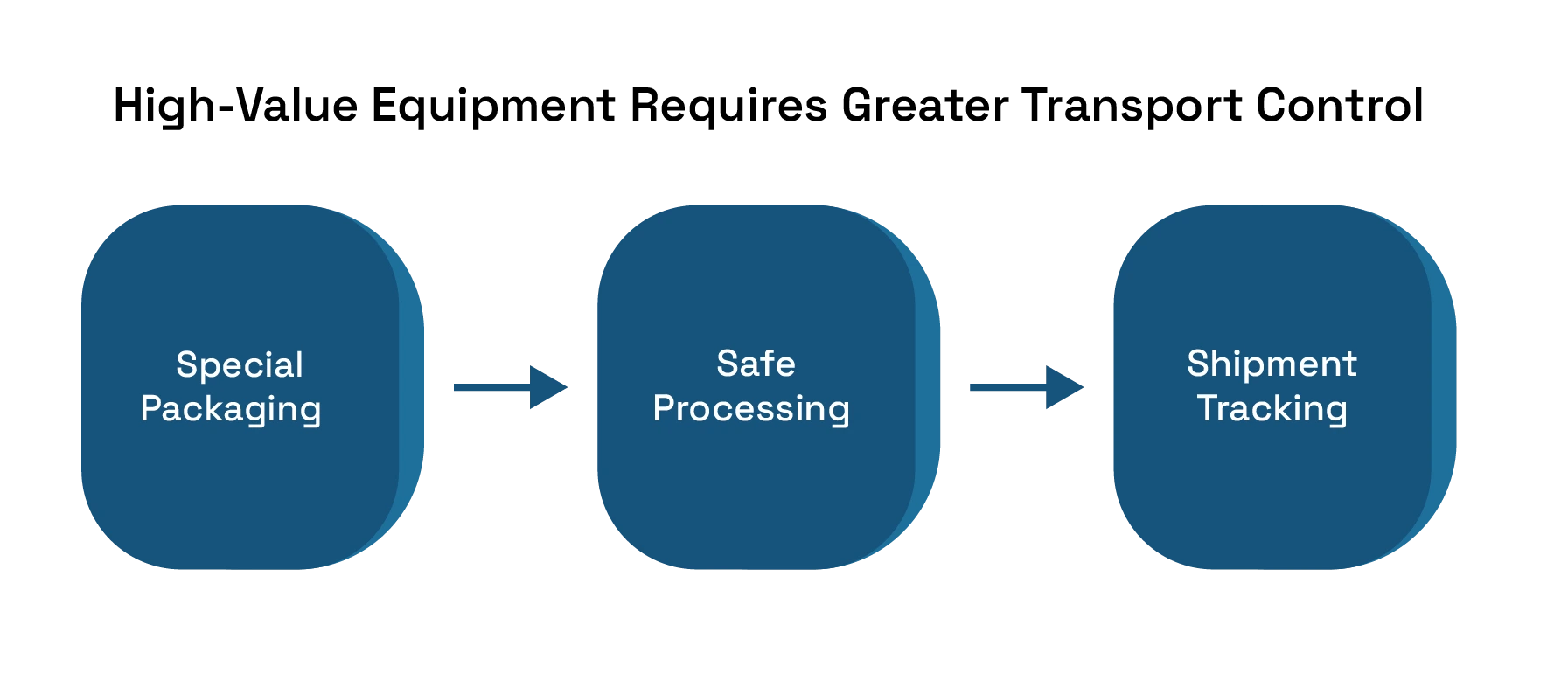
High-Value Equipment Requires Greater Transport Control
AI servers and GPU systems can represent a significant capital investment in a relatively small number of shipments. This changes the way companies approach international transportation.
Standard freight arrangements may not be suitable for high value computing equipment. Business may require safe processing, proper packaging, shipment tracking and carefully chosen routes of transport. The equipment is also exposed to physical damage and inappropriate environmental conditions in transit.
For larger deployments logistics teams may arrange global freight with special handling at airports, ports, warehouses and final delivery locations. It’s not just about getting the equipment there quickly, it’s controlling the shipment from beginning to end.”
Customs Classification Has a Direct Logistics Impact
The customs process is an important part of international AI hardware logistics. Servers, GPUs, networking equipment and related components must be accurately described and classified for import purposes.
The commercial invoice, packing list, customs declaration and supporting technical documentation should all agree with each other for the shipment. If there are differences between the physical equipment and the documents submitted, Customs may ask questions, do an extra review or cause delays.
Classification may also affect the duties, taxes and regulatory requirements applicable. For companies importing large amounts of AI infrastructure, it’s essential to get the classification right before shipping and not treat customs paperwork as an administrative step at the end.
Trade Controls Are Adding Another Layer
The international movement of advanced computing equipment can involve trade-control considerations in addition to ordinary customs requirements. Depending on the equipment, origin, destination, end user and intended use, additional screening or authorisation may be required.
This is particularly relevant to high-performance computing systems and certain advanced processors. Businesses therefore need to evaluate the regulatory status of equipment before dispatching it internationally.
A logistics provider can help with the shipping and customs paperwork, but the importer and other parties involved should be sure that the transaction is compliant with the relevant legal requirements. Trade-control checks should be part of shipment planning, not just when equipment gets to the border.
Data-Centre Deliveries Require More Precise Planning
The final delivery of AI servers can be more complicated than delivering standard commercial goods. Data centres often have controlled access, designated loading areas, security procedures and specific delivery windows.
Sometimes equipment might need to come in a certain order. For example, servers, racks and networking equipment may need to be positioned according to an installation plan, and not just delivered when there is transport capacity.
Logistics teams can manage customs clearance, temporary storage, transportation and final delivery around the schedule of the receiving facility in global projects. This reduces the chances that equipment will arrive at a site before the facility is ready to receive it.

Warehousing Is Becoming Part of AI Equipment Logistics
Regional warehousing can provide additional flexibility when AI infrastructure is being deployed across multiple locations. Equipment can be received, stored and released according to project requirements instead of being shipped directly from the manufacturing location to every individual data centre.
However, high-value computing equipment requires appropriate warehouse controls. Inventory records should identify the equipment accurately, while storage and handling procedures should reflect the size, value and technical sensitivity of the hardware.
For international deployments, a warehouse can also serve as a coordination point for customs-cleared equipment, staged deliveries and final-mile transportation.
International Import Planning Needs to Start Before Purchase
Logistics of AI equipment should start before the purchase order is signed. Importers can check the customs requirements, product classification, documentation, taxes, trade controls and delivery conditions of the destination country before committing themselves to a shipment.
The commercial terms also matter. The selected Incoterm® 2020 determines how certain transportation, customs and cost responsibilities are allocated between the buyer and seller. Businesses should understand who is responsible for export formalities, import clearance, duties, taxes and delivery at the destination.
Conclusion
Global demand for AI servers is changing international equipment logistics by increasing the need for specialised transportation, accurate customs documentation, trade-control review, secure warehousing and carefully coordinated data-centre delivery.
The movement of AI infrastructure is no longer simply a matter of shipping IT equipment from one country to another. High-value hardware, advanced computing components, complex supply chains and demanding installation schedules require logistics planning to begin well before the shipment leaves its origin.
Did You Know?
In 2026, the U.S. Department of Energy reported that AI training centres use thousands of specialised chips working together in tightly coordinated cycles, creating new power-demand and grid-planning requirements.
Frequently Asked Questions
What makes AI server logistics different from standard IT equipment shipping?
AI servers are usually heavier, more valuable and more sensitive, needing coordinated delivery of GPUs, racks and networking systems.
Do AI servers need special customs paperwork?
They require correct commercial & customs documents and additional requirements by product , destination & regulations.
Can I keep AI servers in a local warehouse before shipping them?
Yes. Regional warehouses are available for storing AI equipment until the data center has the appropriate stock , with handling and security controls.
How can organizations minimize delays when importing AI Network?
Prepare classification, documentation, trade-control checks and destination procedures before shipment, and coordinate delivery with the data centre.
Does the Incoterm® affect AI equipment logistics?
Yes. Incoterms® 2020 define how transportation, customs and costs are allocated between the buyer and seller.