Overview
Global hardware deployments rarely include sending one shipment to one country or closing the logistics process. IT systems projects can involve servers, GPUs, storage systems, networking equipment, switches, routers, racks, power-based hardware, or replacement units moving into several countries over weeks or months. Each destination can have different customs processes, import requirements, documentation rules, taxes, & product controls. When shipments are planned specifically without a common import planning , inconsistencies can appear between invoices, product descriptions, classifications, consignee details, and customs declarations. A coordinated approach helps companies manage these requirements across the full deployment rather than treating every shipment as an isolated delivery.
Why Global Hardware Rollouts Require Centralized Import Planning
Large deployments often start with a procurement plan, but the import process begins much earlier than the arrival of the first shipment. A company may purchase identical servers for facilities in five or ten countries, yet the import process may not be identical in each destination. The equipment could require different documentation, importer details, registrations, permits, or tax treatment depending on local rules. Product details can also affect classification and regulatory treatment. Planning these requirements before equipment leaves the origin country gives the project team time to identify who will act as importer, who will provide customs information, and which documents must accompany each shipment.
A centralized import plan is particularly useful when equipment moves in shipment waves. The first wave may contain core servers and networking equipment, followed by additional racks, storage units, GPUs, cables, replacement components, and spare units. If each wave is handled under different assumptions, customs declarations can become inconsistent even when the equipment belongs to the same project. Companies therefore need a destination-by-destination view of the rollout, including the importer arrangement, customs broker management, product details, valuation, tax requirements, supporting documents, or expected delivery sequence. This creates a common framework while still allowing each country to follow its own customs process.
Managing IOR Across Multiple Countries
The Importer of Record (IOR) manages the import transaction when a company cannot act as importer in a destination. This can include customs declarations, duties and taxes, import documentation, and applicable product requirements. Since IOR rules vary by country, the same arrangement may not work across every market.
For a multi-country rollout, companies should confirm the IOR arrangement before each shipment. Some destinations may require a local entity or registration, while others may have additional product requirements. The IOR should match the shipment, parties involved, customs requirements, product details, and intended end use.
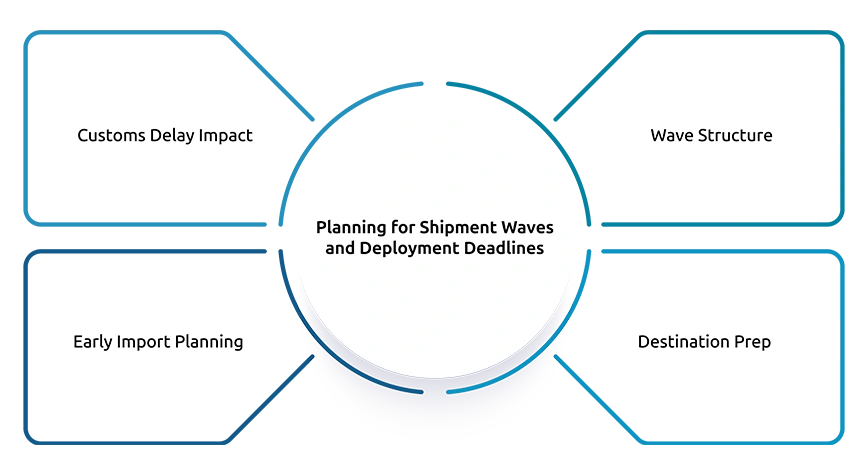
Planning for Shipment Waves and Deployment Deadlines
Hardware rollouts are often connected to strict installation schedules. A delayed customs clearance can affect site readiness, engineering work, testing, and the planned start of operations. For this reason, companies should not wait until the equipment arrive the destination country to confirm the import process. The import planning should be consistence with the deployment calendar, starting with the equipment that has the longest lead time for documentation, approvals, or customs preparation.
Shipment waves can also be structured around operational priorities. Core infrastructure may arrive first, while additional capacity, replacement hardware, and non-critical components follow later. This approach gives logistics teams greater visibility into what must clear customs first and what can be delivered during later phases. It also allows companies to prepare destination-specific documents and customs instructions before each wave leaves the origin.
Returns, Replacements and Reverse Logistics
Global hardware deployments also create a reverse flow of equipment. Faulty components may need to be returned to a manufacturer, repaired and sent back, replaced under warranty, or moved between facilities. These movements can create customs considerations that are different from the original import. A company that plans only the inbound shipment may discover later that returning the same hardware involves additional documentation, customs procedures, or tax considerations.
Reverse logistics should therefore be considered during the initial rollout planning stage. The project team should know which entity will manage returned equipment, where repairs will take place, and how replacement units will be imported. Serial numbers and equipment records can also help connect the outbound return with the original import transaction where required. Having this information available before the first deployment reduces the risk of treating warranty returns as ordinary commercial imports when a different customs procedure may apply.
Coordinating Brokers, IOR and Internal Teams
An IOR does not replace every party involved in the customs process. Customs brokers or representatives may prepare and file declarations under the appropriate authority, while the importer remains responsible for the import transaction according to local law. Manufacturers and exporters also retain responsibilities for accurate product information and export documentation. Procurement teams, logistics providers, finance teams, technical engineers, and compliance specialists may each hold information needed for a successful shipment.
For a multi-country deployment, these roles should be defined before shipment release.

Conclusion
Global hardware rollouts require more than international transportation. When servers, GPUs, storage systems, networking equipment, and spare parts move across multiple countries, customs and import requirements become part of the deployment plan itself.
A structured import plans gives project teams a clearer view of what must happen before each shipment reaches the destination. By planning IOR, customs documentation, shipment waves, spare parts, and reverse logistics together, companies can developed an import process that supports the technical deployment instead of treating customs as a separate final-stage activity.
Did You Know?
In 2025, new tariffs and other import measures affected US$2.64 trillion of global imports, equal to 11.1% of total world imports, according to the WTO.
FAQs
What is an IOR in a global hardware rollout?
An Importer of Record handles the import transaction in the destination country, including applicable customs documentation, duties, taxes, and import requirements.
Do companies need a separate IOR for every country?
Not always, but the importer arrangement must be confirmed for each destination because local entity, registration, customs, and product requirements can differ between countries.
How should companies manage customs for multi-country hardware shipments?
Companies should prepare destination-specific import documents, product information, classifications, importer details, and broker instructions before each shipment wave.
Are spare parts subject to separate import requirements?
Yes. Replacement, warranty, repaired, or returned components can follow different customs procedures, documentation, or valuation requirements from the original hardware shipment.
How can companies prepare for hardware returns and replacements?
Companies should plan reverse logistics in advance, including the responsible entity, return documentation, equipment records, repair location, and import process for replacement units.