Traditional customs clearance mainly depended on paperwork, manual checks, customs brokers, & communication between importers, exporters, freight forwarders, & government laws. As global trade becomes faster & more difficult, this past approach is becoming difficult to handle.
The classification of shipments, the preparation of declarations, the evaluation of risks, and the movement of products across borders are all being altered by the next generation of customs automation.
Artificial intelligence (AI), machine learning, automation, application programming interfaces (APIs), electronic paperwork, and digital customs platforms are examples of technologies that assist firms in reducing human labor while improving compliance.
Why Customs Automation Is Becoming More Important
International supply chains now added with multiple countries, suppliers, logistics providers, products, & regulatory needs. A single shipment can require commercial invoices, packing lists, certificates, licenses, product approvals, tariff classifications, valuation information, & other supporting documents.
Manual processing creates many risks. Data can be entered incorrectly, important documents can be missing, & the same information may need to be entered into different systems. These problems can lead to customs queries, shipment delays, additional costs, or compliance issues.
Customs authorities are also processing increasing volumes of global trade. Automation allows authorities & businesses to manage larger amounts of data without depending mainly on manual processes.
AI Is Changing Customs Risk Management
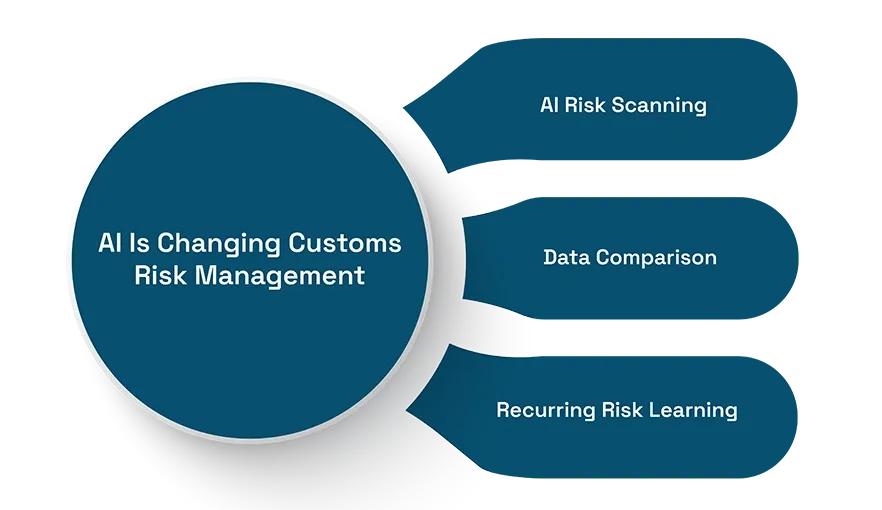
The next generation of customs systems is anticipated to heavily rely on artificial intelligence. AI-supported systems can scan massive amounts of trade data and identify shipments that might require extra attention rather than going over each cargo in the same manner.
An automated system might, for instance, compare data from invoices, prior declarations, tariff classifications, shipping values, country of origin, and importer records. After then, unusual patterns might be reported for more investigation.
Recurring dangers can also be identified with the aid of machine learning. Automated systems can learn from trends if specific product, value, origin, or categorization combinations commonly lead to customs disputes.
This does not mean that AI replaces customs officials or compliance professionals. Instead, it can help direct human attention toward higher-risk transactions while allowing routine shipments to move through more easily.
Automated HS Code Classification
Accurate tariff classification is one of the most important parts of customs compliance. The HS code determines how a product is classified and can influence applicable duties, taxes, restrictions, & regulatory requirements.
Mainly, classification often involves reviewing product specifications & tariff schedules manually. For critical technical equipment, this can take considerable time.
Updated customs automation can use product descriptions, technical specifications, historical classifications, & tariff databases to suggest potential HS codes. A compliance professional can then review the suggested classification before it is used in a customs declaration.
Automated classification can be mainly useful for businesses importing large numbers of products or handling repeated shipments across different markets.
Digital Documents and Paperless Customs
Another major development is the move from paper-based customs processes toward electronic documentation.
Invoices, packing lists, certificates, licenses, origin documents, and other information can increasingly be exchanged digitally. Automated systems can extract information from these documents and transfer relevant data into customs or trade management platforms.
This reduces repetitive data entry and can improve consistency between commercial documents and customs declarations.
Paperless processes can also make it easier to track documentation. Instead of searching through emails or physical files, businesses can maintain a centralized digital record of shipment information.

Predictive Customs Compliance
Automation is changing beyond simply processing customs declarations. The next generation of systems will mainly focus on predicting potential compliance problems before a shipment is submitted.
A system may identify that a product description is too vague, an HS code need review, a declared value appears inconsistent with previous shipments, or a main product may need an import approval.
This type of predictive compliance allows businesses to correct problems before goods reach the border.
For companies handling global shipments across multiple countries, this can be especially valuable because regulatory requirements differ between markets.
Automated Customs Workflows
Workflow automation can also minimize the administrative burden surrounding customs clearance.
A system can automatically assign tasks, request missing documents, send notifications, manage approval status, & handling records. If a shipment needs a specific license or certificate, the system can identify the requirement & notify the responsible team.
Instead of depending on spreadsheets & email chains, businesses can create structured workflows with clear responsibilities & deadlines.
The Role of Human Oversight
Despite the growth of automation, human expertise remains important. Customs regulations can be complicated, & automated systems may not understand every product, transaction structure, or regulatory exception correctly.
Businesses should therefore treat automation as a decision-support & process-management tool rather than assuming that every automated recommendation is correct.
Human review remains mainly important for product classification, customs valuation, origin determination, licenses, restricted goods, & other high-risk decisions.
Conclusion
Customs automation is changing from basic electronic filing toward intelligent, connected, & predictive trade management. AI can support risk identification & classification, digital documentation can reduce paperwork, APIs can connect different systems, & automated workflows can help businesses identify compliance requirements earlier.
The goal is not simply to make customs clearance faster. The bigger opportunity is to make Global trade more predictable, transparent, & compliant.
Businesses that prepare their product data, documentation, classification processes, & internal systems for greater automation will be better positioned as customs authorities and global supply chains become increasingly digital.
Did you know?
In Kazakhstan, digitalization helped reduce the processing time for transit declarations by 67% between 2017 and 2024.
FAQ
1. What is customs automation?
Customs automation uses technologies such as AI, machine learning, digital platforms, and automated workflows to streamline customs declarations, document processing, risk assessment, and compliance activities.
2. How does AI improve customs clearance?
AI can analyze large volumes of trade data, identify unusual patterns, support risk assessment, and help flag shipments that may require additional customs review.
3. Can customs automation help reduce shipment delays?
Yes. Automated document checks, data validation, classification support, and digital workflows can help identify potential issues before a shipment reaches customs, reducing avoidable delays.
4. What is automated HS code classification?
Automated HS code classification uses product descriptions, technical specifications, historical data, and tariff information to suggest an appropriate HS code. The classification should still be reviewed by a qualified customs or trade compliance professional.
5. Will customs automation replace customs professionals?
No. Automation can reduce repetitive administrative work and support decision-making, but human oversight remains important for complex classifications, customs valuation, regulatory requirements, restricted goods, and other high-risk transactions.