Introduction: Why Green Customs Matters in Global Trade
Environmental regulations are beginning to play a major part in international trade and customs compliance. Stronger rules are being implemented by governments to protect the environment and stop illegal trade in goods subject to regulations. In order to inspect imports and carry out these regulations, customs officials are now working more closely with green groups.
This implies that more than just charges, taxes, and standard shipping documents may be needed for customs clearance for importers. Before products may be traded, companies may require environmental permits, certificates, or product information, depending on the product and the country. Import rules may also be affected by agreements like the Basel, Montreal, and Minamata Protocols. Green Customs helps customs officials in supporting lawful trade while avoiding the illegal shipment of sustainable products. Companies can reduce compliance issues, delays, and unexpected costs by verifying environmental import requirements before shipment.
What Is Green Customs?
Green customs refer to the use of customs processes to maintain legal international trade while helping to environmental protection. Harmful waste, harmful substances, ozone-depleting compounds, and other regulated products are examples of environmentally sensitive goods that customs officials can help in detecting and controlling. Launched in 2004, the Green Customs Program joins environmental and customs organizations to improve this effort. To check that regulated goods follow to the required regulations, customs officials work with environmental groups and other border authorities. This is important since trade rules that must be followed to at the border are part of many environmental agreements.
Environmental import compliance is becoming an important part of customs compliance as environmental rules grow more connected with global trade. Green Customs avoids the illegal transportation of ecologically sensitive goods while helping countries in supporting lawful and sustainable trade.
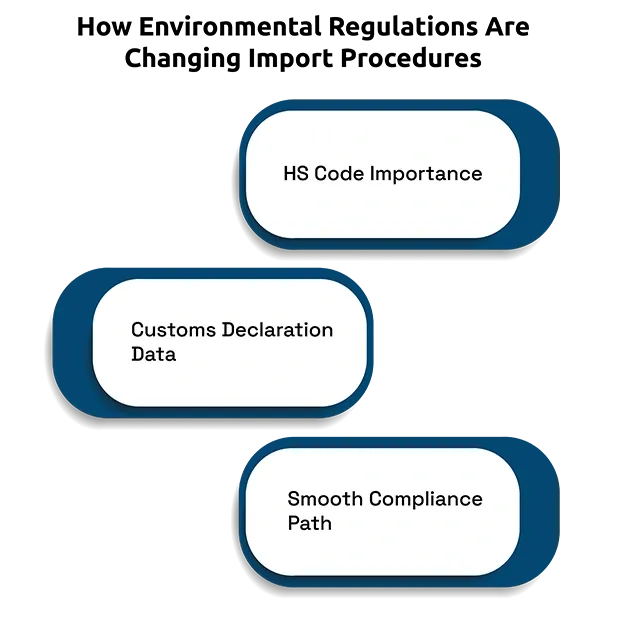
How Environmental Regulations Are Changing Import Procedures
Import procedures for some products are becoming more detailed due to environmental rules. Before goods may enter a country, importers may require extra import documents, environmental certificates, permits, and product details. Correct HS code classification is also important because certain environmental laws are limited to specific goods. In order for authorities to identify products that require extra checks, correct data must be included in customs declarations. When environmental customs rules are in effect, customs may also check cargo or verify documents. Incorrect or missing documents may result in compliance issues and delay customs clearance. Therefore, to support smooth customs rules compliance, businesses should maintain reliable records and verify environmental import rules before shipping. In 2026, the WCO continues to focus on improving the detection and handling of environment sensitive products at customs using devices like the Harmonized System.
Green Customs and Sustainable Trade
Green Customs connects environment protection and efficient international trade with customs processes. It helps countries in supporting legal trading in ecologically sensitive products while reducing illegal trade in goods like hazardous waste, toxic materials, and materials that reduce the ozone layer. Additionally, it supports responsible supply chains by improving checks, data transfer, to work together between environmental and customs officials. These rules can increase trade transparency and help companies in knowing and following to environmental rules. By helping with the safe and legal shipment of recycled, reused, and rebuilt goods, Green Customs may also support circular economy values. The WCO published research on rebuilt and recycled goods in July 2026 in an effort to support more transparent customs regulations for the circular economy.
The Role of Customs in Environmental Protection
Because they check goods as they travel across borders, customs officials are important to environmental security. They identify products that are illegal or environmentally sensitive, check import declarations, and verify required permits and licenses. Officers can review shipments and make sure that the products match documents when needed. In order to carry out rules under international environmental protocols, Customs works with environmental agencies. The WCO’s Operation DEMETER XI in 2026, which included 120 Customs officials and produced 409 recoveries connected to prohibited goods and illegal waste, showed the growing importance of customs in environmental enforcement.
Additionally, rather than checking every item in the same way, Customs uses risk-based customs rules to focus checks on shipments that might present a higher risk. Shipments can be identified for additional checks using data, product details, origin, and other risk factors. The Green Customs Initiative provides tools and training to border and customs officials so they can identify illegal traffic in ecologically sensitive goods while allowing legal trade to proceed.

Conclusion: Environmental Compliance Is Becoming Part of Import Compliance
Import compliance now is highly dependent on environmental laws. Environmental regulations are receiving more focus on customs officials, and the WCO’s 2025–2028 Strategic Plan places a high value on green customs. Before shipping, companies must check environmental import regulations, permits, and documents. Proper planning may reduce compliance issues, extra costs, and customs delays.
Did you know
FY2026 enforcement has accelerated further: CBP collected $182.22 million from just 181 audits through April 30, 2026.
FAQ
What Is Green Customs and Why Does It Matter?
Green Customs means using customs procedures to help protect the environment. It helps control environmentally sensitive goods and supports legal and sustainable trade.
How Environmental Regulations Are Changing Import Procedures?
Environmental rules can require importers to provide extra documents, permits, or product details. These requirements may also affect customs checks and clearance for certain goods.
Key Environmental Regulations Affecting International Imports?
Rules under agreements such as the Basel, Montreal, Minamata, and other environmental agreements can control the movement of certain goods across borders. Customs helps enforce these trade-related rules.
The Future of Green Customs and Sustainable Trade?
Green Customs is becoming more focused on technology, better data, and planning between customs & environmental organizations. These changes can help make global trade more sustainable and secure.
How Importers Can Prepare for Green Customs Requirements?
Importers should check environmental rules before shipping and confirm the correct documents, permits, & product details. Good preparation can help reduce delays at the border.