Introduction
Businesses are handling cross-border shipments, trade compliance, and customs clearance different due to artificial intelligence (AI). In 2026, a lot of businesses use AI-driven tools to speeds up import and export processes, process customs papers, classify products using HS codes, and identify compliance problems. These technologies improve the detail of customs operations while reducing manual effort. Businesses are using AI to simplify the flow of goods across global borders, save time, and reduce operating costs as global trade gets more difficult. AI can help with quicker customs processing, automate complex processes, and evaluate large amounts of trade data. Customs officers can now focus more on important compliance choices. By handling regular tasks like document verification, trade data management, and trade compliance help, AI speeds up customs clearance. It cannot, however, handle every detail of the customs process. To handle difficult rules, handle customs issues, deal with officials, and make sure every shipment follows with legal criteria, skilled customs brokers are still required.
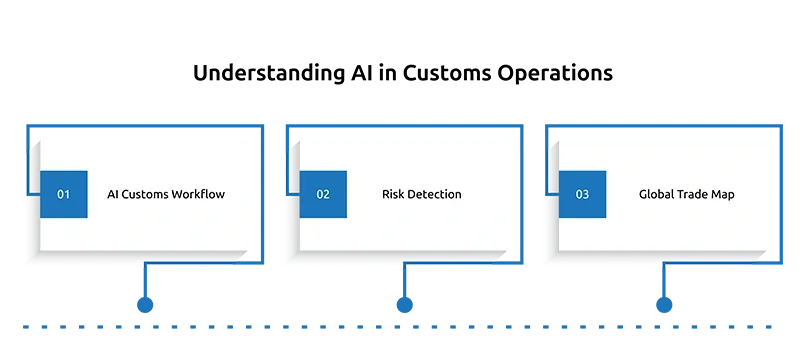
Understanding AI in Customs Operations
In customs, artificial intelligence (AI) refers to the use of smart software to speed up and improve import-export, trade compliance, and customs clearing processes. AI can quickly review trade data, find missing details, and help companies in following to customs rules rather than carefully reviewing every document. This saves time and reduces documents when shipping globally. AI is used in modern customs automation to help with duties and tax calculations, cargo tracking, verifying documents, HS code changes, and compliance checks. Large volumes of trade data can be reviewed by AI to find possible risks before a shipment reaches at customs. This reduces the risk of delays and helps companies in preparing proper documents. Due to the growing difficulties of global trade, many businesses are investing in AI-powered trade technologies. Companies handle multiple of shipments between many countries, each with its own set of customs rules. In logistics, artificial intelligence improves quicker decision-making, increases accuracy, reduces manual work, and helps handle this data more effectively. AI improves the efficiency of customs operations, but for challenging compliance and regulatory decisions, it runs well when linked with everyday life.
How AI is Improving Customs Clearance
By decreasing manual work, AI is speed up and improving the accuracy of automated customs clearance. AI document processing can extract required shipment details and quickly verify invoices, packing lists, and other customs documents. Customs automation software allows quicker customs decisions, helps trace shipments, and identify possible compliance issues. Businesses can increase accuracy, reduce delays, & ship goods across borders more effectively as digital customs systems continue to grow.
What Does a Customs Broker Do?
A customs broker is a regulated trader who helps companies in transporting goods across global borders and following to customs laws. Before shipments are imported or exported, they make sure they follow with all legal rules. Their expertise helps companies in avoiding compliance problems, fines, and delays. Preparing and verifying customs documents is one of the main tasks of a customs broker. Certificates of origin, import permits, packing lists, commercial invoicing, and other required documents come under this category. Customs officials can process items more swiftly when they have correct documents.
By choosing the correct HS code for import or export goods, customs brokers help with tariff classification as well. Because it defines the tariffs, taxes, and customs rules that apply to a shipment, the correct classification is important. Support for customs clearance is another important role. Customs brokers handle queries, provide documents to customs officials, and help in solving any issues that could come during the clearing process. This reduces the time required for goods to move across borders. By making that shipments follow to local and global customs rules, they also play an important role in import compliance. They make sure all requirements are fulfilled, keep aware of changing trade regulations, and help companies in completing imports and exports in a way that is both legal and compliant.
How AI and Customs Brokers Can Work Together
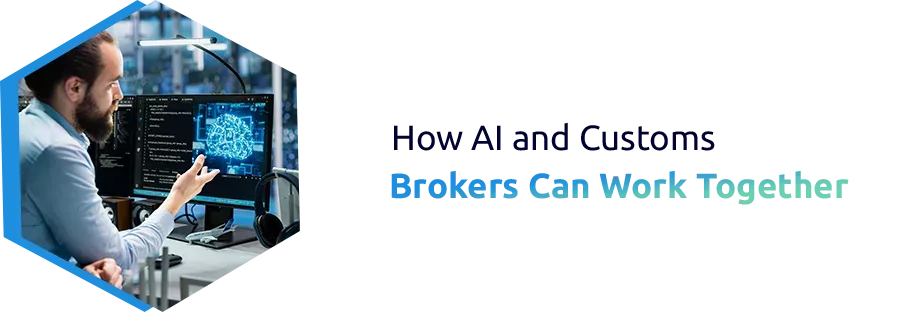
Human-AI collaboration, in which AI & customs brokers work together rather than replace each other, delivers the best results. Repetitive processes like document verification, trade data the company, and shipment tracking with customs technology can be handled by AI. Customs brokers handle challenging situations, solve customs problems, and make sure that shipments follow to all rules. By increasing accuracy, providing better compliance, simplifying customs clearance, and reducing company risks during global trade, this approach supports a digital customs broker.
Conclusion
AI is changing customs processes by reducing manual effort, better accuracy, and speeding up customs clearance. It makes it easier for companies to handle trade data, process documents, and improve trade compliance. AI, however, cannot take the place of customs brokers’ expertise in handling difficult rules and making sure shipments follow to the law. The best way to get smooth cross-border trade, improved compliance, reduced delays, & reliable international shipment is to combine AI with expert customs brokers.
Did you know
The Customs Brokerage Services Market size was estimated at USD 26.38 billion in 2025 and expected to reach USD 28.26 billion in 2026, at a CAGR of 7.37% to reach USD 43.40 billion by 2032.
FAQ
Can AI completely replace customs brokers?
No. AI can automate many daily tasks, but customs brokers are still require to handle challenging rules, solve customs issues, & make sure shipments follow legal requirements.
What are the limitations of AI in customs compliance?
As an expert customs broker, AI is not able to deal with customs officials, handle typical customs issues, & make legal decisions.
How does AI help with customs clearance?
AI helps by checking customs documents, handling trade details, track shipments, & supporting faster customs clearance with less manual mistakes.
How can businesses combine AI with customs brokerage services?
Businesses can use AI for daily tasks such as document processing and shipment tracking, while customs brokers handle compliance, complex cases, & customs clearance decisions.
What is the future of AI in customs operations?
AI will continue to improve customs automation & trade compliance, but customs brokers will remain important for legal responsibility, difficult decisions, & regulatory guidance.