Overview
India’s foreign trade system is undergoing a huge change with the introduction of new regulations under the Foreign Exchange Management Act (FEMA) for 2026. These changes, introduced by the Reserve Bank of India, aim to modernize the country’s export–import ecosystem and see the developing realities of global trade. The new FEMA 2026 Export–Import Regulations focus on improving tracking of global shipments, clarifying reporting requirements, and increasing oversight of foreign exchange flows in trade systems. Businesses involved in global trade, whether manufacturing exporters, digital service providers, or technology organizations, must now follow their working and economic processes with these new rules.
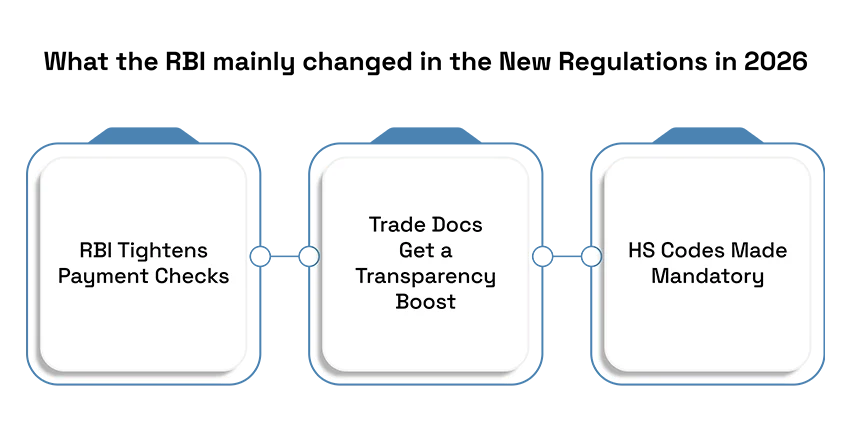
What the RBI mainly changed in the New Regulations in 2026
Updated Monitoring of Cross-Border Payments
One of the major adaptations introduced by the RBI involves stronger tracking of foreign exchange transactions related to imports and exports. Financial organizations are expected to verify the legitimacy and documentation of global payments more carefully during import export in India. This show looks to reduce inconsistency between trade documentation and economic shipments.
Greater Transparency in Trade Documentation
Another important development is the importance of improved documentation standards for export and import transactions. Regulators expect organizations to provide clearer information on products with HS Code categorization, shipment details, and shipment values in global trade. The new rules also clarify responsibilities among parties involved in global shipments and trade contracts. These concepts related to Incoterms and delivery responsibility, such as DAP and DAPs, must be correctly shown in trade agreements and economic documentation for customs clearance.
FEMA 2026: What Indian Importers-Exporters Must Do Now
Indian organizations working in global trade must update their approval procedures to show the revised regulatory expectations. This includes checking trade contracts, financial documentation processes, and reporting methods. Organizations should also assess their internal tools and shipments, including the use of the best trade compliance software for import export rules, to confirm that regulatory reporting and documentation remain accurate in global trade.
Improve Trade Documentation and Recordkeeping
Organizations must maintain consistent documentation across financial records, trade filings, and shipping documents. Proper categorizations under HS codes and correct shipment declarations are necessary to stop inconsistencies that could raise regulatory concerns. Businesses should also confirm that their expert teams understand the relationship between trade documentation and approval requirements.
Clarify Roles in Cross-Border Trade Operations
Another step is confirming clarity in the roles of logistics partners and getting approval from intermediaries in global trade. Questions such as whether a freight forwarder can be the exporter of record or whether a customs broker can handle both import and export documentation frequently develop in international trade terms. Organizations must confirm that these roles are defined correctly in agreements and that responsibilities work with regulatory guidelines. Clear agreements with service providers for exporter of record, importer of record, and International freight services can reduce approval risks and operational confusion in global trade.
Why IT Companies and SaaS Businesses Face Different Risks
Digital Trade Creates Unique Compliance Challenges
Unlike traditional exporters working with physical goods, IT organizations and SaaS providers work in a largely digital trade environment. Cross-border IT devices service payments and licensing models create complex financial flows that must still follow foreign exchange regulations. While physical exporters frequently work with Customs clearance procedures and shipment documentation, technology organizations must confirm that their cross-border service payments are reported correctly under FEMA guidelines.
Financial Flow Tracking in Service Exports
Technology organizations frequently receive payments from global customers through digital channels. Regulators now expect better tracking and documentation of these inflows to confirm clarity in global shipments. Even though these organizations may not manage physical shipping or logistics, they still require strong inventory and order management systems, where applicable, specifically for hybrid businesses that combine software services with hardware distribution.

Conclusion
The updated FEMA 2026 Export–Import Regulations saw an important step in India’s efforts to update its international trade terms. By increasing cross-border payment tracking, clarifying documentation standards, and defining responsibilities across trade shipments, the RBI aims to improve transparency and regulatory efficiency in global trade. For Indian businesses, the major takeaway is clear: compliance must develop alongside trade methods. Exporters, importers, and technology organizations alike are required to review their internal systems, documentation processes, and contractual systems to work with the updated rules.
DID YOU KNOW?
For small transactions up to Rs 10 lakh, exporters and importers will be allowed to close outstanding entries in the RBI’s export and import monitoring systems.
FAQs:
1. What are the FEMA 2026 Export–Import Regulations?
The FEMA 2026 Export–Import Regulations are updated rules introduced by the Reserve Bank of India under the Foreign Exchange Management Act to improve monitoring of cross-border payments, enhance trade documentation standards, and strengthen foreign exchange compliance in India’s global trade system.
2. How do the FEMA 2026 regulations affect Indian importers and exporters?
The new rules require businesses to maintain more accurate trade documentation, confirm proper reporting of cross-border payments, and clearly define roles such as exporter of record or importer of record in international trade transactions.
3. Do FEMA 2026 rules apply to IT and SaaS companies?
Yes. Even though IT and SaaS companies may not ship physical goods, they must follow FEMA regulations for cross-border service payments, foreign exchange reporting, and international financial transactions.
4. Why are HS codes important under FEMA 2026 regulations?
Correct product categorization using the Harmonized System Code helps confirm accurate customs documentation, proper trade reporting, and agreement with international trade regulations.
5. What steps should businesses take to comply with FEMA 2026?
Businesses should update their trade documentation procedures, review cross-border payment processes, clarify roles in trade operations, and adopt approval tools to confirm the correct reporting method.