
Overview
Cold chain validation requirements play a vital role in confirming the safety and effectiveness of temperature-sensitive medical goods during cross-border shipments. Medical devices, surgical tools, biologic equipment, and diagnostic tools must be shipped under strong regulated guidelines to meet regulatory expectations and medical safety standards. As international shipping terms, customs clearance processes, and logistics chains become more difficult in the regulatory process, checking the cold chain across borders has become a major part of global healthcare supply chains.
Understanding Cold Chain Logistics in Cross-Border Medical Shipments
What Is Cold Chain?
Cold chain logistics involves the complete management of temperature-controlled medical shipments under the services, such as the exporter of record to the importer of record. It confirms that goods shipped within a given temperature range throughout international freight services, customs inspections, and complete shipments.
Regulatory and Trade Considerations
Cross-border shipments must follow multiple regulatory systems, including HS code categorizations, HTS Harmonized Tariff Schedule code requirements, and country-specific import rules for shipping. While trade programs such as the generalized system of preferences (GSP) may change duty systems, approval with the cold chain confirmation system remains required without exception of tariff benefits.
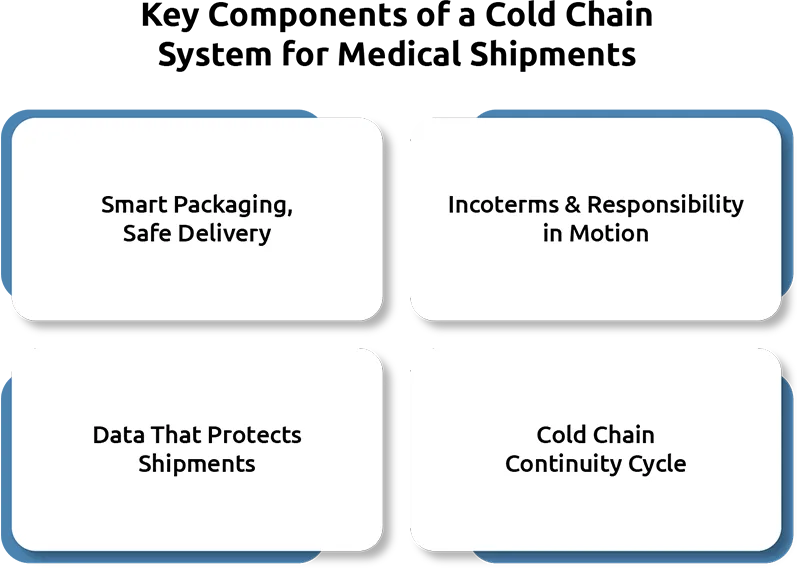
Key Components of a Cold Chain System for Medical Shipments
Temperature-Controlled Packaging
Validated packaging systems are the foundation of medical cold chain shipments. These approaches, such asinsulated containers, refrigerants, and phase-change materials, worked to withstand long logistics times under DAP or DAPs delivery arrangements.
Transportation and Handling Controls
International shipping terms and Incoterms define responsibilities across the supply chain, but validated handling procedures confirm continuity independent of who controls each leg of logistics. Premium delivery service options are frequently used to reduce logistics delays and temperature risks.
Tracking and Documentation
Accurate data collection is necessary for confirmation. Temperature records, shipment records, and variation reports must be maintained for inspections and customs broker reviews. This documentation also supports inventory and order management systems by confirming tracking across borders.
How IoT Solutions Ensure Cold Chain Logistics Safety for Medical Shipments?
Real-Time Temperature Tracking
IoT sensors provide live tracking of shipments during international freight services. These devices continuously track temperature and the location of the delivery, allowing secure action before the product combination is affected in the supply chain.
Automated Alerts and Analytics
Advanced IoT platforms combined with supply chain optimization tools show alerts when changes occur in global trade. This allows logistics teams to reroute shipments, adjust storage temperature conditions, or fast customs clearance when necessary documents are required.
Data-Driven Validation and Compliance
IoT data supports cold chain validation by providing verifiable proof of compliance across multiple administrative. This is particularly valuable when working with importer of record service providers and regulatory officials during cross-border inspections of shipments.
Why Temperature Control Matters in Medical Cold Chain Shipments
Product Safety Outcomes
Temperature variations can make medical devices and biologics ineffective or unsafe during shipments. Validated cold chain processes confirm that medical products reach hospitals in their intended condition, protecting public health globally.

Regulatory Approval and Risk Minimization
Problems to confirm temperature conditions can result in shipment rejection, economic loss, and regulatory fees. Exact work with customs clearance requirements and international shipping terms reduces the risk of approvals across borders.
Business Continuity and Reputation
Reliable cold chain validation increases trust among partners involved in logistics, importer of record service providers, and exporter of record services. It also supports continuous supply chain performance, mainly for time-critical medical shipments.
Conclusion
Cold chain validation requirements are a cornerstone of safe and complete cross-border medical shipments. From temperature-controlled packaging and IoT tracking to work with HS code categorization, Incoterms, and customs broker processes, every element must work in coordination. As global medical logistics continue to develop, organizations that invest in validated cold chain systems, international freight services, and supply chain optimization will be better positioned to confirm regulatory agreement, product integrity, and dependable patient access globally.
DID YOU KNOW?
This is the most recent year for which figures are available from the US Census Bureau, showing 90% of temperature-controlled items shipped by all means.
FAQs:
1. What are cold chain validation requirements in medical shipments?
Cold chain validation requirements confirm that temperature-sensitive medical products remain within approved temperature ranges throughout international transportation, storage, and customs processes.
2. Why is cold chain validation important for cross-border medical shipments?
It helps maintain product safety, meet regulatory expectations, and reduce the risk of shipment rejection, financial loss, or compliance issues during international trade.
3. How do IoT solutions support cold chain validation?
IoT solutions provide real-time temperature monitoring, automated alerts, and verifiable data records that help confirm approval across global medical supply chains.
4. What role do customs and trade regulations play in cold chain logistics?
Customs clearance, HS code classification, and country-specific import regulations must align with cold chain validation standards to confirm smooth cross-border medical shipments.
5. What happens if cold chain requirements are not met?
Failure to maintain temperature control can result in damaged medical products, regulatory penalties, shipment delays, and loss of trust among supply chain partners.