Overview
In today’s interconnected economy, few sectors feel the immediate impact of political and economic tension as strongly as technology. From semiconductors and servers to networking hardware and advanced computing devices, the tech sector is frequently the first target when governments introduce new import guidelines. These shows affect not only manufacturers but also international shipping terms, customs clearance processes, and inventory and order management systems across borders. Technology products are deeply used in national security, economic growth, and innovation ecosystems. Also, when trade relationships become strained, restrictions frequently start with IT and electronics. Understanding why this happens is necessary for businesses involved in global trade, international freight services, and cross-border sourcing of technology equipment.
Definition and Types of Trade Restrictions and Purpose of Trade Restrictions on the Tech Sector
What Are Trade Restrictions?
Trade restrictions are imposed limits or regulations on the shipping of goods across borders. These can be import quotas, licensing requirements, approval rules, technical standards, and product-specific bans. While such measures apply to many industries, the tech sector is uniquely at risk because of its major importance and quick innovation stages. For organizations depending on international shipping terms and freight forwarding companies near me to move high-value electronics, even small regulatory changes can issues delivery timelines and sourcing plans.
Why Governments Focus on Technology
Technology plays a vital role in dashboard systems, data security, and artificial intelligence. Controlling the movement of IT equipment allows governments to protect sensitive capabilities, improve local manufacturing, and reduce dependence on global suppliers. Importer of record service providers and exporter of record services frequently see increased scrutiny when shipments involve advanced hardware, networking tools, or data-processing equipment.

Increasing Trade Restrictions Across the World
Over the decade, trade policies globally have become more difficult. Nations are introducing strict approval systems, stronger documentation requirements, and closer inspection of high-tech imports. These changes directly affect the customs clearance processes and international freight services that specialize in electronics and IT equipment. Increasing geopolitical conflict, issues about cybersecurity, and technological usage have grown this trend globally. Also, organizations involved in global shipping inventory and order management must remain flexible, continuously improving their processes to accept changing regulations.
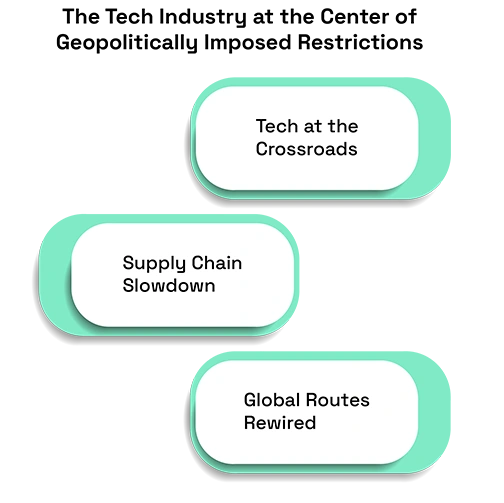
The Tech Industry at the Center of Geopolitically Imposed Restrictions
Technology stands at the crossroads of economic change and national security. Advanced chips, cloud infrastructure hardware, and communication systems can be used for both civilian purposes. This dual-use nature makes tech products for restrictions when diplomatic relations change. When new controls are announced, they frequently ripple through freight forwarding companies near me, premium delivery service providers, and global distributors. Delays, re-routing of shipments, and additional verification steps become common. Businesses must depend on specialized importer of record service partners to confirm approval while reducing working disruption.
Impact of Import Restrictions on IT Equipment in Global Trade
Import restrictions on IT equipment have wide-ranging consequences. First, they raise procurement costs by reducing supplier options and extending delivery cycles. Second, they complicate supply chain optimization efforts, as companies must redesign sourcing strategies and build redundancy into their chain. Customs clearance becomes more detailed and urgent, frequently requiring additional certifications, end-use declarations, and technical documentation. International freight services managing electronics must invest in approval expertise to avoid shipment holds or penalties. These restrictions also affect innovation timelines. Delayed access to hardware can slow software development, cloud expansion, and digital transformation projects. To offset this, organizations increasingly partner with exporter of record services and importer of record service specialists who can manage regulatory problems while supporting smoother international shipping operations.
Conclusion
Import restrictions frequently target technology first because tech products sit at the heart of modern economic power, national security, and digital infrastructure. As global competition intensifies, governments will continue to track and regulate the shipping of IT equipment more closely than many other goods. For businesses, this increases the importance of dynamic approval planning, strong inventory and order management, and working with experts in international freight services.
DID YOU KNOW?
In 2025, the U.S. added 140 entities to its Entity List, restricting access to certain U.S. exports and highlighting the impact of export controls on global technology trade.
FAQs:
1. Why do import restrictions on technology equipment change between countries?
Import restrictions vary by country because governments apply different national security policies, product standards, licensing rules, and trade measures. Requirements may also depend on the equipment’s technical specifications, country of origin, intended end use, and destination market.
2. How can import restrictions affect technology equipment shipments?
Import restrictions can affect shipment timelines, documentation requirements, and the approvals needed before goods enter a country. Businesses importing networking equipment, should verify product classification, licensing requirements, and end-use conditions before dispatch.
3. How do import restrictions impact IT equipment supply chains?
They increase procurement costs, delay deliveries, complicate customs clearance, and force companies to redesign sourcing strategies, inventory planning, and international freight operations.
4. Which technology products are most affected by import controls?
Semiconductors, servers, networking equipment, cloud infrastructure hardware, and advanced computing devices are most impacted because they are often classified as sensitive or dual-use technologies.
5. How can businesses manage tech import restrictions effectively?
Businesses can work with experienced importer of record and exporter of record service providers, strengthen compliance planning, diversify suppliers, and align closely with international freight services to avoid shipment delays.