Overview
In global trade, not all trade restrictions are visible or announced through headline policy changes. One of the most precise yet powerful tools governments use is licensing delays. While licensing systems are frequently presented as official or regulatory necessities for importer of record service, long-term approval timelines can softly restrict market access, disappoint global suppliers, and change global trade shipping. Knowing how countries use licensing delays as trade barriers is necessary for businesses looking to work smoothly across borders.
What Are Trade Barriers in Global Trade?
Trade barriers are government-added restrictions that minimize or control the shipping of goods between countries. Also, these barriers are related to duties or quantitative limits. However, in modern global trade, many obstacles appear in an administrative form.
Hidden and Administrative Trade Barriers
Unlike visible policy tools, administrative barriers operate through regulatory systems. These required product registrations, documentation requirements, and licensing approvals. When these processes become slow, unpredictable, or inconsistently applied, they effectively restrict imports without mainly banning them. Licensing delays fit squarely into this category, making them difficult to challenge while remaining highly effective in International freight services.

Mechanisms of Licensing Delays as Trade Barriers
Licensing delays work by increasing the time, cost, and risk related to going into a global market. Even when approvals are mainly confirmed, the delay itself can cause lost sales, agreement failures, and damaged trust of the exporter of record service.
Procedural Complexity and Repeated Reviews
Governments may require multiple stages of review across different brokers. Applications may be sent back for minor clarifications, formatting issues, or extra certificates in the Customs clearance process. While each step appears reasonable in separation, the increasing effect can extend processing timelines from weeks to many months.
Selective Enforcement and Unclear Timelines
Another common mechanism is the absence of fixed approval deadlines. Without clear service standards, authorities retain caution over how quickly applications are processed. This allows licensing delays to be applied more strictly to some import-export goods or countries, creating an uneven playing field while maintaining the appearance of neutrality.
How Trade Compliance Helps Reduce Licensing Delays
Strong trade compliance helps companies to avoid licensing delays by making sure that all documents are complete & proper before they are submitted. Following local import rules also reduces the chance of extra checks, requests for more details, or rejected shipments. Businesses that check documents on a daily basis & keep up with changing trade rules can ship goods more efficiently. Good planning and correct documents improve international trade, reduce shipment delays, lower costs, & help businesses maintain reliable delivery times across countries.
How Tariffs and Licensing Delays Impact International Trade
Although tariffs directly increase the cost of goods, licensing delays affect trade in a different but equally damaging way by stopping predictability using the HS code, HTS Harmonized Tariff Schedule.
Market Access Uncertainty
When companies cannot dependably estimate approval timelines, it becomes difficult to plan production stages or overseas partnerships. Buyers may turn to local or alternative suppliers simply because they can deliver faster using inventory and order management. Also, this uncertainty reduces competition and changes the sourcing structure.
Economical and Operational Consequences
Delayed licenses can trap capital in perfect inventory and increase contractual risks. In industries driven by technology, aviation, or automotive demand, timing is necessary. Even short administrative hold-ups can erase profit margins and make some markets commercially unsuitable for supply chain optimization.
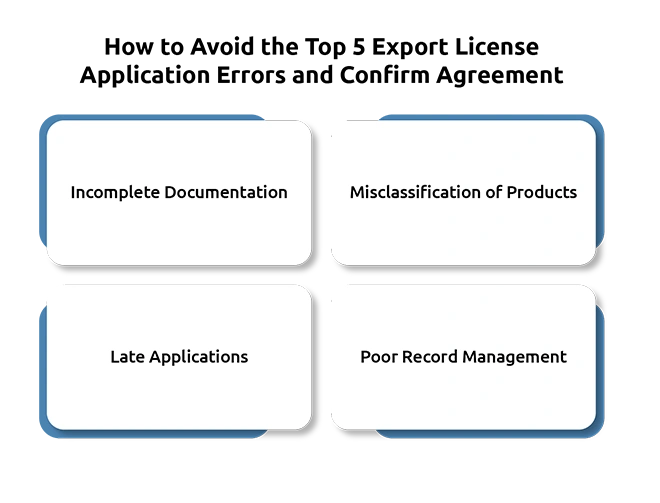
How to Avoid the Top 5 Export License Application Errors and Confirm Agreement
While licensing delays are frequently outside a company’s control, many problems are intensified by avoidable issues. Addressing these issues improves approval success and reduces the risk of extended processing.
1. Incomplete Documentation
Missing forms, unsigned declarations, or outdated certificates are among the most common reasons applications are replaced or returned to customers. Create a standardized internal checklist and verify every submission before completing.
2. Misclassification of Products
Incorrect product descriptions or unclear technical details can trigger additional reviews. Provide precise specifications, end-use statements, and supporting materials to reduce follow-up queries of International shipping terms.
3. Ignoring Country-Specific Requirements
Each market applies different licensing standards. Assuming that one format fits all frequently leads to rejection or resubmission. Always customized applications to local regulatory expectations.
4. Late Applications
Applying only after a contract is signed or goods are prepared increases trading risk. Early submission allows time to resolve questions without disrupting responsibilities.
5. Poor Record Management
Authorities may request historical filings or prior approvals. Disorganized records slow responses and can damage dependability. Maintain a centralized archive of all licensing documents and confirm consistency in premium delivery service.
Conclusion
Licensing delays are a quiet but important form of trade barrier. They rarely make headlines, yet their impact on global trade can change supply routes, discouraging competition and protecting local trades without explicit restrictions. For businesses, success depends not only on understanding tariffs or headline guidelines but also on recognizing how administrative systems change market entry. Proactive preparation, accurate applications, and strong approval systems are the most effective ways to reduce exposure to licensing delays.
DID YOU KNOW?
According to a Reuters report, India is prepared to reduce tariffs on more than half of the $23 billion worth of American imports, which would be the largest reduction in many years.
FAQs:
1. What are licensing delays in international trade?
Licensing delays refer to prolonged approval timelines for import or export licenses caused by administrative reviews, documentation checks, or regulatory processes, which can restrict trade without an official ban.
2. Why are licensing delays considered hidden trade barriers?
Unlike tariffs or quotas, licensing delays operate quietly within regulatory systems, making them difficult to challenge while still limiting market access and increasing operational uncertainty.
3. How do licensing delays affect global supply chains?
They disrupt delivery schedules, increase holding costs, reduce supplier reliability, and force businesses to shift sourcing strategies or abandon certain markets altogether.
4. Are licensing delays legal under global trade rules?
Licensing systems are permitted under international trade agreements, but excessive or discriminatory delays may conflict with fair trade principles, depending on how they are applied.
5. How can exporters reduce the risk of licensing delays?
Exporters can minimize delays by submitting complete documentation, correctly classifying products, meeting country-specific requirements, applying early, and maintaining organized compliance records.