Overview
The global economy has changed quickly from boxed products to instant digital access. Businesses and consumers now purchase software through cloud platforms and licenses for IT or devices. This change frequently raises a common question: why can software be taxed even when no physical media is shipped? Governments worldwide have adapted their tax systems to confirm that digitally supplied software is not excluded from taxation simply because it lacks physical packaging. Even though traditional systems involving HS code categorization, HTS harmonized tariff schedule references, or generalized system of preferences (GSP) once dominated product taxation, digital software now operates in a parallel legal space where nonphysical supplies are clearly recognized.
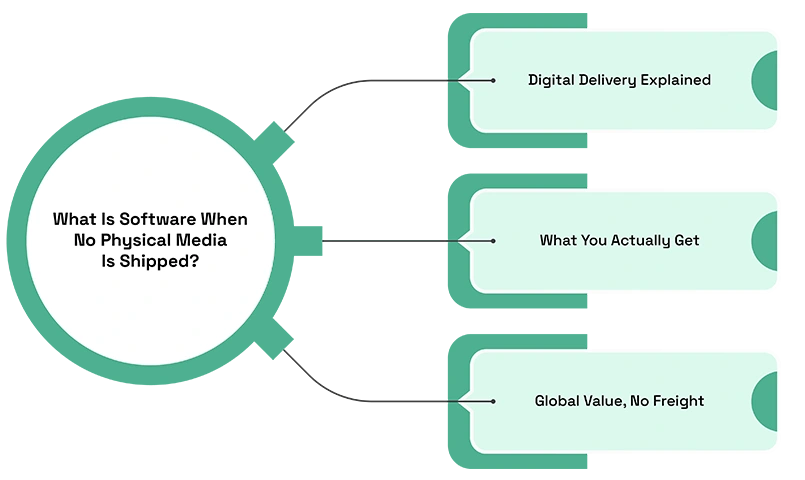
What Is Software When No Physical Media Is Shipped?
When no physical media is shipped, software is supplied electronically. This includes cloud subscriptions, downloadable enterprise tools, mobile applications, and web-based platforms. Instead of receiving a package, users receive login credentials, activation keys, or digital licenses. In conventional trade, goods move through structured networks involving international freight services, importer of record service arrangements, and exporter of record services. Digital software bypasses these channels but still creates trade value. Organizations pay for the right to use technology that supports operations, automation, analytics, and collaboration. Because revenue is generated and consumption takes place within a country, tax authorities view these transactions as taxable events. That is a central reason why software can be taxed even when no physical media is shipped.

How Are Governments Updating Tax Rules for Digital Software Transactions?
Governments are updating tax frameworks to address the rapid growth of cloud software, digital licenses, and online services. New regulations focus on where software is supplied, accessed, and consumed rather than physical delivery methods. These changes help tax authorities identify taxable digital transactions and improve compliance for global businesses.
Understanding How Software Is Taxed When No Physical Media Is Shipped
Taxation does not depend only on the physical movement of goods. Instead, it focuses on the nature of the transaction, whether there is a sale, license, subscription, or service component required.
When customers pay for software, they are usually purchasing:
- The right to use a program
- Access to a digital platform
- Ongoing updates and technical support
From a legal standpoint, this exchange represents either a supply of goods in physical form or a supply of services. Tax authorities evaluate factors such as ownership rights, duration of use, level of customization, and whether ongoing support is required. These elements determine how the transaction positions into existing tax categories.
Computer Software is Categorized Mainly into Two Types
Software is commonly divided into two broad categories, and each can be taxed differently depending on structure and usage.
1. Packaged or Standard Software
This refers to pre-developed software sold to multiple users with the same core features, such as accounting programs, design tools, or productivity software. Even when downloaded, these products resemble traditional off-the-shelf goods. Taxes may apply because the transaction involves allowing standardized usage rights for a price.
2. Customized or Subscription-Based Software
This includes transform systems, cloud-based platforms, and enterprise solutions built or configured for specific users. These frequently involve continuous access, updates, and support. In many administrations, this category leans more toward a service-related transaction, though it remains taxable because it delivers an ongoing economic benefit.
Taxability of Software Under Existing Laws (Service Tax, Central Excise & VAT)
Historically, tax systems addressed software under different legal lenses. Software systems frequently tried to incorporate software into traditional methods:
- Central Excise focused on manufactured goods, which led to debates about whether recorded or embedded software could be treated as excisable.
- VAT regimes expanded the idea of “goods” to include physical products, allowing authorities to impose tax on software sales even without a physical form.
- Service Tax systems recognized that software frequently involves development, customization, maintenance, and access rights, all of which resemble service provisions.
Over time, courts and policymakers acknowledged that software transactions frequently combine both product and service elements. This development explains why software can be taxed even when no physical media is shipped, even under older legal systems.
Conclusion
The absence of a physical disk or device does not remove software from the scope of taxation. Modern economies depend heavily on digital tools, and tax laws have adapted to confirm that value created and consumed in digital form is treated consistently with traditional trade. Understanding why software can be taxed even when no physical media is shipped requires recognizing that taxation is driven by value exchange, legal rights, and economic presence, not only by physical software shipment.
DID YOU KNOW?
The UK government reviewed its Digital Services Tax in 2025 to evaluate how digital businesses, including online platforms and software-based services, are being taxed in the digital economy.
FAQs:
Why is software taxable even when no physical media is shipped?
Because taxation is based on value exchange and consumption, not physical delivery. When users pay for software access, licenses, or subscriptions, it is considered a taxable economic transaction.
Is downloadable or cloud-based software treated as goods or services?
It can be treated as either goods or services depending on the structure. Standard software may be viewed like goods, while cloud subscriptions and customized solutions are often classified as services.
Does software without physical form require HS codes or customs clearance?
No physical shipment means customs clearance and HS codes usually do not apply, but domestic tax laws, digital service taxes, or GST/VAT rules may still impose tax obligations.
Are software licenses and subscriptions taxable?
Yes. Licenses and subscriptions grant legal rights to use digital products, which tax authorities recognize as taxable supplies.
How do governments track and tax digital software transactions?
Governments use digital tax laws, place-of-supply rules, and platform reporting systems to ensure taxes are collected even when no physical media is involved.