Overview
Global trade connects markets, suppliers, and consumers across borders, yet one of the most overlooked challenges in global business is terminology. The same trade process can be shown differently depending on the country, authority, or industry body required. For example, what one nation refers to as Customs clearance, another may frame under broader logistics or regulatory processes. These variations change documentation, agreement, compliance, and even digital systems. Understanding these differences is necessary for organizations working in International freight services, Importer of record services, and exporter of record services, where misinterpretation can lead to costly delays or penalties.
Key Reasons for the Variation of Words in the Trade Process
Historical and Legal Foundations
Every country has developed its trade language based on its legal systems, colonial history, and trade changes. Some nations have systematic trade terminology around customs law, while others improve taxation or port authority regulations. This is why product categorizations might be called an HS code globally, but referenced locally through extensions such as the HTS Harmonized Tariff Schedule in certain markets. Similarly, tariff benefits under programs such as the Generalized System of Preferences (GSP) may be interpreted and labeled differently across regions.

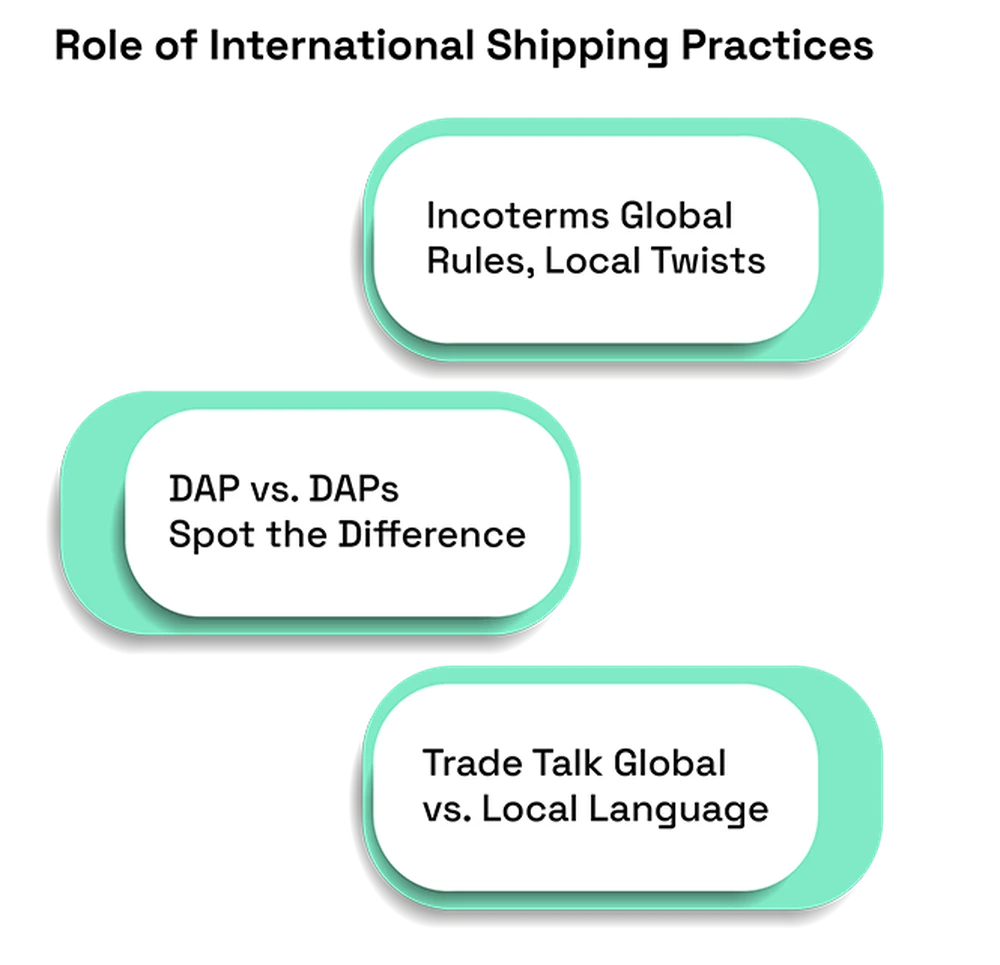
Role of International Shipping Practices
Incoterms and Commercial Customs
Organizations like the International Chamber of Commerce introduced Incoterms to standardize International shipping terms, yet everyday business usage still changes. Also, DAP (Delivered at Place) may be referred to informally as DAPs in agreements or internal systems, creating confusion when working on responsibilities for risk, duty, and delivery. These verbal habits frequently show local trade methods rather than global definitions.
Industry-Specific Language
Different sectors, from medical to automotive, also adapt trade terminology to suit regulatory and operational needs. Warehousing teams might prioritize Inventory and order management, while transport providers focus on routing and premium logistics responsibilities like a Premium delivery service. Over time, these specialized terms become integrated into national trade ecosystems.
Efforts Toward Standardization of Trade Process
Global Classification and Compliance Frameworks
International bodies have made major progress in aligning terminology. The World Customs Organization advances global categorizations through the HS code, while trade systems such as the HTS Harmonized Tariff Schedule. Also, Incoterms look to reduce disputes by defining buyer and seller responsibilities.
Digital Trade and Supply Chain Integration
Technology as a Common Language
Modern platforms supporting Supply chain optimization increasingly depend on combined data fields and global trade vocabularies. Electronic customs filing, automated Customs clearance, and AI-based approval tools push businesses to use standardized terminology to confirm systems communicate effectively across borders.
How To Tackle Different Words for the Same Trade Process
Build Internal Trade Wordbook
Creating an internal wordbook that maps local terms to international standards helps teams avoid misinterpretation. This is specifically useful when coordinating with overseas partners or Freight forwarding companies near me that may use region-specific expressions.
Invest in Training and Expert Support
Align Operations With Global Norms
Trade professionals should be trained to recognize multiple terms for the same activity, whether it involves valuation, documentation, or border formalities. Working with experienced providers of International freight services and an importer of record Service confirms that terminology differences do not disrupt approval or delivery timelines.
Leverage Integrated Trade Solutions
Companies that combine trade management into their ERP and logistics platforms gain transparency. This allows consistent labeling of transactions, smoother shipment between departments, and stronger work between transportation, warehousing, and regulatory teams.
How One Union Solutions Help You
End-to-End Trade Language Alignment
One Union Solutions completes terminology gaps across regions by unifying documentation, regulatory interpretation, and operational workflows. Whether handling exporter of record services, managing Customs clearance, or working with international partners, their approach confirms every process is mapped to globally recognized standards.
Simplifying Complex Trade Environments
From categorizations under the correct HS code to managing contractual responsibilities under Incoterms like DAP, we support businesses with consistent trade language across trades. Their solutions connect agreement, Inventory and order management, and transportation under one integrated system, reducing friction and risk.
Conclusion
Different words for the same trade process are a natural outcome of history, law, and trade. While globalization has introduced standards such as Incoterms, the HTS Harmonized Tariff Schedule, and the generalized system of preferences (GSP), local terminology remains deeply situated. Businesses that recognize and use these differences through systematic processes, technology, and expert partners gain a complete process. Working with organizations can strengthen Supply chain optimization, reduce delays, and guide international trade.
DID YOU KNOW?
In 2024, Germany recorded the largest trade surplus in goods with countries outside the European Union, valued at 255.0 billion euros, followed by Italy (65.1 billion euros) and Ireland (57.1 billion euros).
FAQs:
1. Why do different countries use different terms for the same trade process?
Trade systems develop around local laws, customs regulations, taxation structures, and old trade methods. Over time, these influences create unique terminology even when the underlying process is similar.
2. How does trade terminology variation affect international businesses?
It can cause miscommunication, incorrect documentation, customs delays, approval risks, and system mismatches, especially in customs clearance, shipping contracts, and regulatory filings.
3. What role do HS codes and Incoterms play in standardization?
HS codes provide a global product classification framework, while Incoterms define buyer and seller responsibilities. Both reduce confusion, though local interpretations and extensions still exist.
4. How can companies manage different words for the same trade process?
By creating an internal trade glossary, training staff, working with expert trade service providers, and using integrated digital trade management systems.
5. Why is unified trade language important for supply chain optimization?
Consistent terminology improves coordination between logistics, approval, warehousing, and finance teams, reducing errors, speeding up customs procedures, and improving global operations.