In today’s fast-paced global trade environment, compliance is more important than ever. While businesses often focus on tariffs, customs duties, & shipping logistics, one important document is mainly Ignored the calibration certificate. For many industries, this document is not optional; it may be needed for customs clearance.
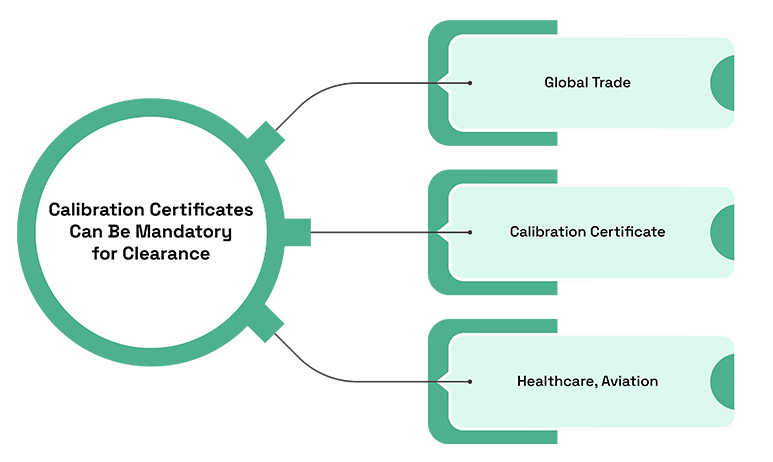
Calibration certificates are mainly important in sectors where detail & safety are useful, such as healthcare, aviation, IT & automotive. Without these certificates, transportation can be delayed, held at customs, or even rejected.
What is a Calibration Certificate?
A calibration certificate is an official document issued by an approved calibration laboratory that verifies a piece of equipment or instrument has been tested for accuracy & performance. It improves as proof that the equipment meets global quality & accuracy standards. The certificate typically added details such as the equipment verification, the calibration method used, the standards against which the instrument was tested, the measurement results, & the validity period of the calibration. Customs authorities often depend on this document to confirm that imported instruments are compliant & safe to use.

Why Calibration Certificates Are Important for Customs Clearance
Customs authorities mainly need documentation that proves compliance with local regulations. For some precision equipment, a calibration certificate is needed. First, it ensures regulatory compliance, as many countries require proof of calibration for instruments used in healthcare, aviation, & industrial applications. Second, it provides safety assurance, verifying that equipment is managed accurately & minimize risks associated with faulty measurements. Third, calibration certificates act as quality verification, giving businesses confidence that their high-value instruments meet required performance standards. Finally, having a calibration certificate streamlines customs clearance, as officials can fastly verify compliance without additional verification or delays.
Industries That Require Calibration Certificates
Many sectors depend heavily on precision equipment, making calibration certificates mainly critical. In healthcare, devices such as MRI machines, X-ray systems, & laboratory analyzers must deal with strict accuracy standards to ensure patient safety. In aviation, instruments used for aircraft testing & navigation require precise calibration to meet safety regulations. The automotive industry depends on diagnostic and testing equipment to ensure vehicle performance & safety. Similarly, IT and data centers depend on measurement tools for servers, networking, & environmental management, while manufacturing facilities need calibrated machinery to maintain consistent quality & operational efficiency.
How to Obtain a Calibration Certificate
Obtaining a calibration certificate requires using a recognized & accredited laboratory, often following international standards such as ISO/IEC 17025. The process involves identifying the equipment that requires calibration, testing it against standard reference materials, recording the results, & issuing a certificate confirming compliance. The certificate must come from an accredited source, as customs authorities may reject documents from non-certified laboratories.
Tips for Smooth Customs Clearance
To avoid delays at customs, businesses should first verify the import requirements of the destination country and ensure all calibration certificates are current & valid. Certificates should always be issued by an accredited laboratory recognized internationally. Including the certificate with customs documentation is necessary, & managing with experienced freight forwarders or Importer of Record (IOR) services can ensure all compliance requirements are met efficiently, minimizing the risk of delays or penalties.
Consequences of Missing Calibration Certificates
Missing to provide a proper Tuning certificate can result in significant issues. Shipments may experience delays due to inspections or additional testing, while businesses may also face financial penalties for non-compliance. In some cases, authorities may reject shipments entirely, causing operational disruptions. Such delays can lead to downtime, affecting critical business functions & overall productivity.
Conclusion
A calibration certificate is often mandatory for many types of equipment. It guarantees accuracy, safety, & regulatory compliance, while simplifying customs clearance & securing delays. Industries such as healthcare, aviation, automotive & IT must focus on making valid calibration certificates to protect operations & remain compliant with regulations. By adding calibration certificates into global transportation procedures, businesses can ensure faster customs clearance, lower risks, & easier global trade operations.
Did you know?
In many international trade scenarios, calibration certificates may be required by customs or regulatory authorities to prove that testing and measurement instruments meet recognized standards, supporting quality and compliance documentation for imported goods.
FAQ
Q1: What is a calibration certificate?
Ans: A calibration certificate is an official document from a recognized lab that proves a piece of equipment has been tested for accuracy and meets quality standards.
Q2: Why are calibration certificates important for customs clearance?
Ans: Customs authorities may require calibration certificates to ensure equipment is safe, accurate, and complies with local regulations, helping prevent delays or shipment rejections.
Q3: Which industries usually need calibration certificates?
Ans: Industries like healthcare, aviation, automotive, IT, and manufacturing often need calibration certificates because their equipment must be precise and reliable.
Q4: How do I get a calibration certificate?
Ans: You get it from an accredited laboratory. The lab tests your equipment, records the results, and issues a certificate showing it meets the required standards.
Q5: What happens if I don’t have a calibration certificate?
Ans: Shipments can be delayed, held for extra inspection, fined, or even rejected. Missing certificates can disrupt operations and affect productivity.