Overview
Compliance history is no longer limited to a single port or flag state. In today’s connected maritime environment, a ship’s past inspections, documentation quality, and regulatory behavior increasingly travel across ports, increasing how authorities assess risk. Whether a ship is moving under specific International shipping terms, handling sensitive cargo, or working with freight forwarding companies near me, its historical compliance profile changes inspection frequency, clearance speed, and trade credibility. Understanding why compliance history follows ships and how to manage it is now necessary for shipowners, agents, and global trade partners.
A Complete Guide to Maritime Compliance Standards
Maritime compliance standards are built on international agreements, port state control agreements, and digital data-sharing systems. These systems allow customs and port authorities to review a ship’s past performance across multiple administrations. Records related to Customs clearance, cargo declarations, and the use of Incoterms or other International shipping terms are frequently logged and referenced when ships arrive at new ports.
Safety and environmental compliance, trade documentation also matter. Errors in product classification, missing identifiers such as HS codes, or inconsistencies with the HTS Harmonized Tariff Schedule can raise issues. Even trade programs like the generalized system of preferences (GSP) require accurate historical reporting, further tying today’s shipment outcomes to yesterday’s compliance behavior with trade.

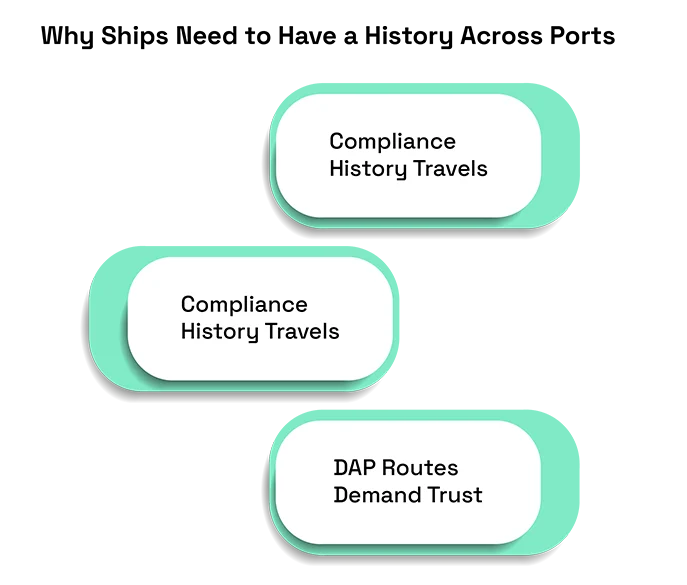
Why Ships Need to Have a History Across Ports
From isolated inspections to connected risk profiles
Ports no longer evaluate ships in isolation. A delayed declaration, unresolved discrepancy, or repeated documentation error in one region can impact how authorities in another region treat the same ship. This is why compliance history now “travels.”
For operators managing difficult routes that involve DAP or DAPs delivery structures or working with multiple ports, a clean historical record helps confirm smoother processing. Strong compliance history supports faster approvals, more predictable International freight services, and fewer secondary inspections.
From a business standpoint, ships with dependable records are better positioned to integrate with modern trade ecosystems, from Inventory and order management platforms to advanced Supply chain optimization programs.
The Core Documents Every Ship Agent Must Track
Operational and regulatory essentials
Ship agents play a crucial role in maintaining a complete history. They are responsible for coordinating the documents that authorities review again and again as a ship moves across borders.
Key documentation categories
- Cargo and Port Paperwork: Correct invoices, packing lists, and tariff sources, such as the correct HS code and HTS Harmonized Tariff Schedule for logistics.
- Shipping reports: Approval of Customs clearance, Incoterms, and dependability with International shipping terms such as Delivery At Place.
- Role-based trade compliance: Records showing the correct use of Importer of Record Service and Exporter of Record services, which clarify legal responsibility across ports.
- Operational logs: Port looks into histories, inspection reports, and corrective action documentation that show continuous improvement in the ship.
When these documents are complete and traceable, ships can work more effectively with global partners, including freight forwarding companies near me and specialized International freight services providers.
How One Union Solutions Helps You Track Compliance History Across Ports
Centralized visibility for modern maritime operations
One Union Solutions supports shipowners and agents by building structured systems that combine agreement records across regions. By integrating documentation management with trade and operational data, the company helps confirm that compliance history remains consistent, accessible, and defensible in 190+ countries.
Their approach aligns compliance tracking with trade services, such as Importer of Record Service, Exporter of Record services, and coordinated International freight services. This allows customers to maintain accurate records that support smoother port interactions, optimized Supply chain optimization, and stronger integration with Inventory and order management workflows.
Conclusion
Compliance history now moves as freely as ships themselves. With port authorities increasingly connected, every inspection, declaration, and correction becomes part of a ship’s traveling profile. Managing this history requires more than paperwork; it demands a coordinated strategy that links port operations with modern trade services, from Customs clearance to global delivery models. Understanding why compliance history travels across ports and by working with solutions like One Union Solutions, shipowners and agents can protect their operational reputation, strengthen international partnerships, and build a foundation for resilient, clear port trade.
DID YOU KNOW?
The UK Maritime and Coastguard Agency launched a compliance campaign on Thursday, January 1st, and the invitation extended to facilities to demonstrate compliance with the Ports and Maritime Facilities Security Code will remain open for three months.
FAQs:
1. What does “compliance history across ports” mean?
Compliance history across ports refers to the way a ship’s past inspections, documentation accuracy, and regulatory behavior are digitally shared and reviewed by authorities in different countries to assess risk and inspection needs.
2. Why is compliance history important for ships today?
Because ports are now connected through data-sharing systems, past violations, delays, or documentation errors can influence inspection frequency, clearance speed, and how authorities treat a ship at future ports.
3. What types of records usually form a ship’s compliance history?
Compliance history typically includes customs clearance records, cargo declarations, HS code accuracy, inspection reports, environmental and safety compliance data, and corrective action documentation.
4. How does a strong compliance history benefit shipowners and agents?
A clean and consistent compliance record can support faster port processing, fewer secondary inspections, smoother international freight services, and stronger credibility with global trade partners.
5. How can companies better manage compliance history across ports?
Using centralized documentation systems, maintaining accurate trade records, tracking inspections, and aligning port operations with professional trade compliance and international freight services.