Overview
In aviation, safety, compliance, and performance depend on absolute traceability. Every bolt, sensor, engine module, and avionics unit installed on an aircraft must be verifiable throughout its complete lifecycle. This is why aircraft parts are tracked by serial number, not HS code alone. While HS categorizations support global trade and documentation, they cannot provide the operational detail required to manage airworthiness, maintenance history, or regulatory accountability. Serial number–based tracking gives airlines, MROs, and manufacturers the power to trace an individual part’s origin, usage cycles, repairs, and certifications, something no tariff or tax system can achieve on its own, or Importer of Record Service.
How Aircraft Parts Are Tracked by Serial Number
Digital traceability from manufacture to retirement
Aircraft parts are tracked by serial number from the start of their production. The manufacturer allocates a unique serial number to each part, connecting it to production, inspection, and certifications. Once the part is used in service, that serial number becomes its fixed identity for tracking during Customs clearance.
Every installation, removal, inspection, repair, and overhaul is logged against the serial number in maintenance tracking systems.
This serial-centric approach confirms that traceability follows the physical part, not just the product category. Two identical-looking parts can have completely different tracking, and in aviation, that history defines whether a component is airworthy.

How are aircraft parts labeled for identification and traceability?
Physical marking and data integration
Aircraft parts are labeled using durable, regulation-compliant identification methods. These mainly include mark or Laser-mark serial numbers, manufacturer part numbers, and machine-readable formats such as barcodes or Data Matrix codes for Premium delivery service.
Labels are used to withstand heat, vibration, chemicals, and a long working lifecycle. The markings allow technicians to immediately verify the part’s identity during inspections or installations. When scanned or entered into digital systems, the serial number pulls up the full maintenance and certification record.
When HS Code and Serial Number are used for Aircraft Parts
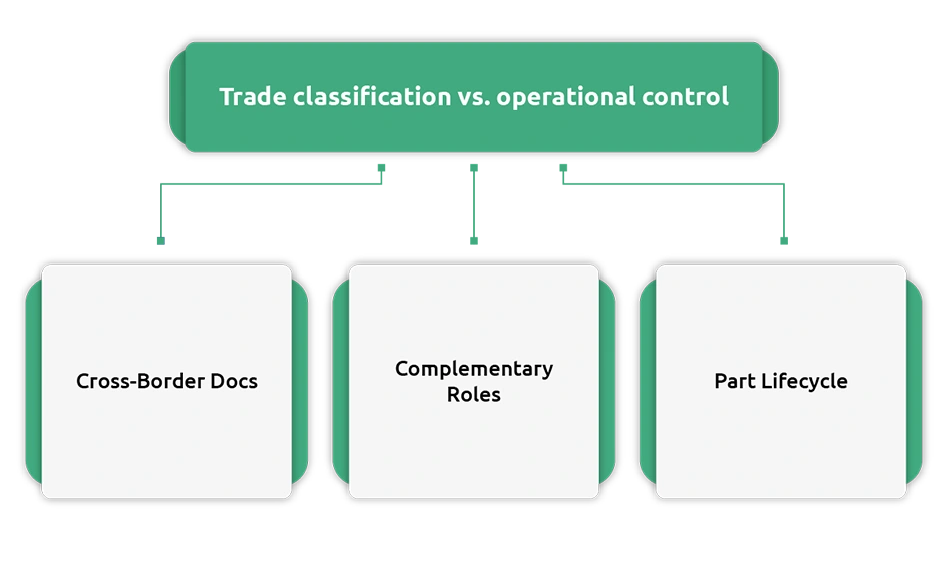
Trade classification vs. operational control
HS code and serial number serve different but complementary roles. HS code classification groups aircraft parts for international shipping terms trade, taxation, and reporting purposes. It helps authorities and businesses categorize components at a product level.
Serial numbers, on the other hand, identify the exact physical unit. They are used for maintenance tracking, regulatory approval, safety audits, warranty management, and lifecycle projections.
When aircraft parts move across borders, both identifiers appear in documentation. The HS code defines what the good is, while the serial number defines which specific good it is. The serial number there is no way to confirm that the part received is the same one that was delivered, serviced, or approved by a customs broker. This is why aviation depends on serial number tracking rather than HS Code categorization alone.
What Is an Aircraft Part Number and How Are Aircraft Part Numbers Systems?
Part numbers vs. serial numbers
An aircraft part number identifies the design of a component, not the individual unit. It tells you what the part is supposed to be, its configuration, similarity, and working category during supply chain optimization. Multiple parts can share the same part number if they are created from the same design.
The serial number is what differentiates each physical good. For example, two hydraulic pumps may share one part number but have different serial numbers.
Typical structure of aircraft part numbers
Aircraft part numbers are systematic by the manufacturer and may include:
- A base method or aircraft part identifier
- Dash numbers indicating variants or modifications
- Revision or configuration codes
Conclusion
Aircraft parts are tracked by serial number, not HS code alone, because aviation demands traceability at the individual component level. HS code categorization supports trade and documentation, but it cannot record life limits, maintenance events, or regulatory status. Serial numbers change each part into a fully traceable device with a documented history from manufacture to destruction. Using serial number tracking with standardized part numbering and strong labeling methods, the aviation industry protects safety, stops unauthorized parts from entering service, and confirms every component can be accounted for at any moment.
DID YOU KNOW?
RGIS achieved a 98.9% inventory accuracy rate, identifying 2,000 unrecorded products and 900 obsolete aviation parts requiring action.
FAQs:
1. Why are aircraft parts tracked by serial number instead of HS code alone?
Aircraft parts are tracked by serial number because aviation requires traceability at the individual component level. HS codes classify products for trade, but serial numbers record a part’s unique history, including inspections, repairs, life limits, and certifications.
2. What is the difference between an aircraft part number and a serial number?
A part number identifies the design and type of a component, while a serial number identifies the exact physical unit. Many parts can share the same part number, but each serial number is unique.
3. How are aircraft parts labeled for identification and traceability?
Aircraft parts are labeled using laser marking, engraving, nameplates, and machine-readable codes such as barcodes or Data Matrix codes. These markings are designed to withstand heat, vibration, and chemicals.
4. When are HS codes and serial numbers used together in aviation?
Both are used during international shipping and customs documentation. HS codes define what the product is, while serial numbers specify which exact component is being shipped, installed, or serviced.
5. How does serial number tracking improve aviation safety?
Serial number tracking ensures every part’s maintenance history, airworthiness status, and regulatory approvals are documented. This prevents unapproved parts from entering service and supports full lifecycle accountability.