
Overview
In the aviation industry, shipping high-value components requires accuracy, security, and strong approval to global standards. Aircraft parts such as engines, avionics, and sensitive devices are not only expensive but also necessary for working safety. White glove logistics an important service for aviation organizations looking to reduce risks and confirm smooth logistics. White glove logistics grows to a premium level of service that focuses on special management, secure shipments, and a customized delivery approach. In global aviation logistics, this requires frequent working with international freight services, regulatory approval, and effective customs clearance processes. As cross-border shipments increase with incoterms, HS code categorizations, and the HTS Harmonized Tariff Schedule becomes important to avoid delays and confirm agreement in countries.
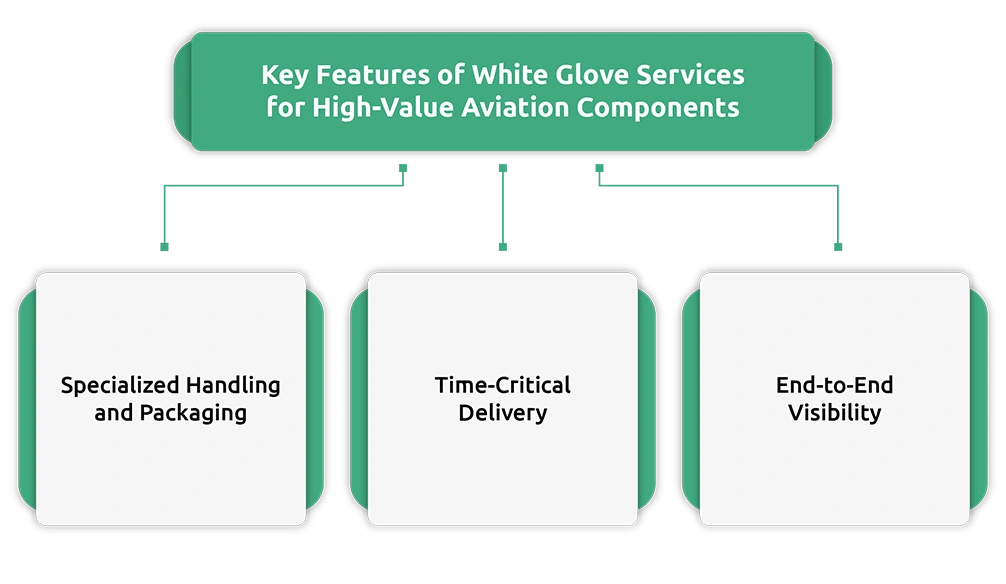
Key Features of White Glove Services for High-Value Aviation Components
Specialized Handling and Packaging
High-value aviation components demand advanced packaging solutions to secure them from environmental and physical damage. White Glove logistics providers use shock-resistant materials, temperature-controlled containers, and anti-static packaging of shipments. These shows support better inventory and order management while having product integrity during logistics.
End-to-End Visibility
White Glove Service provides real-time tracking systems that provide full visibility of shipments. This clarity is necessary for supply chain optimization, allowing customers to track every stage of the logistics process and respond quickly to problems. Handling aviation parts requires experts with knowledge of approval, safety standards, and technical specifications. Their expertise confirms proper documentation, including HS code categorizations and approval to international shipping regulations.
Time-Critical Delivery
In urgent scenarios such as Aircraft on Ground (AOG), time is necessary for shipments. White glove logistics prioritizes fragile international freight services and improved delivery routes, confirming reduced maintenance time.
Secure Logistics
Security is increased through GPS tracking, tamper-proof packaging, and controlled handling environments. These shows secure high-value shipments from theft or damage during logistics.
What Does White Glove Mean in High-Value Aviation Logistics?
Premium Service Level
White-glove logistics represents a high-end service method that goes beyond standard shipping. It includes various planning, handling, and delivery customized to aviation requirements.
Customized Solutions
Every shipment is unique, requiring customized logistics plans. Logistics shipping terms, such as Incoterms with shipping terms DAP and DDP shipping play an important role in responsibilities between buyers and sellers, confirming clarity in global logistics.
Agreement and Documentation
Regulatory approval is a major component of aviation logistics. White glove services frequently combine exporter of record services and importer of record services to manage international shipping responsibilities. Questions such as “can a freight forwarder be an exporter of record,” or “can a customs broker handle both import and export documentation” are important considerations in systematic, complete logistics operations.
Risk Reduction
Risk is minimized through careful planning, advanced tracking, and the use of the best trade compliance software for import export rules. These tools help manage documentation, tariffs, and regulatory requirements effectively in import-export.

How Do White Glove Logistics Work for High-Value Aviation?
Step 1: Assessment and Planning of delivery
The process starts with a complete estimation of the logistics costs. This requires checking categorization requirements, such as HS code, and knowing trade benefits such as the Generalized System of Preferences (GSP), which may affect duties and costs of shipments.
Step 2: Customized Packaging
Based on the evaluation, the packaging is designed to protect the component during logistics. This confirms safety during managing, storage, and logistics.
Step 3: Secure Transportation
Shipments are logistics using fragile and secure shipments. Working with international freight services confirms timely and dependable delivery across borders of aviation parts.
Step 4: Customs Clearance and Approval
Effective customs clearance is necessary in global trade. Complete documentation, approval of the HTS Harmonized Tariff Schedule, and agreement with trade regulations help stop delays and penalties of logistics.
Step 5: Real-Time Tracking of logistics
Advanced systems track the shipment throughout its delivery, confirming clarity and a quick response to any issues during the delivery of parts.
Step 6: Final Delivery and Handling
The final stage requires careful unloading, inspection, and logistics of aviation parts. In some cases, extra services such as installation are also provided to complete the process of delivery.
Conclusion
White glove logistics plays a crucial role in the safe and effective transportation of high-value aviation components. As global trade becomes more difficult, integrating elements such as Incoterms, exporter of record services, importer of record services, and advanced compliance tools becomes necessary for shipments. White glove logistics not only increases working efficiency but also supports long-term supply chain optimization, making it an indispensable solution in modern aviation logistics.
DID YOU KNOW?
The aviation value chain recorded a financial loss of approximately $14 billion in 2024; this figure is significantly larger than the $6 billion loss recorded in 2023 and is even more disappointing when compared to the industry’s overall performance.
FAQs:
1. What is white glove logistics in aviation?
White glove logistics in aviation refers to a premium logistics service designed for handling high-value and sensitive aircraft components. It includes specialized packaging, secure transportation, real-time tracking, and strict compliance with global regulations.
2. Why is white glove logistics important for aircraft parts?
Aircraft parts are expensive and safety-critical, requiring careful handling and secure shipping. White glove logistics minimizes risks such as damage, delays, and compliance issues while ensuring timely delivery, especially in urgent situations like AOG.
3. What types of aviation components require white glove services?
High-value components such as aircraft engines, avionics systems, landing gear, and sensitive electronic equipment typically require white glove logistics due to their cost, fragility, and regulatory requirements.
4. How do Incoterms impact white glove logistics shipments?
Incoterms define the responsibilities of buyers and sellers in international shipping. Terms like DAP (Delivered at Place) and DDP (Delivered Duty Paid) help clarify who handles transportation, customs clearance, and duties in white glove logistics operations.
5. Can a freight forwarder work as an exporter or importer of record?
Yes, in some cases, a freight forwarder can work as an exporter of record or importer of record, depending on legal regulations and agreements. However, this requires proper authorization and approval with international trade laws.