
Insight
The international ports and airports are important in the transport of valuable equipment, such as aviation, information technology, medical equipment, and automotive equipment. The global supply chains are also taken care of by the major ports, including Singapore, Rotterdam, Jebel Ali, and Shanghai, which handle volumes of cargo transported daily across Asia, Europe, and the Middle East. In the same manner, the airports support expedited air transport, which is required for delicate and time-sensitive packages.
These fundamental centers, though, are questioned by a growing set of issues, which include traffic jams, high standards of regulation, and smart customs needs. There are also seasonal & unpredictable weather conditions (hurricanes, heavy snowfalls, or heatwaves) that disrupt the process of logistics by disrupting movement and influencing the safety of the cargo. Given these complexities, there is a need to determine the manner in which the International Shipping Incoterms under the Delivery Duty Paid (DDP), Delivered at Place (DAP), and the Delivered Duty Unpaid (DDU) redistribute their responsibilities, costs, and risks concerning the global movements.
The following blog is going to tell the differences between these incoterms and help you choose the most appropriate shipping term to use in your logistics. It also aims at optimization of freight forwarding, customs standards, and warehousing to provide port-to-port, safe, and efficient delivery of your high-value equipment. With this, you will be in a position to make wise decisions, shorten delays, & secure your precious shipments in a highly competitive global business environment.
Understanding Shipping Incoterms: DDP, DAP, and DDU
Incoterms are precise in their allocation of the cost of shipping, clearing, import duties, and risk management in international transportation. These words are crucial in offering transparency, where everyone, including freight forwarding services and warehouse operators, knows their positions. This is clear and enables easy communication, thereby avoiding and minimizing the need for expensive shipping delays. Purchasing according to the terms of sale that match your logistical capabilities optimizes your supply chain functions, providing certainty and effective management. Shipment of aviation components, IT equipment, healthcare equipment, or auto parts – all these terms define the efficient flow of logistics.
What is DDP, and What are its Advantages?
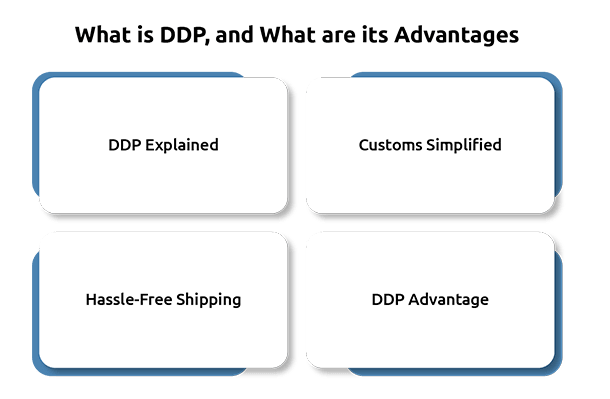
DDP implies that the entire shipping operation is controlled and financed by a single party. These include freight expenses, port clearance at the export and import ports, and all import duties and taxes. The cargo is shipped cleared and usable at the destination, and no extra paperwork and fees are applicable by the receiving party.
By this set-up, most of the hassles that one ordinarily faces in other nations, like clearing any form of customs, are avoided. It is especially relevant when the shipment being made is very delicate and valuable. As such, it needs speed and reliability. It also leads to increased control over compliance, which can result in delays or sanctions during the shipping process.
All About DAP (Delivered at Place)
With DAP, the seller handles transportation as well as export clearance until the goods reach the agreed destination. The importer has to take the burden of clearing formalities, customs, and taxes at the port of entry. This structure grants the importer authority regarding local importation processes and costs. At the same time, the seller specializes in duties related to transit and exportation. DAP is suitable for importers who are familiar with customs processes and wish to reduce costs while maintaining efficiency in shipping. This will be useful because it distributes responsibilities between the two parties in a manner that complements their fields of experience.
The Role of DDU (Delivered Duty Unpaid)
While DDU remains a common industry term, it has been replaced by DAP, using the official terms is essential to match digital customs systems. Under this rule, the seller ships the goods, but you handle the taxes and paperwork. This is beneficial for businesses that handle all costs themselves. Using DAP in your 2026 agreement is the best way to avoid legal errors or shipment delays.
Better Cash Flow: You only pay taxes when the goods arrive, which keeps your money free for other business needs instead of paying the seller in advance.
Pick Your Expert: You can choose your own customs broker to handle the paperwork, giving you a trusted partner to ensure accuracy and prevent clearance issues at the border
Comparing Costs & Risks: Which Incoterm Fits Your Supply Chain?
- DDP places maximum costs and risks on the seller, ensuring a worry-free import experience for the buyer.
- DAP splits responsibilities; the seller manages shipping/export, importer manages import clearance and duties.
- DDU has the seller deliver the shipment, while the importer takes on all customs and clearance duties, best used by those with extensive import expertise.
- Choosing the right incoterm depends on your import-export skills, financial planning, risk appetite, and supply chain priorities.
Conclusion
The shipping Incoterms that ought to be applied are DDP, DAP, and DDU, which must be selected in order to ensure effective logistics and deliveries within a limited time frame and at reasonable prices of high-value products, such as aviation parts, IT equipment, medical equipment, and auto parts.
One Union Solutions will deliver quality freight forwarding, precise warehousing, and white-glove delivery services to your particular shipment needs. The services that we provide concerning logistics in a holistic manner help in increasing transparency of the supply chain, security of valuable cargo, and professional services about the documentation, customs clearance, and end-to-end shipment assistance. Travel with us and have the benefit of having your equipment delivered without any hustle and at an affordable price, and safely and on time.
Did You Know,
UN Trade and Development’s (UNCTAD) year-end Global Trade Update shows East Asia, Africa and South–South trade powering gains, even as rising uncertainty shapes the outlook for 2026.
FAQ’s
What does DDP mean in international shipping?
Under DDP, the seller handles the entire process, including all shipping costs, import taxes and customs duties. This means the buyer doesn’t have to worry about any paperwork or surprise bills when the product reaches the port.
How does DAP differ from DDP?
Under DAP, the importer manages customs clearance and import duties, and the seller handles shipping and export.
How do new digital rules affect my choice of Incoterms?
In 2026, DDP is safe because the seller handles all required digital paperwork. Otherwise, any error could result in your shipments being turned away or denied entry at the border.
Which incoterm minimizes risk for the importer?
DDP places the least risk on the importer, with the seller managing customs and duties.
How do Incoterms influence freight forwarding and warehousing?
They determine which party arranges freight forwarding, customs procedures, and warehousing management, affecting logistics efficiency.