Overview
Global trade increasingly depends on transshipment ports to connect with other markets, combined cargo, and improve ship routes. While these ports play a vital role in modern international shipping terms, they can also introduce unwanted economic risks. One of the most overlooked challenges is unexpected duty exposure situations where goods are subject to duties, taxes, or regulatory scrutiny simply because they passed through an intermediate port. For businesses managing international freight services, container movements, and customs clearance processes, understanding how transshipment points affect duty dependability is necessary to protect the border and confirm approval.
What is the Role of Transshipments in Global Shipping?
It occurs when cargo is unloaded at an urgent port and transferred to another ship before reaching its final location. This method allows shipping lines and freight forwarding companies near me or globally to connect routes effectively, reduce shipping time, and serve markets that need direct services.
Why Transshipment Ports Matter
Major container hubs work as changing hubs where cargo from multiple origins is reorganized and redirected. These ports support international shipping by allowing flexible routing, consolidating volumes, and supporting inventory and order management strategies for multinational companies. Also, each additional stop introduces new documentation, handling, and regulatory layers. If not managed carefully, this difficulty can hide the country-of-origin trail, trigger inspections, or even cause goods to be treated as having entered a new customs zone, creating unexpected duty exposure.

The Role of Container Ports in Transshipment and Tariff Disclosure
Container ports engaged in transshipment are not merely transit points; they are active operational zones where containers may be stored, broken, relabeled, or reloaded. These activities can improve how authorities interpret the trading status of the goods.
How Ports Develop Duty Liability
If cargo is considered to have undergone a trade activity beyond simple transit, such as repacking, value-added handling, or extended storage, it may fall under local customs clearance rules. In some administrations, this can expose shipments to duties or taxes, even though the final buyer is elsewhere. For companies depending on an Importer of Record service or an Exporter of Record service, this can make approval responsibilities difficult and increase financial risk.
How Unexpected Duty Exposure Occurs during Transshipment Ports
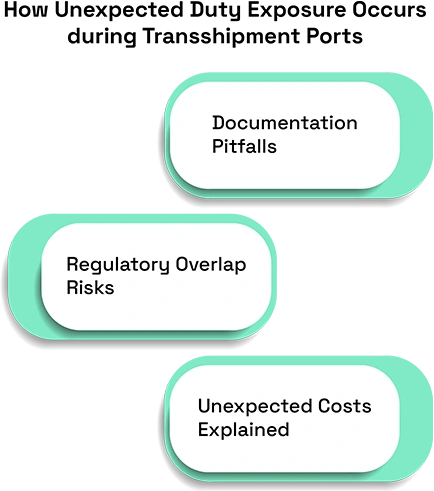
The unwanted duty aspect usually arises from documentation issues, procedural missteps, or regulatory interpretations that differ between countries.
Common Risk Scenarios
One frequent issue occurs when shipping documents do not clearly establish that goods remain in international transit. If the paperwork is inconsistent or incomplete, authorities may classify the cargo as having entered the local market. This can immediately trigger duties, port taxes, or agreement checks.
There is also the risk of regulatory overlap. When shipments pass through multiple officials, each may apply different interpretations of international shipping terms. Without complete work between freight partners and customs clearance teams, organizations may discover unexpected dependabilities only after the cargo is already delayed or released under bond.
How Does the Transshipment Impact Transit Time and Reliability?
Beyond financial exposure, transshipment directly affects logistics time and shipment dependability. Every additional port call increases the chance of congestion, inspection holds, or schedule changes.
Operational Consequences
Delays at a transshipment hub can disrupt downstream production schedules and inventory, and order management systems. Missed connections can extend transit times by days or weeks, reduce service guarantees, and complicate premium delivery service provided by Warehousing and distribution services. From a compliance perspective, long-time staying at ports may increase the chance that authorities inspect shipments more closely, especially if containers remain in bonded areas for extended periods. This raises the probability of administrative errors, documentation revalidation, or reclassification, all of which can create new duty exposure.
Conclusion
Transshipment ports are necessary to global trade, allowing flexible routing and broad market access. Yet they also represent one of the most underestimated sources of unexpected duty exposure. Container handling work, documentation inconsistencies, and differing regulatory interpretations can change a simple logistics stop into an economic and operational risk point. For businesses working in international shipping, the major issue is visibility and control. Clear documentation, careful partner selection, and working between business and agreement teams help confirm that transshipment remains a major advantage rather than a hidden dependency.
DID YOU KNOW?
The detailed project report for the proposed ₹1 lakh crore international container transshipment port at Galathea Bay in Great Nicobar Island has been prepared and will soon be submitted to the Union Ministry of Ports.
FAQs:
1. What is unexpected duty exposure in transshipment?
Unexpected duty exposure occurs when cargo passing through a transshipment port becomes subject to customs duties, taxes, or regulatory actions, even though the goods are not intended for that country’s market.
2. Why do transshipment ports increase customs risk?
Each transshipment point introduces new authorities, documentation requirements, and handling activities. If shipments are not clearly maintained as “in transit,” customs may treat them as imports, triggering duties.
3. Can storage or handling at a transshipment port affect duty liability?
Yes. Activities such as long-term storage, repacking, relabeling, or value-added services can cause authorities to reclassify goods, potentially exposing them to local customs clearance and taxes.
4. How can companies reduce duty exposure during transshipment?
Businesses can reduce risk by maintaining precise shipping documents, using bonded facilities, coordinating closely with freight and customs partners, and monitoring dwell times at intermediate ports.
5. Does transshipment impact delivery time and reliability?
Yes. Additional port stops increase the chance of congestion, inspection delays, missed connections, and documentation issues, which can affect both transit time and shipment predictability.