Trade digitization use to the change from paper-based, divided supply chains to development, paperless, & data-driven global trade. It mainly transfer labor markets from routine physical & administrative tasks toward digital, high-skilled roles, mainly augmenting human productivity rather than causing widespread, net-negative workforce displacement.
Understanding Trade Digitization
Trade digitization is the change of past, paper-heavy international commerce into easy electronic processes. It replaces physical documents like bills of lading & invoices with eDocs, automates supply chains, & accelerates trade finance using technologies like blockchain & artificial intelligence to minimize costs & border delays.
Understanding trade digitization needs looking at how it replaces old, inefficient issues with modern speed. Here is how the shift impacts global commerce:
Main Components
Digitization vs. Digitalization: Digitization is simply changing physical, paper documents into digital formats. Digitalization goes further by mainly changing how business is done using data flows & automated workflows.
Digital Trade: Includes the exchange of goods & services that are either digitally ordered or digitally delivered e.g., software, streaming, or financial services.
Trade Finance Digitization: The automation of letters of credit, digital contracts, & purchase orders. This connects physical supply chains with financial data to provide faster access to capital & remote approvals.
Why It Matters
Trade digitization plays an important role in enhancing international trade efficiency & usability by minimizing costs, updating supply chain stability, & supporting equality. By removing paper-heavy processes, businesses can mainly minimize executive delay, lower transaction costs, & minimize risks associated with lost or delayed documentation, leading to faster trade cycles. The development of Big Data & the Internet of Things enables real-time tracking, updated risk management, & enhance record control, which improves whole supply chain resilience. Trade digitization supports greater inclusivity by using the traditional issues of cost & difficulty, allowing small & medium-sized enterprises to participate more easily in global markets & improve their global reach
Economy-wide impacts of technology adoption
To analyze the whole impact of technology on jobs, it is useful to consider the connectivity & impact of technology choices across sectors. EAP resembles the rest of the world in the labor market impacts of mechanization, but the impacts of industrial automation have so far been different. Mechanization is associated with farm productivity gains & little change in the level of employment. While the share of farm employment has dropped globally & in EAP countries, this decline is driven more by the pull of higher manufacturing wages than by mechanization’s labor displacement. The share of manufacturing employment globally rises in the early stage of robot adoption & then falls. Developing EAP countries have so far defied this pattern. The share of industrial employment has continued to rise even as countries deepen robot adoption.

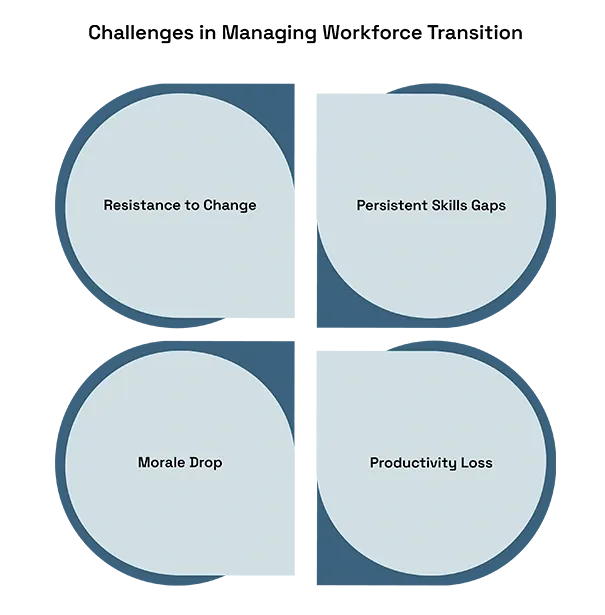
Challenges in Managing Workforce Transition
- Resistance to Change
Resistance to change is one of the main challenges in workforce change, mainly when organizations use technologies like AI or change toward hybrid working models. Employees often experience fear due to concerns about job security, risk to update routines, & doubt about new systems. This doubt can slow down or even block the successful development of new processes. To overcome this, organizations need to connect employees early in the transition through structured change management approaches such as Change Management Solutions. Clear communication about the purpose of change, along with highlighting quick wins & giving hands-on training, can help build trust & mainly turn resistance into active support & promotion.
2. Persistent Skills Gaps
Persistent skills gaps are a main challenge in updated workforce transformation, as new digital & AI-driven roles often need skills that current employees may not possess, while the external talent market for these specialized skills remains highly competitive. This often results in slow hiring processes & low holding rates during the first year in critical roles. To address this issue, organizations need to shift from traditional one-time training programs toward a continuous learning framework that supports ongoing skill development & adaptability. For specialized roles, using solutions such as Taggd AI Workforce Transformation Insights can help organizations identify suitable candidates more effectively through behavioral profiling & access to pre-built talent pools, improving both hiring efficiency & long-term holding.
- Morale Drop and Productivity Loss
Morale drop & productivity loss are common challenges during workforce change such as layoffs, reshaping, or role transfer, as these changes often create mainly among employees. Remaining staff may experience increased workloads, & minimizes trust in leadership, which can mainly lead to lower productivity & engagement levels. To address these issues, organizations should adopt structured workforce management strategies such as the Allegis Global Solutions approach, which focuses on managing organizational agility during transitions. This includes ensuring easy knowledge handovers, mainly managing employee strength, & giving strong emotional & professional support to help employees adjust easily to new roles & responsibilities.
Conclusion
Trade digitization is mainly changing the structure of global commerce by replacing traditional, paper-heavy systems with faster, more efficient, & data-driven digital processes. While this change improves productivity, minimizes costs, & improves supply chain resilience, its effect on employment is more difficult, as it shifts workforce demand from routine manual & administrative roles toward more skilled, technology-enabled functions. Workforce displacement is not simply a loss of jobs but a broader transition toward new forms of employment driven by automation, AI, & digital platforms.
Did you know?
If current AI use cases were expanded across the economy and reduced employment proportionally to efficiency gains, an estimated 2.5% of US employment would be at risk of related job loss.
FAQ
1. What is trade digitization?
Trade digitization is the shift from paper-based international trade processes to digital, data-driven systems. It includes the use of electronic documents, automation, AI, blockchain, and digital platforms to make global trade faster, more efficient, and more transparent.
2. How does trade digitization affect employment?
Trade digitization shifts job demand from routine manual and administrative roles toward digital and high-skilled roles. While it may reduce some traditional jobs, it also creates new opportunities in areas like data analysis, supply chain management, and digital compliance.
3. Is workforce displacement caused by trade digitization permanent?
Not necessarily. Most displacement is transitional. Workers often move from traditional roles into new digital roles, provided they receive proper reskilling and upskilling support.
4. Which sectors are most affected by trade digitization?
The most affected sectors include manufacturing, logistics & customs processing. These sectors experience high levels of automation and digital transformation.
5. What are the biggest challenges in workforce transition?
Key challenges include resistance to change, skills gaps, declining employee morale during restructuring, and lack of effective training programs.