Trade compliance in Australia covers statutes for exporting, importing, and employing cloud computing services. These regulations defend data protection, fair competition, and intellectual property. Industries must comprehend and follow trade compliance to operate lawfully and evade tribulations.
Enterprises in Australia are required to select cloud providers that comply with Australian regulations and industry criteria. Agreements and service contracts must deal with data handling, protection standards, and trade compliance. This article will examine the trade compliance of cloud computing in Australia and other significant facts.
Comprehending cloud computing and its significance in the business world
Cloud computing in Australia enables both consumers and organizations to use computer resources without the need for physical infrastructure. Pay-per-use software, servers, and apps are all included in this. Businesses and people with low resources benefit from this since expensive gear can be stored and preserved. Additionally, the pay-per-use approach guarantees easy procedural scalability.
Businesses have completely changed due to cloud computing’s potential to reduce costs, scale, and improve collaboration. Businesses don’t need physical infrastructure to access computer resources on demand, which reduces costs and frees them up to focus on their core competencies. Thanks to this transition, industries may now operate in the market with more responsibility and agility.
The influence of Australian cloud computing on multinational trade
Cloud computing has intensely impacted multinational trade by enabling corporations to develop and access international markets. Through cloud-based solutions, enterprises can cooperate globally, boosting global trade and new options. Nevertheless, these improvements also bring about custom compliance challenges.
Challenges of Trade compliance in the context of cloud computing
Cloud computing poses trade compliance challenges for companies, especially related to data privacy and protection. Storing and processing data in the cloud may be subject to altering statutes across diverse nations, making it challenging for industries to assure compliance. Some nations also restrict storing or processing specific data outside their borders, which can impede corporations that depend on multinational cloud services.
One challenge in cloud computing is data protection troubles, the transferring of technology, and intellectual property throughout borders. This raises troubles about protecting and licensing intellectual property, as corporations should comply with local statutes to employ and transmit software and additional assets
Pivotal trade compliance deliberations for cloud computing in Australia
Industries in Australia are required to evaluate data safety and privacy regulations when it comes to trade compliance in cloud computing. The Australian Privacy Act delineates provisions for dealing with personal data, so corporations should have appropriate data safety criteria and comply with these laws.
Companies in Australia must take into account the nation’s export control laws, which may need authorizations or permits for exporting particular technology and software. It is essential for corporations to be aware of these laws and comply with any licensing provisions when employing cloud services that include transferring technology globally.
Cloud computing can influence trade and import statutes due to data transfer across borders. Industries must be aware of Australian trade and import rules to guarantee compliance.
As cloud computing Australia continues to grow, enterprises must navigate evolving legal frameworks, particularly concerning trade compliance for data storage. Adhering to customs compliance guidance in Australia is vital for companies to ensure lawful cross-border data flows and maintain competitive advantages. Aligning with local and international standards helps prevent regulatory penalties and enhances business trust

Australian Privacy Act and Cloud Compliance Rules
The Australian Privacy Act is a law that protects people’s personal data in Australia. It controls how businesses collect, store, use, & share information when using cloud computing services. Companies must make sure customer data is kept safe, private, & used only for legal purposes. For cloud compliance in Australia, businesses must choose cloud providers that follow these privacy rules. They need to use strong security systems, protect data from leaks, & make sure data is not shared without permission. If companies do not follow these rules, they can face fines, legal problems, & loss of trust. In simple words, the Australian Privacy Act & cloud compliance rules help make sure that all data stored in the cloud is safe, secure, & handled in a responsible way.
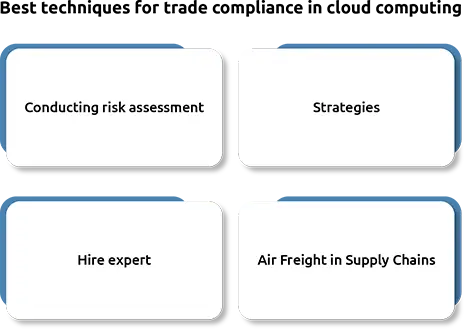
Best techniques for trade compliance in cloud computing
Conducting risk assessment: Enterprises can assure trade compliance in cloud computing by executing a risk assessment to specify and mitigate any probable hazards associated with their usage of cloud services.
Strategies: Companies must establish approaches and strategies to fulfill trade compliance prerequisites, such as data security, export management, and trade compliance. These approaches must outline the essential measures for adhering to relevant statutes and rules.
Hire expert: Industries should hire a trade compliance professional or adviser to navigate the complex custom compliance terrain. These professionals can assist industries in understanding industry-specific provisions and provide entire compliance.
Conclusion
Trade compliance is important for companies using cloud computing in Australia. Cloud services can create challenges with data privacy, intellectual property protection, and following trade laws. Businesses must understand these rules and make sure they meet all requirements. One Union Solutions offers strong and reliable trade compliance support for cloud computing companies. Our expert team helps you understand complex regulations and stay fully compliant. By partnering with One Union Solutions, your business can focus on the benefits of cloud technology while we handle compliance. Contact us today to achieve smooth and secure trade compliance in the cloud era.
Did you know
Overall, Australia’s trade values in March 2026 showed a robust increase in imports, with a total of 41.59B AUD, up 4.96B AUD from the previous month and 7.06B AUD from the previous year
FAQs
How does trade compliance affect cloud data storage in Australia?
Trade compliance ensures that companies store, process, and transfer data according to Australian rules. It helps protect sensitive information, avoid legal risks, and choose cloud providers that meet national privacy standards.
What happens if a company does not follow cloud trade compliance laws in Australia?
Non-compliance can lead to legal penalties, data breaches, loss of trust, and operational delays. Businesses may also face restrictions on using certain cloud services that do not meet Australian compliance requirements.
Do Australian regulations impact the choice of international cloud service providers?
Yes. Companies must confirm that global cloud providers meet Australian data protection laws, especially when storing or transferring data overseas. This includes checking data centres, security controls, and privacy policies.
How can businesses ensure their cloud operations stay compliant over time?
Regular audits, continuous monitoring, updated documentation, and working with experts like One Union Solutions help businesses stay aligned with evolving compliance rules and industry standards.
What role does One Union Solutions play in managing cloud-related compliance risks?
One Union Solutions helps companies identify risks, review cloud processes, update compliance practices, and stay informed about new regulations. Their support ensures smooth cloud operations while meeting Australian legal requirements.