The rush is on to build sufficient data center capacity to support a huge development in the use of AI. Data center demand has already boosted in response to the role data plays in modern lives. But with the introduction of generative AI (gen AI), demand is set to develop even higher. And that is likely to presage a supply shortage.
The effect of Gen AI has expanded beyond cybersecurity into the broader domain of cloud operations. As cloud computing demand is developing, the operational models & development methods are growing to adapt to the abilities of Gen AI. This transformation includes a shift to more dynamic, AI-driven methodologies from traditional IT operating models. As per industry experts, around 50% of new system deployments will be cloud-based, and generative AI will play a significant role in the transition.
Limitations of Cloud Customization for Specialized Workloads
The limitation of customization for such workloads turns into an important restraint for the market. The one-size-fits-all nature of cloud offerings does not meet the specific requirements of industries that demand highly specialized computing needs. Enterprises involved in niche sectors, with difficult simulations or scientific research, often require customized configurations that do not adapt within standardized cloud infrastructures. This restricts the adoption of cloud services in sectors where personalized solutions are useful for optimal performance & efficiency.
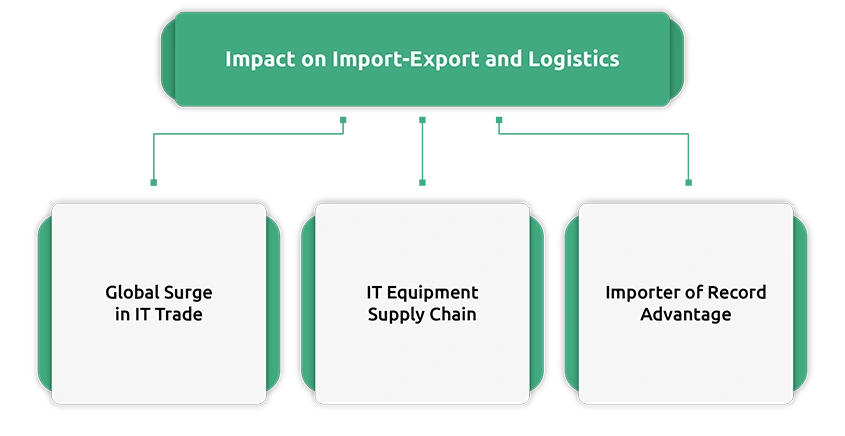
Impact on Import-Export and Logistics
Increased Trade of IT Equipment
As demand for servers, networking devices, & cloud infrastructure grows, global trade in IT & telecom equipment is also increasing. Many countries depend on imports to meet their technology needs, especially for advanced servers & networking hardware. This has created new opportunities in the import-export sector, mainly for businesses involved in technology distribution & logistics.
Compliance and Customs Challenges
Importing IT equipment is not always simple. It involves strict regulations, certifications, & customs procedures that vary from country to country. Businesses must ensure proper documentation, correct classification of goods, & compliance with local laws. Failure to meet these requirements can lead to delays, penalties, or shipment rejections. This is why many companies depend on Importer of Record services to manage compliance & ensure smooth customs clearance.
Public Cloud Dominance Driven by Scalability and Cost Efficiency
By deployment, the market is transitioning into public cloud, private cloud, & hybrid cloud. The public cloud segment is expected to lead the market, contributing 67.42% globally in 2026, as enterprises are shifting to the public cloud for its ability to allow easy scalability and provide greater security and reliability for both internal team members and end-users. In addition, with the public cloud, enterprises can create nimble virtual machines that can grow and shrink, save on server-intensive computing, and balance workloads. Around 30% of enterprises in various industries spend between USD 2.4 million and USD 12 million on public cloud.
Cloud Computing Revolution in the IT & Telecom Industry
By industry, the market is segmented into healthcare, IT & telecom, and others. The IT & telecom segment dominated the market. The telecom industry has undergone a significant transformation due to the adoption of cloud computing. Telecommunication companies are increasingly turning toward cloud computing as an alternative to traditional network architectures for improving agility & reducing operational costs. In the telecom sector, cloud computing provides a software-defined infrastructure that facilitates telcos to store and process data in remote data centers, rapidly expand their services, & respond quickly to changing demand. According to telecom statistics, nearly 35% to 50% of telecom companies use the cloud for deeper collaboration across digital ecosystems.

Conclusion
The high demand for servers, networking, & cloud infrastructure is driven by digital transformation, growing technologies, & the development of data centers. Cloud computing has become a main supporter of business growth, giving scalability, flexibility, & global connectivity. The growth in demand has increased global trade in IT equipment, creating both opportunities & challenges in import-export & logistics. Businesses that invest in modern, compliant, & scalable infrastructure will be better prepared to succeed in an increasingly digital & competitive world.
Did you know?
The global cloud infrastructure services market size was valued at USD 158.89 billion in 2025 and is projected to grow from USD 178.18 billion in 2026 to USD 493.41 billion by 2034, exhibiting a CAGR of 13.60% during the forecast period. North America dominated the global cloud infrastructure services market with a share of 39.90% in 2025.
FAQ
1. Why is the demand for servers, networking, and cloud infrastructure increasing?
The demand is rising due to rapid digital transformation, increased data generation, and the adoption of technologies like AI, IoT, and big data. Businesses need strong infrastructure to store, process, and manage data efficiently.
2. Which industries are driving the demand for IT infrastructure?
Industries such as healthcare, finance, e-commerce, IT & telecom, and manufacturing are major drivers. These sectors rely heavily on digital platforms, real-time data processing, and cloud-based services.
3. How does cloud computing support this growing demand?
Cloud computing provides scalable and flexible resources, allowing businesses to expand or reduce their infrastructure based on needs. It reduces the need for physical hardware and improves efficiency and cost management.
4. What role does networking play in modern IT infrastructure?
Networking ensures seamless communication between systems, devices, and users. High-speed and secure networks are essential for data transfer, remote work, and cloud connectivity.
5. How does this demand impact import-export and logistics?
The growing demand increases global trade in IT equipment like servers and networking devices. It also creates challenges related to customs regulations, compliance, and documentation, making services like Importer of Record (IOR) important for smooth operations.