Introduction to AI in Documentation and Compliance
In today’s global trade, managing documents and following rules is becoming more difficult. Businesses involved in import export must manage a lot of paperwork, regulations, and country-specific requirements. This can take time and increase the chances of mistakes.
This is where AI-powered documentation and compliance tools help. These tools use artificial intelligence to automate tasks like document creation, checking, and compliance verification.
For companies in IT, aviation, medical, and automotive industries, AI reduces manual work and makes customs clearance smoother. Whether using DAP, DAPs, or other Incoterms, AI tools help businesses manage international trade in a faster and more efficient way.
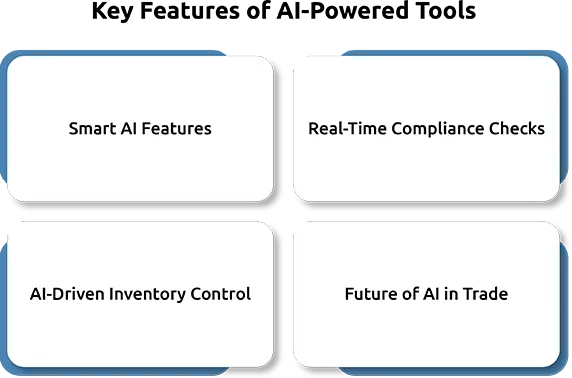
Key Features of AI-Powered Tools
AI-powered tools come with smart features that help organizations to work faster and more correctly.
One of the main features is automatic document processing. These tools can quickly read invoices, packing lists, and shipping documents. They extract important information & minimize the need for manual data entry.
Another important feature is real-time compliance monitoring. AI tools check if shipments follow global trade rules, including the correct use of HS codes and HTS Harmonized Tariff Schedule classifications. This helps businesses avoid delays and fines.
AI also improves inventory and order management by connecting documents with supply chain systems. It helps track shipments, manage stock, and keep records updated. Many companies now use the best trade compliance software for import export rules to stay competitive in global markets.
Benefits for Import Export Businesses
Using AI in documentation and compliance offers many benefits.
First, it reduces human errors. Manual paperwork usually leads to mistakes, & even small mistakes can delay shipments or create compliance issues. AI helps to avoid these issues by improving accuracy.
After that, AI saves time. Tasks that used to take hours can now be done in minutes. This is very important in international freight services where timing matters a lot.
Another big benefit is cost savings. Automation decreases the need for manual work & helps to avoid fines caused by mistakes. AI also supports supply chain optimization, making processes smoother and more efficient.
For companies providing Importer of Record Service and Exporter of Record services, AI tools make it easier to handle legal responsibilities & maintain proper documentation while following local and international rules.
Industry Use Cases
AI-powered documentation tools are used in many industries to make work easy & fast.
In the IT sector, businesses use AI to manage large numbers of equipment shipments. It helps manage documents & provides smooth cross-border shipping services. Correct paperwork is important to avoid delays & keep processes running without interruption.
In the aviation industry, parts & equipment must follow strict rules. AI helps to ensure all papers meet international standards. This is important for safety and to prevent delays in operations.
The medical industry also depends on AI tools. Medical devices need correct paperwork & permissions before shipping. AI helps to make sure all compliance needs are met, especially for sensitive shipments.
In the automotive manufacturing supply chain, AI helps to manage difficult logistics processes. It tracks parts, checks proper categories and ensures compliance with rules & regulations. This makes processes more efficient & supports reliable international logistics solutions.
Challenges and Future Trends
AI has many benefits, but there are still some challenges. One major issue is data security. AI tools handle important business and trade data, so companies must keep this information safe with strong security systems.
Another challenge is integration. Many businesses already use different software systems, and connecting AI tools with these systems can take time and effort. However, modern customs compliance solutions are making this process easier.
Looking at the future, AI in trade compliance has great potential. New features like predictive analytics can help identify problems before they happen. AI will also help automate more decisions, making global trade faster, smoother, and more efficient.

Conclusion
AI-powered documentation and compliance tools are changing how companies manage international trade. They help to improve accuracy, save money, & make processes faster and easier. Because of this, they are becoming very important for import export companies.
For industries like IT, aviation, medical, & automotive, using AI is no longer a choice; it is necessary. With the right tools, businesses can manage customs clearance easily, also manage global freight forwarding efficiently, & follow international trade rules without difficulty.
As global trade keeps growing, companies that use AI tools will have a clear advantage and will be more successful in a competitive market.
Did you know?
A single international shipment can require more than 20 different documents. AI helps manage all these documents easily, reducing confusion and saving time.
FAQs
1. What are AI-powered documentation and compliance tools?
AI-powered tools use artificial intelligence to automate tasks like document processing, data entry, and compliance checks in global trade. They help reduce manual work and improve accuracy.
2. How do AI tools help in customs clearance?
AI tools check documents, verify HS code classification, and ensure all requirements are met before shipment. This helps avoid delays and makes customs clearance faster and smoother.
3. What are the benefits of using AI in import export businesses?
AI reduces errors, saves time, lowers costs, and improves supply chain optimization. It also helps businesses follow international trade rules more easily.
4. Do AI-powered tools help in global freight forwarding?
Yes, AI tools support global freight forwarding by managing documents, tracking shipments, and ensuring compliance with international regulations.
5. Are AI compliance tools difficult to integrate with existing systems?
Integration can take some time, but modern customs compliance solutions are designed to work with existing systems, making the process easier for businesses.