Overview
One of the rapidly growing industry is the aviation industry, and one of the most revolutionary developments is the adoption of predictive analytics in aviation aftermarket supply chains. The expansion of aircraft fleets and operational demands increase, concentrating on more intelligent methods to manage maintenance, repairs, and spare parts distribution is what businesses are doing. Predictive analytics uses historical data, real-time inputs, and advanced algorithms to forecast future events, enabling businesses to make proactive decisions rather than reactive ones.
This trend is very important for import-export companies in the IT, aviation, medical, and automobile industries. Aviation aftermarket operations involve complex global networks where timing, accuracy, and compliance are critical. The use of predictive analytics simplifies these operations, reduces downtime, and improves overall efficiency.
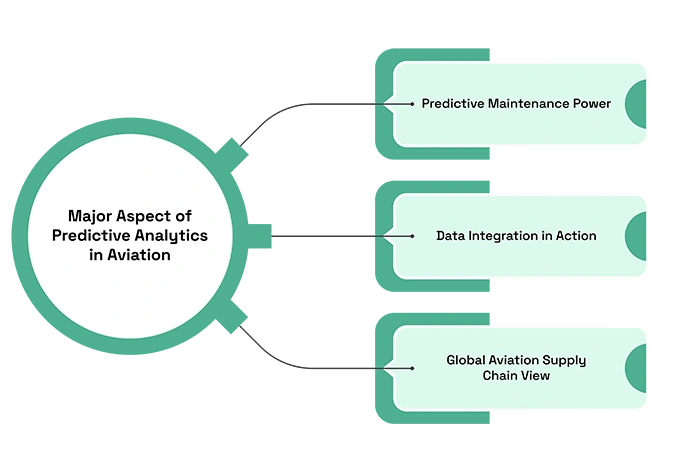
Major Aspect of Predictive Analytics in Aviation
Among the most crucial elements of predictive analytics in aviation, its ability to predict maintenance needs is the most important factor here. Through data analysis from aircraft systems, sensors, and historical maintenance records, companies can predict when a component is probably to fail. This enables prompt repairs and reduces unexpected breakdowns.
Another key aspect is improved demand forecasting. Maintenance companies and airlines can precisely estimate the need for spare parts, ensuring that crucial components are available when required. Delays are reduced as a result and enhances operational reliability.
Additionally, data integration is essential. Predictive analytics Systems collect and manage information from several sources, including manufacturing units, service providers, and global distribution networks. This produces a cohesive perspective of the supply chain, allowing for improved decision-making.
Furthermore, risk management is enhanced by predicted insights. Companies are able to recognize any possible interruptions in the supply chain and take precautions. This is particularly important for industries like aviation and medical equipment, where delays may have detrimental effects.
Predictive Analytics in Aviation Aftermarket Supply Chains
Predictive analytics in aviation aftermarket supply chains is changing the way spare parts and maintenance services are overseen. Traditionally, companies relied on fixed schedules and manual assessments, which often led to inefficiencies and higher costs. Today, predictive models allow businesses to optimize the flow of goods and services across global networks.
For those companies which are in import-export , this means better coordination in the movement of high-value aircraft components. Predictive analytics ensures that components are shipped at the appropriate time and place, reducing storage costs and avoiding shortages. It also supports more efficient use of resources, helping businesses maintain a balance between supply and demand.
Another significant benefit is enhanced visibility. Companies can track the status of components throughout the supply chain, from manufacturing to final delivery. This transparency improves accountability and helps in maintaining compliance with international regulations. Additionally, Predictive analytics makes collaboration between various stakeholders, including manufacturers, suppliers, and service providers. By exchanging information and insights, these stakeholders can cooperate more effectively, resulting in better results.

Key Factors
For the success of implementation of predictive analytics in aviation aftermarket supply chains there are many important factors which play a crucial role in background. One of the most important is data quality. Accurate and reliable data is essential for generating meaningful insights and making informed decisions.
Technology infrastructure is also one of the most important segments. Businesses need advanced systems and tools to collect, process, and analyze large volumes of data. This also has the inclusion of artificial intelligence and machine learning technologies.
A skilled labor force is also crucial. Investing in education and training to ensure that employees can effectively use predictive analytics tools and analyze the outcomes which will benefit the companies in the long run.
Integration with existing systems is equally important. Predictive analytics solutions should seamlessly relate to ongoing activity to reduce disruptions and maximize efficiency.
Finally, regulatory compliance is still crucial consideration. Businesses must make sure that their processes align with global norms and specifications, especially when dealing with cross-border operations.
Conclusion
The use of predictive analytics is transforming aviation aftermarket supply chains by making operations quicker, smarter, and more effective. From anticipating and optimizing spare parts requires maintenance distribution, this technology is helping businesses stay ahead in a highly competitive industry.
For import-export companies operating in IT, aviation, medical, and automotive sectors, adopting predictive analytics offers a significant advantage. It not only improves operational efficiency but also enhances decision-making and risk management. As the aviation industry grows on large scale, predictive analytics will be playing an significant role in molding the future of aftermarket supply chains. Industries which will adopt this technology will be better positioned to navigate challenges and seize new opportunities in the global market.
DID YOU KNOW
“The reason for the need for predictive analytics is that companies have to face serious business and supply chain disruptions, sudden changes in demand, and new risks or challenges.”
FAQs
- What is predictive analytics in aviation aftermarket supply chains?
It uses data and algorithms to predict maintenance needs and manage spare parts efficiently. - How does predictive analytics benefit aviation operations?
It reduces downtime, improves forecasting, and ensures timely availability of critical components. - Why is predictive analytics important for aftermarket services?
It helps optimize repair schedules and inventory planning, reducing costs and delays. - How does it support import-export businesses?
It improves coordination, visibility, and timely movement of aviation parts across global markets. - What technologies are used in predictive analytics?
Artificial intelligence, machine learning, and real-time data systems are key technologies driving it.