Insight: How eVTOL Aircraft will transform cross-border trade
Electric Vertical Takeoff & Landing/eVTOL aircraft are transforming the aviation sector to provide faster, more efficient, & environmentally friendly travel options. The feature of vertical takeoff and landing allows eVTOL to work in busy cities with very limited opportunities to conduct trade and logistics. As supply chains improve eVTOLs, their implications in cross-border trade are set to increase, like compliance, tariffs, customs clearance, & control of supply chains.
This shift creates new opportunities for faster last-mile delivery and reduced dependency on large airports. However, it also introduces new regulatory and compliance challenges that businesses must address. Proper planning around import/export laws, certifications, and duty structures will be essential. Logistics providers will need to adapt processes to support eVTOL-based transport. Overall, eVTOL adoption is set to reshape how goods move across borders.
eVTOL aircraft in global logistics
In the cross-border trade, the eVTOL aircraft offer many advantages, including cost-effectiveness & efficiency in transporting high-demand and time-sensitive commodities. eVTOLs can reduce delivery time and streamline operations due to the possibility of avoiding congested airports and connecting directly to urban centres. Nevertheless, with the emergence of this technology, other issues linked to international controls and customs procedures emerge to be handled by businesses to fully realise the benefits of eVTOLs in international commerce.
Compliance and Regulatory Issues
The emergence of eVTOL aircraft will present numerous compliance issues to businesses that conduct cross-border trade. New technologies, in turn, bring new regulations, so governments must develop certain guidelines to help guarantee the safety and effective work of eVTOLs. Since the aircraft are bound to come under more stringent supervision because of their newness, companies should be cautious of the changing foreign trade regulations in the country of operations.
Adherence to customs clearance procedures is a very important consideration for eVTOL operations. As foreign trade increasingly relies on these planes, companies must also be able to have their goods easily reach foreign countries by meeting the different customs authorities, such as proper categorisation according to different tariffs and assignment of HS codes. Appropriate classification allows proper customs duties and taxes to be paid without delays or penalties during import and export.
Effect on Tariffs and Trade
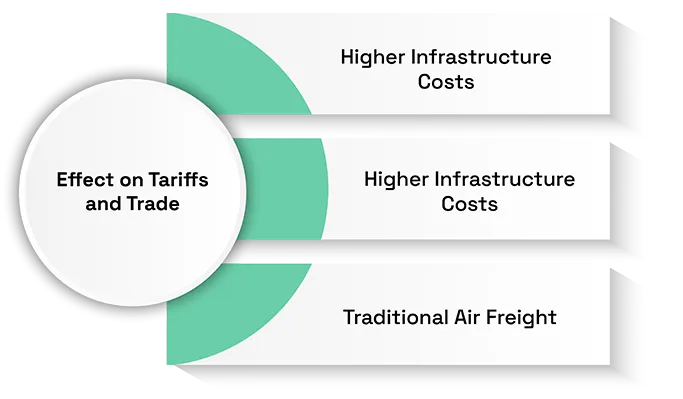
As the eVTOL aircraft gain traction, modifications to customs duties will be required due to the emerging means of transport. Since eVTOLs should be considerably cheaper than regular freight aircraft, they might even result in a decline in the total shipping expenses. Nevertheless, tariffs on the planes themselves and the plane components will also need to be considered by businesses wanting to integrate eVTOLs into their logistics process.
Shipping terms such as Delivered Duty Paid (DDP), to mention a few, will also be more pertinent in the eVTOL context. With DDP, the seller pays the total costs of transporting the goods, such as duties, taxes, and delivery, at its own expense. This will help make the purchase process easy since buyers will not be concerned about hidden prices or complicated customs regulations.
Also, corporations should expect air freight prices to change due to eVTOL aircraft affecting the supply chains. The cost of traditional air freight mostly depends on the weight, size, and distance; however, it can be altered using eVTOLs. Transportation costs could be reduced due to the decreased necessity to use large airport facilities and the possibility of reaching the urban setting.
The Future of Cross-Border Trade with eVTOL Aircraft
The eVTOLs will likely become a commodity as international trade is expected to increase exponentially. The early adoption of eVTOL technology will likely translate to an efficiency in trade and lower shipping expenses for countries undertaking this step. Governments can also implement policies that stimulate eVTOLs in cross-border trade, maybe introducing tax benefits or subsidies to businesses and ensuring such technologies are implemented in the chain.
Besides the advantage of being faster and more efficient, eVTOLs can be used to lower the amount of carbon emissions produced by air transport. On takeoff, during flights, and at landing, eVTOLs are much less polluting because of electric power. The eco-friendly factor can fit well into the emerging need for sustainable business operations. It may become a turning point in how the industry, especially the transport sector, minimizes environmental impact.
Conclusion
The eVTOL vehicle is an outstanding development in cross-border trade as it promises faster, more efficient, and environmentally friendly logistics alternatives. Although this new technology has several compliance issues, such as replacing updated tariffs, customs clearance procedures, and laws, it brings about a big potential in the business firms that may want to streamline their supply chains.
With eVTOL planes being made a part of our future of trade and logistics, we are guided to ensure businesses can navigate these complexities. At One Union Solutions, we are proficient in international trade and compliance, and want to make sure that your business can effectively integrate these innovative technologies into your supply chain to ensure you remain ahead of the new market.
Did You Know,
The global eVTOL aircraft market was estimated at $1.5 billion in 2030 according to the forecasts of 2021, radically reforming transportation and logistics in the air.
FAQ’s
What are the main compliance risks for eVTOL aircraft?
eVTOL aircraft must comply with international trade laws, including customs clearance, tariffs, and export control regulations such as ECCN requirements.
How can eVTOL aircraft affect air freight costs?
eVTOLs can lower freight costs by reducing the need for large airports and enabling direct city-to-city or last-mile deliveries.
How does Delivered Duty Paid (DDP) apply to eVTOL shipments?
With DDP, the seller covers all shipping costs, duties, and taxes in advance, making the import and export process simpler and more predictable.
What impact will eVTOLs have on warehousing practices?
eVTOLs support decentralized warehousing by reducing reliance on large central warehouses and enabling faster, more flexible deliveries.
How do eVTOLs support sustainability in global trade?
Because eVTOLs are electric and produce lower emissions, they offer a more environmentally friendly alternative to traditional aircraft for international trade.