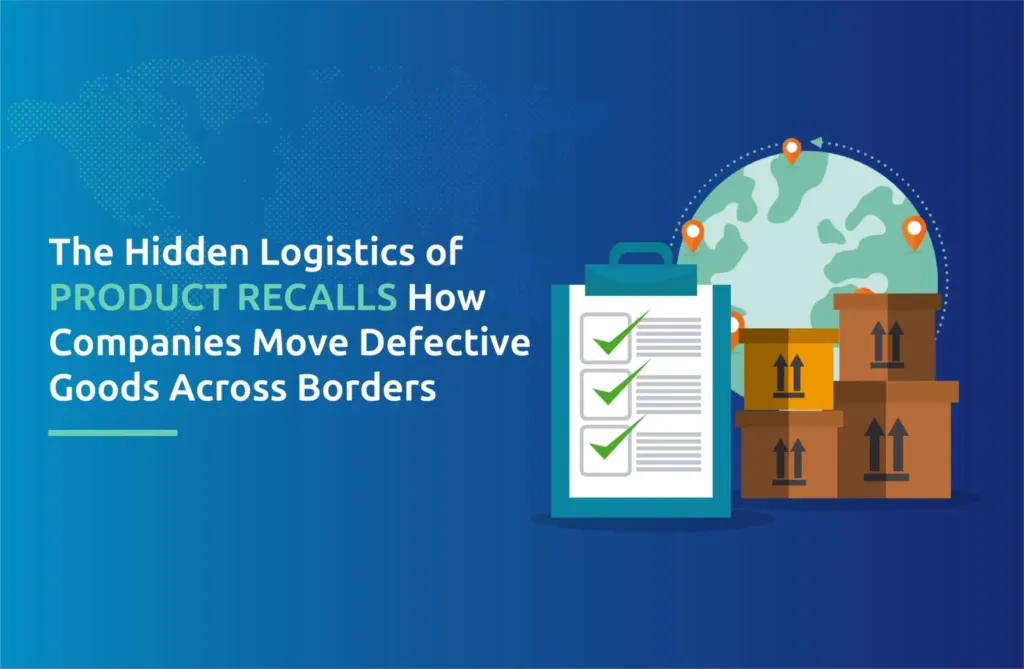
When a company recalls a product, the public mainly sees the announcement, customer notifications, & replacement or refund process. What often remains behind the scenes is the complicated logistics operation needed to bring those products back.
When faulty products are distributed across some countries, a product recall could become more critical. Businesses may have to identify the affected inventory, halt shipments, set up reverse logistics, handle customs processes, & transport goods to a location for recycling, destruction, repair, or verification.
Why Product Recalls Create Difficult Logistics Challenges
A normal supply chain is developed to ship products from manufacturers & suppliers toward customers. A recall reverses that flow.
Products may need to be transported from consumers to producers, distributors, retailers, warehouses, or repair facilities. There may be additional customs and regulatory requirements when the locations are in separate nations.
Reverse Logistics Becomes the Core of the Recall
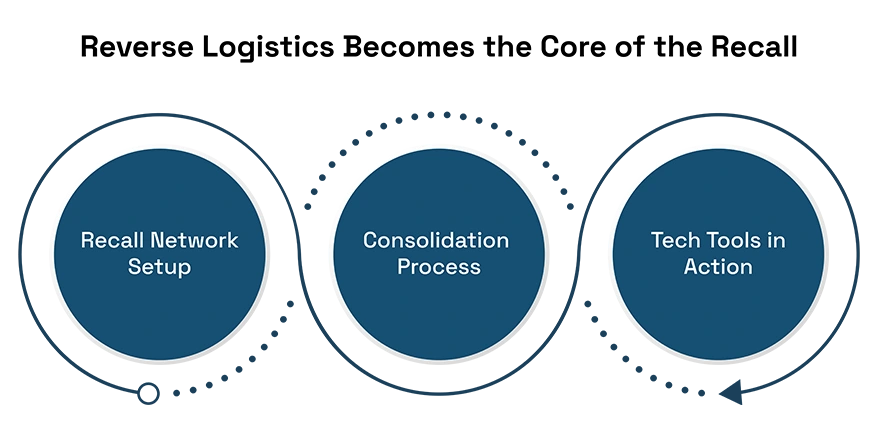
The first major logistics step is establishing a reverse logistics network.
Instead of one simple return route, companies may need some collection points. Customers could return products to retailers, distributors could consolidate inventory at regional warehouses, & those warehouses could send the goods to a central inspection or repair facility.
Businesses may control transportation costs and maintain visibility over each returned item with a well-managed reverse logistics operation.
Technology is also crucial. Companies can ascertain the location of recalled products and whether they have been successfully recovered with the use of serial numbers, barcodes, RFID systems, warehouse management systems, and shipment tracking.
Customs Does Not Disappear During a Recall
One of the most common fallacies regarding product recalls is that because the goods are damaged, customs procedures immediately get easier.
In actuality, recalled products might still require appropriate customs handling while traveling across international boundaries.
The company may need to provide commercial or pro forma documentation, product descriptions, HS classification, country-of-origin information, values, & details explaining the reason for the shipment.
Temporary Movement Can Add Another Layer
Sometimes recalled products are not being imported for commercial sale. They may only be entering a country temporarily for testing, repair, inspection, or other purposes. This is where companies need to examine whether a temporary admission or other customs procedure is appropriate.
Getting this wrong can result in unnecessary duties, taxes, delays, or documentation problems. Companies should therefore establish the intended final destination & treatment of recalled goods before managing global transportation.
Special Products Require Extra Attention
Not all recalled goods can be handled in the same way as regular cargo.
Additional transportation or regulatory requirements may arise from the use of lithium-ion batteries, medical devices, chemicals, telecommunications equipment, and technological products.
For instance, malfunctioning or broken lithium batteries might pose a risk during transit and might be governed by certain dangerous-goods regulations. In a similar vein, when medical equipment are repaired, returned, or reimported, further regulatory restrictions may be necessary.
This implies that instead of handling the recall as a typical return package, the recall team must coordinate logistics, customs, product compliance, transportation, and regulatory experts.
What Happens After the Goods Come Back?
The recall procedure includes more than just returning a damaged product.
After products arrive in a warehouse or facility, businesses must decide what to do next. Products can be reconditioned, recycled, destroyed, mended and returned to customers, or tested to verify the flaw. This choice needs to be meticulously recorded.
Records indicating which units were received, examined, repaired, replaced, recycled, or destroyed may also be required by businesses. These documents may be crucial for internal investigations, customer correspondence, warranty claims, and regulatory reporting.
Maintaining a full chain of custody might be particularly crucial for expensive equipment.
The Role of an Importer of Record
Cross-border recalls can also raise an important question: Who is responsible for importing the returned goods?
The original manufacturer may not have a legal entity or established importer in every country where recalled products are located.
An Importer of Record can help manage the import side of the process where appropriate. Depending on the country & shipment structure, this may include coordinating customs documentation, classification, declarations, duties & taxes, & communication with customs authorities.
Developing a Recall Logistics Plan Before a Crisis
Businesses primarily take their time creating recall procedures. Decisions frequently need to be made promptly after a significant product issue is discovered.
The impacted markets, collecting sites, transportation routes, customs requirements, choices for temporary storage, facilities for repair or destruction, and accountable parties should all be identified in a workable recall logistics strategy.
Conclusion
Product recalls are often viewed as a customer-service or quality-control issue. But when defective products cross borders, they become a major logistics challenge.
From reverse transportation & customs clearance to temporary imports, regulatory needs, warehousing, repair, recycling, & destruction, every stage needs careful planning.
The companies that handle recalls effectively are not simply the ones that identify defective products quickly. They are the ones that can manage the movement of those products across borders & handle compliance from collection to final disposition.
Did you know?
Did you know that product recalls can involve complex reverse logistics when defective goods are distributed across multiple countries? Companies may need to coordinate product returns, transportation, customs procedures, repair or replacement, and final disposal. Regulatory authorities also track recalls to help protect consumers and manage safety risks.
FAQ
1. What is product recall logistics?
Product recall logistics is the process of identifying, collecting, transporting, storing, and managing defective or potentially unsafe products after a recall is initiated. For international recalls, it can also involve customs clearance, regulatory requirements, and cross-border transportation.
2. Why are international product recalls more complicated?
International recalls involve multiple countries, each with its own customs procedures, import regulations, product-safety requirements, and transportation rules. Companies must coordinate the movement of goods while ensuring that every shipment complies with the requirements of the countries involved.
3. Can recalled products be shipped across international borders?
Yes, recalled products can generally be moved across borders, but the shipment may require specific customs documentation, declarations, permits, or handling procedures depending on the product, destination, and reason for the movement. The appropriate customs treatment should be confirmed before shipping.
4. Who handles customs clearance for recalled goods?
The party responsible can vary depending on the shipment structure and country. It may be the manufacturer, an authorized local entity, customs broker, or an Importer of Record (IOR). The responsible party must ensure that the required customs information and documentation are properly submitted.
5. Do companies have to pay duties and taxes on recalled products?
Not necessarily. The customs and tax treatment can depend on why the goods are entering the country, their value, their final destination, and the applicable customs procedure. Returns for repair, replacement, destruction, or temporary admission may be treated differently from ordinary commercial imports.