Introduction
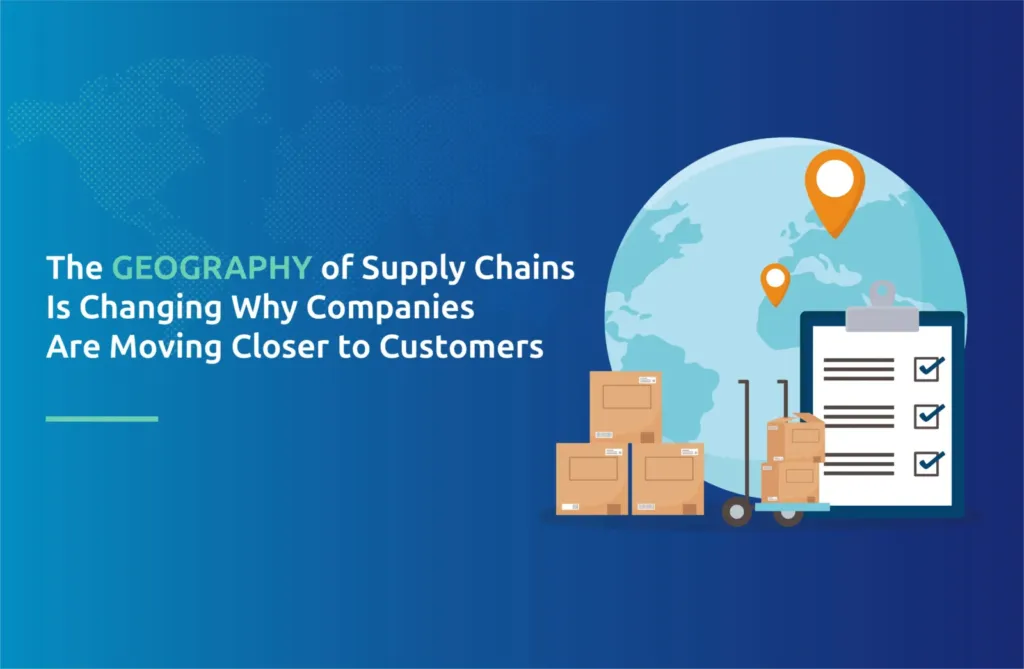
Supply chains are changing as companies consider where they source, manufacture, and store goods. Businesses are being moved into flexible networks by political issues, tariffs, trade risk, transportation delays, and shifting customer demands. Global supply chains continue to face structural shifts, according to a January 2026 World Economic Forum review. Faster delivery is also driving nearshoring, reshoring, & regional sourcing, as companies move some operations closer to customers. This supports supply chain regionalization and helps reduce dependence on a single location.
Global supply chains, however, are not go away. The goal of the global supply chain change is to better balance supply chain strength, cost, and speed. To create a more flexible global-to-local supply chain, companies are merging global and regional networks.
Why Is the Geography of Supply Chains Changing?
Supply chain choices are changing due to geopolitical factors. Tariffs, trade restrictions, political change, trade issues, and tariffs may increase costs or result in delays. This increases the value of supply chain disruption, trade risks, geopolitical supply chain risk, and geopolitical risk management. Companies also want more control over their supply networks. Depending on one country, supplier, or route can create problems during disruptions. Supplier diversification and multi-sourcing help reduce supply chain dependency and improve supply chain risk diversification.
Customers also expect faster delivery. Moving production and inventory closer to customers can reduce shorter lead times and help businesses meet customer demand. This supports regional distribution and a more customer-focused supply chain.
From Global Supply Chains to Regional Supply Networks
Companies are not moving all production back home. Instead, they are building regional supply networks to serve major markets faster. This supports supply chain regionalization while global supply chains remain important. Supply chain regionalization means organizing production and sourcing closer to key markets through regional supply chains, regional manufacturing, and regional sourcing. Nearshoring means moving production or sourcing closer to the target market. A nearshoring strategy can create a shorter nearshoring supply chain through nearshore manufacturing and nearshore sourcing.
Reshoring means bringing production back to the company’s home country. A reshoring strategy can support reshoring manufacturing, domestic production, and local manufacturing. Friendshoring means working with reliable countries and suppliers. A friendshoring strategy uses trusted suppliers and trusted trading partners to improve supply chain diversification.
How Geopolitics Is Reshaping Supply Chain Network Design
The way companies manage their supply chains is being changed by geopolitics. Because shifts in trade policy may increase import costs and tariff risk, supply chains and tariffs are very similar. Cost and risk are now care of by companies when choosing where to source or produce. Political and regulatory uncertainty can also change supplier and shipping decisions. New international trade regulations may create extra requirements or delays, making supply chain compliance more important.
Companies are also building a multi-regional supply chain instead of relying on one location. A distributed supply chain with a diversified supply network gives businesses more options when one region faces disruption.
How Companies Can Adapt to the New Supply Chain Geography
Mapping important suppliers, production centers, and shipping paths is the first step into improving a company’s supply chain plan. This helps them in identifying places where they are too dependent on a single supplier, country, or route. They can then build multiple sourcing options to reduce this risk and make their supply chain planning more flexible.
Using regional distribution hubs can also place inventory closer to key customers and support faster delivery. At the same time, supply chain visibility technology can provide better information about shipments, delays, and possible risks, helping companies act earlier. Businesses should also review the total landed cost, not just manufacturing costs. This includes transportation, inventory, duties and tariffs, delays, warehousing, and disruption costs. By using supply chain optimization, companies can keep global operations where they are useful while adding regional options for greater flexibility.
What the New Geography of Supply Chains Means for Customs and Trade
Customs processes may increase as supply chains are moved across different countries. Customs compliance is important as different markets have different documents, taxes, and regulations. When changing suppliers or production locations, companies may also need to review import laws and HS code classification. Production changes may have an effect on the country of origin, which can change trade regulations and taxes.
Tariff planning is also becoming more important as companies redesign their networks. Regional warehouses still require proper international trade compliance and knowledge of local customs requirements.
The Benefits of Moving Supply Chains Closer to Customers
Bringing supply chains closer to customers can enable companies to react to customer demand more quickly. Production that is local or regional could reduce delays and allow changes as demand changes. Reducing the impact of transport delays and increasing logistical efficiency are two benefits of shorter routes. Because companies have different choices when one location faces an issue, using suppliers & facilities in multiple locations may also reduce disruption risk.
Improved tracking and data can increase supply chain visibility, allowing companies to identify risks and delays early. Closer inventory can also support more flexible inventory planning and stronger local service through a regional distribution network. These are some of the key supply chain benefits of a more regional approach.

Conclusion – Supply Chains Are Moving Closer, Not Becoming Completely Local
The geography of the supply chain is changing as companies look for safer and faster methods to serve customers. Businesses can reduce risk and increase flexibility through nearshoring, reshoring, friendshoring, and supply chain regionalization.
Global supply chains continue to be important. To improve supply chain resilience, the best plan combines regional capacity, global size, and improved visibility.
Did you know
The global supply chain analytics market size was valued at $4.53 billion in 2019, and is projected to reach $16.82 billion by 2027, growing at a CAGR of 17.9% from 2020 to 2027.
FAQ
Why are companies moving production closer to customers?
To reduce delivery times, handle challenges, & reply more quickly to changes in demand, companies are moving some of their production operations closer to their customers.
Does supply chain regionalization mean companies are leaving global suppliers?
No. Adding regional suppliers or production while keeping global suppliers where they are beneficial is usually to as supply chain regions.
What customs issues can arise when supply chains become more regional?
Relocating production or sourcing to a new country can result in changing import laws, country of origin regulations, HS code classification, & customs requirements.
How can companies balance cost and supply chain resilience?
Instead of focusing simply on production costs, companies can compare the total landed cost. Transportation, tariffs, inventory, storage, delays, and unexpected costs are all part of this.
Will global supply chains disappear as companies move closer to customers?
No, global supply chains are still important. To increase supply chain resilience and flexibility, companies are more likely to connect specialized production & delivery with global suppliers.