Insight
The air cargo sector is changing at a high pace. The consistent increase in trade volume and change in customer demands support it. The customers also insist on quicker and more dependable deliveries, particularly for businesses of such high importance as IT, healthcare, aviation, and automobile equipment.
However, the traditional cargo solutions have difficulty keeping up with speed. Most of them are still using age-old infrastructure & procedures. Such restrictions & laws cause the blockages & delays in deliveries. Cargo facilities must be more efficient, connected, and environmentally sustainable to succeed by 2025. The future of cargo facilities will be shaped by the data sharing, automation, & sustainable innovation that improve efficiency and reduce costs throughout the chain.
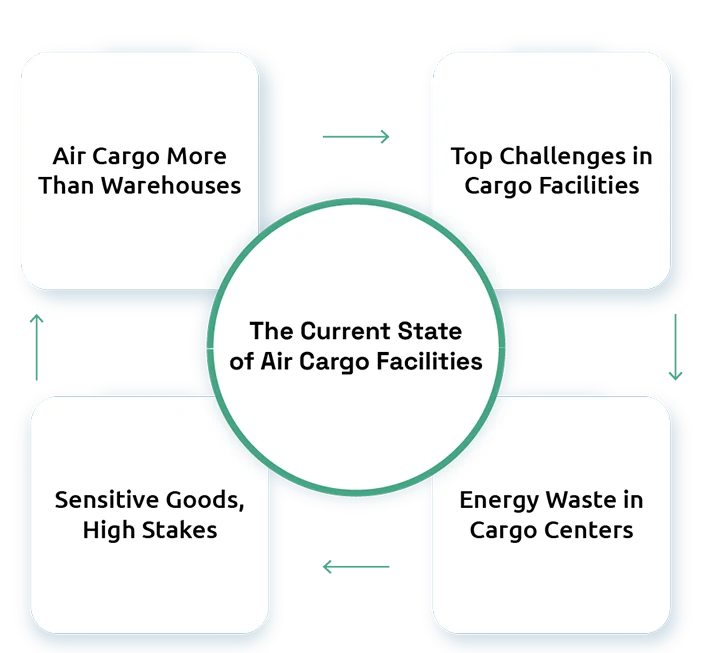
The Current State of Air Cargo Facilities
The modern air cargo systems are not simply warehouses, but critical nodes of international connectivity. They deal with sensitive and high-value goods like IT/data center, aviation, and healthcare equipment. Although important, space limitations and energy wastage are some challenges experienced in most cargo centers. Paper-based record keeping and a lack of operations coordination lead to delays. Security has been given priority, & more regulations have been applied to high-value shipments. The present situation shows the urgency of modernization to be competitive & respond to the rising demand, particularly for time-sensitive deliveries.
Challenges and Opportunities for Evolving Facilities
The air cargo facility issues have been challenges of aging infrastructure that restricts scalability and results in operational inefficiencies. Using paper-based processes and manual checks increases the chances of mistakes and leads to expensive delays. The operations are complicated by the environmental regulations that establish mandatory steps for facilities to reduce the emission rate and enhance energy efficiency. On the other hand, such challenges present fresh development opportunities. Cargo facilities can enhance precision and throughput by embracing automation, computerized documentation, and linkage of systems. Environmentally friendly and cost-effective strategies are based on energy efficiency and renewable sources. With such solutions, the facilities are better placed to compete in the global trade and sustainability objectives and gain a competitive advantage.
New Transformation Approaches for More Efficient Operations
The key elements of future-ready cargo facilities are automation and connectivity. Ground support vehicles are autonomous and are faster than human drivers when they are used to move equipment. The shipments & inventory are continuously tracked using live systems. The interconnected infrastructure will enable uninterrupted communication between cargo terminals, warehouses, & customs offices. AI-based analytics optimize the usage of vehicles, warehouses, and staff.
Such technologies minimize the number of manual operations & errors, increasing the speed of shipment processing. Smart energy management operates lighting, HVAC, and charging systems, decreasing the operation cost. These innovations combine to form safer, faster, & more efficient cargo facilities that can meet the changing needs of air freight.
Evolving Market Forces Shaping Facility Transformation
Several market forces affect the evolution of air cargo facilities. A complex regulatory system implies higher safety, security, and environmental requirements. The increasing fuel prices and the sustainability requirements drive operators toward the electrification and energy-efficient design. The evolution of the labor environment and skills promotion stimulates the utilization of automation and AI. Those facilities that expect and address such trends can provide differentiated service quality at a reasonable cost control.
Adapting to Codes and Compliance Requirements
Compliance with codes like ECCN and proper import export license registration is essential amid changing regulations. Air freight shipments of high-value goods need precise documentation. Working closely with a customs broker & importer of record enables smoother clearance. Supply chain management integrates with trade logistics and compliance expertise to ensure documentation matches changing import-export business policies. This agility reduces operational risks for sensitive cargo and enables steady transport across borders.
Strategic Use of Incoterms for Clear Responsibility
Incoterms such as ddp & DAP define who bears shipping and customs duties. Delivery duty-paid arrangements relieve buyers of import taxes by placing responsibility on sellers, ensuring seamless delivery without surprises. Delivered at Place (DAP) means buyers handle customs clearance. This clarity protects businesses in complex air cargo transactions across international routes. Properly applying these incoterms ensures that freight forwarding and cargo forwarding run with fewer disputes and more reliable timing.
How One Union Solutions Can Help
One Union Solutions offers tailored expertise to guide air cargo facilities through transformation. Our strategic consulting helps identify improvement areas across warehousing, customs support, & freight forwarding. We integrate advanced digital systems to enhance supply chain visibility and compliance with global trade regulations. Our resolutions allow effective management of import-export registration, customs duties, and logistics coordination. We also deliver the white glove service to the high-value or delicate cargo and achieve safety and client satisfaction through sustainable practices. Being our partner will enable your facility to be ready to handle the technological, regulatory, and operational challenges of the year 2025 and beyond.
Did You Know,
According to government trade data, global air cargo tonnage grew by 9.7% in 2024, with investments of over $25 billion directed toward modernizing cargo facilities & digitizing customs operations globally.
FAQ’s
What benefits does automation bring to air cargo facilities?
Automation speeds up operations, reduces errors, and increases throughput.
How does connected infrastructure help shipment visibility?
It enables real-time tracking and coordination across the supply chain.
Why is sustainability important in future cargo facilities?
It lowers operating costs and meets global environmental targets.
How does workforce transformation support facility modernization?
Upskilling ensures smooth collaboration between humans and AI systems.
What role does compliance play in air cargo growth?
Strong compliance avoids delays and fines, ensuring the timely delivery of sensitive goods.