OVERVIEW
The global supply chain is changing fast, the whole global supply chain situation is getting different every day and smart warehousing has emerged as a key driver of this transformation. As businesses face a lot of pressure to deliver things faster, reduce costs and maintain accuracy, the old way of doing things in warehouses is not good enough anymore. Businesses need to find ways to do things because the traditional warehousing models are not working. Businesses have to deliver and reduce costs at the same time, which is a big challenge for businesses.
For companies that do import and export work in areas like information technology, aviation, medical and automotive having a smart warehouse is really important. These areas handle expensive and sensitive goods that need to be delivered on time. If something goes wrong, a small mistake can cause big problems. Using machines to do tasks automatically helps fix these problems by letting people see what is happening in time, work together better and make good decisions, about import and export businesses and smart warehousing.
Smart Warehousing : How Automation Is Transforming Logistics
Smart warehousing is about using technologies like robots, artificial intelligence, Internet of Things and data analytics to make warehouse work better. These technologies all work together to do tasks automatically make sure things are accurate and make storage and getting things out easier.
Nowadays warehouses use things like vehicles, robots that pick things up and smart sensors to handle goods without people having to do much. This means we do not have to rely on people much to do the work and it also means there are fewer mistakes and it is safer. For things like equipment and airplanes where we have to be very precise using robots and such makes sure that products are handled carefully and correctly. Smart warehousing is really important for these kinds of industries because precision is critical. Smart warehousing helps make sure that products are handled with care and that we follow all the rules.
Additionally, smart warehousing systems provide real-time tracking of inventory, enabling businesses to maintain optimal stock levels and avoid overstocking or stockouts. This level of visibility is especially important for import-export operations, where delays and disruptions can impact the entire supply chain.

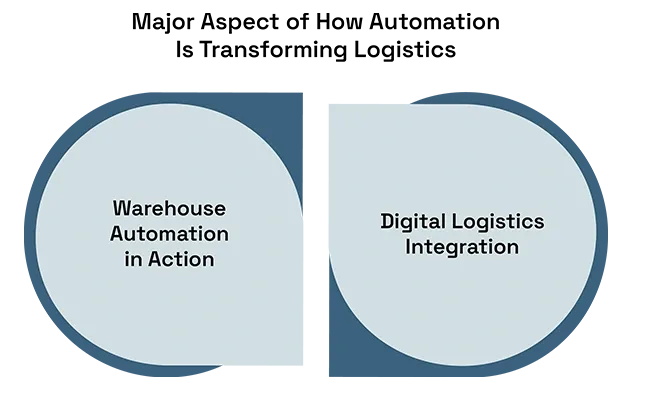
Major Aspect of How Automation Is Transforming Logistics
Automation is fundamentally changing logistics by enhancing speed, accuracy, and efficiency across operations. One of the major aspects is the seamless movement of goods within warehouses. Automated systems can quickly sort, store, and retrieve items, significantly reducing processing time.
Another important aspect is the integration of digital platforms that connect warehousing with transportation and distribution networks. This ensures better coordination and smoother flow of goods from origin to destination. For businesses involved in cross-border trade, this integration supports compliance and reduces operational complexities.
Automation also plays a crucial role in reducing human error. Tasks such as picking, packing, and labeling are handled by machines with high precision, ensuring consistency and reliability. This is particularly beneficial for sectors like automotive and IT, where accuracy and timing are critical.
Moreover, the use of data analytics allows businesses to predict demand patterns, optimize warehouse layouts, and improve overall efficiency. By leveraging these insights, companies can make informed decisions and stay competitive in a rapidly changing market.
Key Factors
People are starting to use warehousing and automation in logistics for a few big reasons. One reason is that customers want their things delivered fast. They expect to get their stuff and they expect it to be delivered right. This is why businesses are starting to use technologies like smart warehousing and automation in logistics to make sure they can deliver things quickly and get it right. Smart warehousing and automation in logistics are becoming really important because of this.
The cost of things is also important. When you first start using automation it can be very expensive. Over time it helps to save money on labor and makes work easier and faster. It also helps to reduce mistakes. Many companies are starting to see the benefits of automation. It helps them to grow in a way that’s good for the company and good for the future.
Being able to grow and change is also crucial. Smart systems for storing things can change easily when the business needs them to. This means companies can get bigger without many problems. This ability to change is very important for businesses that have to deal with changes, in demand.
Security and compliance are just as important as each other. Automated systems help track and monitor goods better. This ensures that all processes follow the rules and regulations. It is especially important for businesses that import and export value and delicate goods. They need to make sure everything is secure and compliant. Automated systems make it easier to do this. They provide a record of everything. This helps businesses avoid any problems with the law. It also helps them protect their goods.
Lastly, advanced technology integration improves overall visibility and control. Businesses can keep an eye on their operations thanks to real-time data, identify bottlenecks, and implement improvements quickly.
Conclusion
The logistics industry is really changing with the help of warehousing. This is because smart warehousing brings automation and efficiency into the work of warehouses. It also makes them smarter.
For companies that import and export, those in the IT sector, aviation sector, medical sector and automotive sector this change is very good. The logistics industry and smart warehousing give these companies benefits. They can do things faster and more accurately. The logistics industry and smart warehousing also help these companies save money and be more cost-effective.
The development of global trade continues, the importance of implementing smart warehousing solutions will grow. Businesses that invest in automation and embrace the digital revolution will be better positioned to handle complexities, meet customer expectations, and maintain a competitive edge.
Smart warehousing will not only support logistics in 2026 and beyond, but it will also define its future.
DID YOU KNOW
“As customer expectations for faster deliveries and lower costs increase, logistics providers adopt technologies that allow them to meet demand while maintaining profitability.”
FAQs
1.What is smart warehousing?
Smart warehousing uses automation and advanced technologies to improve efficiency, accuracy, and speed in warehouse operations.
2.How does automation benefit logistics?
It reduces manual errors, speeds up processes, and enhances overall productivity in supply chain operations.
3.Which industries benefit most from smart warehousing?
Industries like IT, aviation, medical, and automotive benefit due to their need for precision and timely deliveries.
4.Is smart warehousing cost-effective?
Yes, despite initial investment, it lowers long-term operational costs and improves efficiency.
5.What technologies are used in smart warehousing?
Technologies like robotics, AI, IoT, and data analytics are commonly used to automate and optimize warehouse operations.