
Introduction
Saudi Arabia is becoming a vital hub in global trade, and with this growth, organizations must confirm approval with new regulations. For organizations involved in the import export business, understanding certification systems such as the Product Certificate of Conformity and the Saudi Certificate of Conformity is essential. These evaluations simplify customs clearance support, reduce risks of shipment delays, and confirm approval with international export regulations. Organizations that fail to follow risk losing competitiveness in today’s fast-moving global supply chain services.
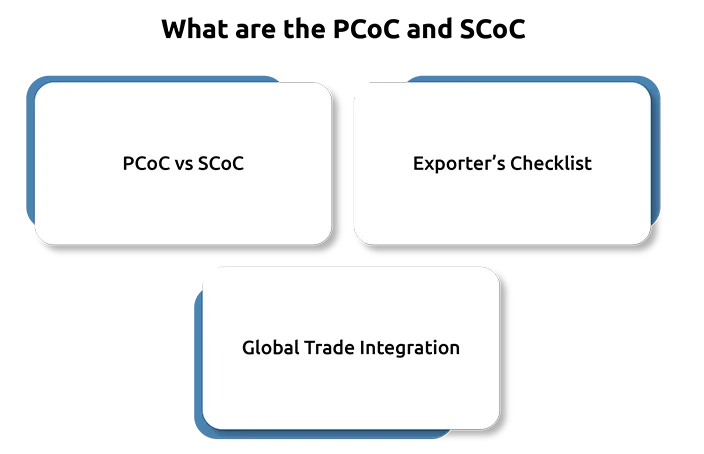
What are the PCoC and SCoC?
The Product Certificate of Conformity verifies that a good follows the Saudi guidelines and regulations. Also, the Saudi Certificate of Conformity is required for clearance of shipments into the Saudi market. Together, these certifications protect buyers while allowing smooth trade. For exporters, navigating these certificates is as necessary as working with HS Code categorizations, HTS harmonized tariff schedules, and Incoterms in global transactions. These certifications work as a compliance passport, confirming that organizations engaged in freight forwarding service or export customs brokerage can move goods effectively.
Is PCoC mandatory for all products in Saudi Arabia?
PCoC is mandatory for most regulated products such as electronics, automotive parts, and consumer goods. Some low-risk or non-regulated items may be exempt, depending on Saudi regulations.
The requirement mainly depends on whether the product falls under Saudi Arabia’s technical regulations and conformity assessment program. Products listed in regulated categories must obtain a PCoC before they can be imported and registered on systems like the SABER platform.
Certification Process & How One Union Solutions Ensures Hassle-Free Compliance
Navigating the Saudi PCoC and SCoC certification process can be challenging for global businesses, especially those managing complex freight forwarding services, customs clearance steps, and importer of record responsibilities. The process includes product testing, SABER registration, and strict verification against Saudi technical standards—all of which demand accuracy in HS Code classification and documentation. One Union Solutions streamlines this entire workflow by providing end-to-end support, from managing compliance documents to handling DDP shipping, in-transit coordination, and warehouse management services. This holistic approach minimizes delays and ensures seamless access to the Saudi market while aligning with global trade compliance best practices.
One Union Solutions provides comprehensive import-export support, including:
One Union Solutions provides complete import-export support to help businesses manage global trade smoothly. Their services include guidance on documentation and registration through platforms like the SABER platform, as well as acting as an Importer of Record (IOR) or Exporter of Record (EOR) based on client needs. They also handle Delivered Duty Paid (DDP) shipping, ensuring that all duties and taxes are managed efficiently. By aligning with global trade facilitation standards, One Union Solutions helps businesses stay compliant and avoid delays. This allows companies to focus on their growth while relying on expert support for all compliance and logistics requirements.
How to Access the Saudi Arabia Market with SABER Certificate of Conformity (SCoC)
The SABER platform is the gateway to compliance in Saudi Arabia. Every product must be registered, and an SCoC must be issued before importation. Without it, shipments risk being delayed or rejected.
For organizations using the Delivery Duty Paid service (DAP/DAPs) or depending on freight forwarding service providers, the SABER system provides transparency and predictability in the supply chain. By using trusted partners, exporters can overcome issues and expand into Saudi Arabia confidently.

SABER Certificate of Conformity (CoC) and Product Certificate of Conformity requirements
To obtain an SCoC, businesses must first secure a PCoC for their products. This involves product testing, quality assessments, and compliance with Saudi standards. Once complete, the SABER platform issues the SCoC for each shipment.
Key requirements include:
- Product testing aligned with Saudi technical standards.
- Accurate classification under the HS code.
- Properly defined Incoterms for clarity in responsibilities.
- Verified compliance documentation for smooth export register processing.
By following these requirements and working with freight forwarding service providers, businesses confirm their shipments meet all regulatory requirements while improving global trade facilitation.
Supply Chain Compliance & In-Transit Management for Saudi Market Entry
Entering Saudi Arabia is not just about getting the right certificates—it also requires a strong supply chain plan. Businesses need clear tracking of goods in transit, proper warehousing, and smooth customs clearance to avoid delays. Many companies rely on logistics partners to handle transport, storage, and special delivery for sensitive items like telecom and automotive parts. Using tools like AI for demand planning and following global trade rules helps reduce risks and improve visibility.
One Union Solutions supports businesses by providing warehouse services, Importer/Exporter of Record (IOR/EOR) solutions, and reliable freight forwarding. This helps companies manage operations smoothly, especially in regulated markets like Saudi Arabia.
Conclusions
Saudi Arabia’s trade compliance system, centered on the PCoC and SCoC, is changing how businesses access the Kingdom’s market. Organizations that work with these rules not only confirm customs clearance support but also strengthen their participation in global supply chain services. With the help of expert partners such as One Union Solutions, businesses can simplify certification, benefit from comprehensive import-export support, and have competitiveness in global trades. Combining tools such as the SABER system, using importer of record services, and adhering to international export regulations, organizations position themselves for growth in Saudi Arabia while contributing to smooth global trade facilitation.
DID YOU KNOW?
Saudi Arabia’s total exports were worth 286,467,258.61 thousand US dollars, and total imports were worth 152,695,088.72 thousand US dollars. This left a positive trade balance of 133,772,169.89 thousand US dollars. The trade growth is 20.97% compared to the global growth of 12.52%.
FAQs
Q1. What is the Product Certificate of Conformity (PCoC) in Saudi Arabia?
The PCoC verifies that products meet Saudi technical regulations and standards. It is required before obtaining the Saudi Certificate of Conformity (SCoC).
Q2. Why is the Saudi Certificate of Conformity (SCoC) important for exporters?
The SCoC is mandatory for customs clearance in Saudi Arabia. Without it, shipments may face delays, fines, or rejection at the border.
Q3. What role does the SABER platform play in trade compliance?
The SABER platform is Saudi Arabia’s online system for registering products, issuing PCoC and SCoC certificates, and ensuring regulatory compliance.
Q4. How can One Union Solutions assist with Saudi trade compliance?
One Union Solutions provides end-to-end support, including SABER registration, importer/exporter of record services, DDP shipping, and customs compliance.
Q5. What are the key requirements for obtaining an SCoC in Saudi Arabia?
Businesses must secure a PCoC first, classify goods under the correct HS Code, define Incoterms, and provide compliance documents for approval.