Introduction
Saudi Arabia has situated itself as a critical hub for global trade, and organizations must adapt to its developing compliance landscape. Businesses engaged in the import export business must confirm that their shipments meet international export regulations while working with Saudi-specific requirements. Saudi Arabia’s growing role in the global supply chain services, understanding the new rules and certifications, is critical to avoid penalties, shipment delays, or complications with customs clearance support.
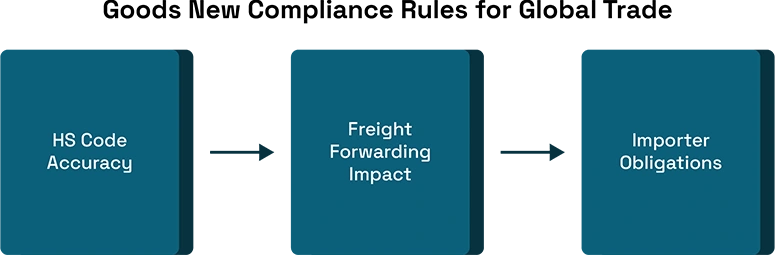
Goods New Compliance Rules for Global Trade
Saudi Arabia’s upgraded compliance system is designed to enhance safety, accuracy, and transparency across international trade. Under the new framework, businesses must ensure precise HS code classification, understand Incoterms 2025, and follow strict trade compliance procedures to avoid delays at customs. These rules significantly impact companies relying on freight forwarding services, customs clearance support, and DDP shipping for seamless movement of goods. Importers must also maintain updated import-export registrations and verify that their products are correctly listed in the export database. With growing scrutiny on global shipments, adopting best practices in in-transit monitoring, warehousing services, and supply chain risk management is essential for smooth access to the Saudi market.
Mandatory Certification and Registration Required for Global Trade and How One Union Solutions Helps
Saudi Arabia now requires documentation and registrations, such as the Product Certificate of Conformity and the Shipment Certificate of Conformity, for goods export into Saudi Arabia. This paperwork is important for global trade facilitation and plays a vital role in minimizing risks.
One Union Solutions supports organizations by providing importer of record services and exporter of record services to confirm goods from start to finish. Their expertise improves Delivered Duty Paid logistics (DDP shipping), export customs brokerage, and comprehensive import-export support. By combining logistics expertise with international export regulations, One Union Solutions makes it easier for businesses to navigate new requirements and move shipments without issues.
The Role of Optimized Supply Chain Strategies Under Saudi Arabia’s New Trade Rules
As Saudi Arabia strengthens its global trade position, businesses need robust supply chain strategies that integrate compliance with operational efficiency. Industries such as IT, telecom, medical, and automotive increasingly depend on reliable importer of record (IOR) support, optimized warehousing solutions, and transparent in-transit visibility to navigate today’s regulatory landscape. Leveraging advanced tools such as AI-powered demand forecasting helps companies reduce risk, control costs, and improve decision-making across cross-border operations. With rising demand for efficient movement of critical components—including MRO supplies and automotive equipment—having a trusted partner for freight forwarding, multimodal transport, and international ecommerce shipping ensures uninterrupted access to the Saudi marketplace while maintaining global supply chain resilience.

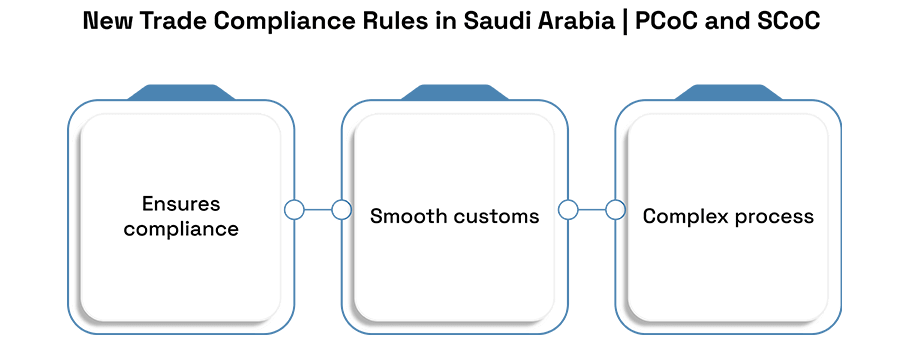
New Trade Compliance Rules in Saudi Arabia | PCoC and SCoC
Two of the most critical compliance rules in Saudi Arabia are the PCoC (Product Certificate of Conformity) and SCoC (Shipment Certificate of Conformity). Without these certifications, goods may be refused entry or held up at customs clearance points.
The PCoC verifies that individual products meet safety and regulatory standards, while the SCoC confirms that complete shipments conform before they exit the port of origin. These rules affect all industries of the import-export business, from IT and electronics to the medical and automotive industries. Partnering with a trusted freight forwarding service provider confirms smoother approval, specifically for organizations depending on DAP or DDP shipping arrangements.
The Advantages of the New Compliance System
While stricter rules may seem like a challenge, Saudi Arabia’s compliance systems provide long-term advantages for businesses. Working with international export regulations and global trade facilitation standards, organizations can benefit from:
- Faster customs clearance support and reduced risk of fees.
- Improved trust and clarity across international supply chains.
- Stronger protection for consumers and importers alike.
- Streamlined logistics through the Delivery Duty Paid service and freight forwarding service integration.
- Greater opportunities for businesses using exporter of record services to expand in Saudi Arabia.
Also, these measures contribute to building a safer, more dependable global trade system.
Conclusions
Saudi Arabia’s new compliance rules for global trade emphasize accountability, certification, and proper import export registration. Companies must adapt by working with reliable partners that understand Incoterms, HS code classification, and the demands of comprehensive import-export support. Providers such as One Union Solutions simplify compliance by providing importer of record services, DDP shipping, and global trade facilitation strategies. For businesses looking to grow in the Middle East, involving these compliance systems is not just a requirement; it’s a competitive advantage in global supply chain services.
DID YOU KNOW?
There are also significant benefits in terms of transport and trade costs for businesses. BRI projects are estimated to decrease shipment times by 3.2% and trade costs by 2.8%.
FAQs:
Q1. What are Saudi Arabia’s new compliance rules for global trade?
Saudi Arabia has introduced stricter compliance measures, including mandatory certifications like the Product Certificate of Conformity (PCoC) and the Shipment Certificate of Conformity (SCoC), to ensure product safety, transparency, and alignment with international trade standards.
Q2. What is the difference between PCoC and SCoC in Saudi Arabia?
The PCoC (Product Certificate of Conformity) verifies that individual products meet regulatory and safety standards, while the SCoC (Shipment Certificate of Conformity) ensures the entire shipment complies before leaving the country of export.
Q3. Why are HS codes and Incoterms important under the new compliance rules?
HS code classification and Incoterms are essential for correct tariff application, customs clearance, and shipment responsibility. Misclassification or non-compliance may lead to penalties or shipment delays.
Q4. How can One Union Solutions help businesses comply with Saudi trade rules?
One Union Solutions provides Importer of Record (IOR) and Exporter of Record (EOR) services, customs brokerage, and DDP shipping solutions to help businesses meet Saudi Arabia’s new trade compliance requirements without delays.
Q5. Which industries are most affected by Saudi Arabia’s compliance system?
Industries such as IT, electronics, medical equipment, and automotive are heavily impacted since their products require strict certification and customs clearance under Saudi regulations.