
Overview
Saudi Arabia is really changing the way it does trade and transport. They just started five rail routes. The goal of these routes is to get cargo from one place to another faster. This will help make shipping a lot cheaper, for Saudi Arabia. This strategic move aligns with the country’s broader vision to become a global logistics hub connecting Asia, Europe, and Africa. Saudi Arabia is making it easier to move cargo by building train connections between important factories and Gulf ports. This will make the system of moving cargo a lot more efficient and reliable, for Saudi Arabia. Saudi Arabia is focusing on this to have a cargo movement system.
For businesses that import and export goods in IT, aviation, medical and automotive sectors this change is a big deal. They will benefit from connectivity and reduced dependency on road transport. Faster cargo movement, less reliance on trucks and better connections will change how goods are moved in the region and to places. They will benefit from connectivity and reduced dependency on road transport. It is a development, for businesses involved in import-export operations.
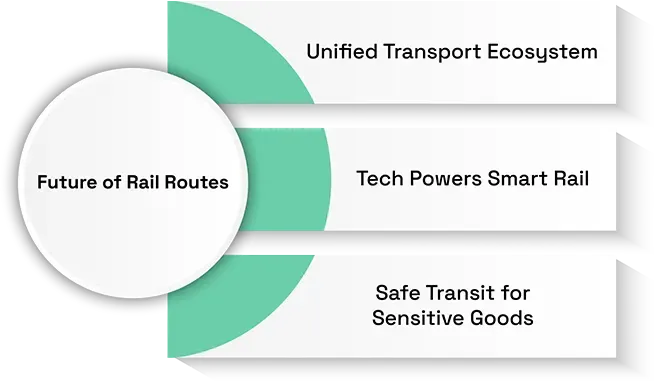
Future of Rail Routes
The future of rail freight in Saudi Arabia looks really good. Saudi Arabia is putting a lot of money into infrastructure projects. These new rail routes will be very good for rail freight in Saudi Arabia because they will connect rail freight, in Saudi Arabia to ports, factories and areas where goods are stored. Saudi Arabia wants to improve its transport system. The new rail routes are a part of this plan. A unified transport ecosystem is the goal. This will make it easier to transport goods by rail. Transporting goods by rail will be a lot simpler.
Rail transport is really good. It can carry a lot of things at one time. Rail transport has a big advantage over trucks: it can carry more heavy things and you can trust it to get things to where they need to go on time. Additionally, using technologies will make these rail routes work even better. This is because things like tracking in time, automated scheduling and advanced systems for handling cargo will make it clearer what’s going on and make it easier to manage operations. This evolution is particularly beneficial for industries dealing with sensitive or high-value goods, such as medical equipment and aviation components.
Major Aspect of Launching 5 Rail Routes to Cut Cargo Time and Cost
The new rail routes are really important because they can greatly reduce the time it takes to travel between manufacturing units and the Gulf ports. This makes it faster to get things delivered. It also costs less to move things around which makes trade better. The new rail routes are a deal because they can reduce the time .
International freight services are really important, for using these rail networks to move cargo across borders. When businesses use rail and sea transport together they can make their supply chains better and lower their shipping costs. International freight services will help make this happen.
The importer of record service and the exporter of record service are helpful. These services make it easier for businesses to deal with rules and paperwork. This means that things can move easily across borders. The importer of record service and the exporter of record service are important for making this happen.
Standardized systems like HS code and HTS harmonized tariff schedule remain essential for accurate classification of goods, enabling faster customs clearance. Similarly, Incoterms such as DAP and DAPs help define responsibilities between trading partners, reducing uncertainties in international transactions.
With increased connectivity, businesses are also focusing on inventory and order management to maintain a steady flow of goods. This interconnected system highlights the importance of integrated logistics solutions that can handle both transportation and compliance requirements.

Key Factors of 5 Rail Routes to Cut Cargo Time and Cost, Linking Gulf Ports Faster
The rail routes in this area work well and there are a few important reasons for this. One reason is where Saudi Arabia is located. Saudi Arabia is in a spot because it is between major routes that people use to trade. When Saudi Arabia improves its rail connections it becomes a more important place for trade in the Gulf region.
Second, the reduction in transit time directly impacts operational efficiency. Faster cargo movement means reduced lead times, improved customer satisfaction, and better responsiveness to market demands. This is especially important for industries like automotive and IT. They need things delivered on time.
Third, cost efficiency is a major advantage. It uses fuel and has lower handling costs, which makes it a cheaper choice, for moving large amounts of goods. This helps businesses use their resources better and make profit. Rail transport is a cost- way to ship bulk goods.
Another important factor is compliance and risk management. Businesses are increasingly adopting the best trade compliance software for import export rules to manage regulatory complexities and ensure accurate documentation. This reduces the risk of delays and penalties, especially in cross-border trade.
Lastly, the integration of rail with port infrastructure enhances overall supply chain resilience. By diversifying transport modes, businesses can mitigate risks associated with disruptions in road or sea transport.
Conclusion
The launch of five new rail routes in Saudi Arabia marks a significant step toward building a faster, more efficient, and cost-effective cargo transportation network. By linking key industrial zones with Gulf ports, the country is not only improving domestic connectivity but also strengthening its role in global trade.
For import-export businesses operating in IT, aviation, medical, and automotive sectors, this development opens up new possibilities for growth and efficiency. By leveraging international freight services, adopting advanced compliance solutions, and focusing on supply chain optimization, companies can fully benefit from this evolving infrastructure.
This will really help us figure out how things will be moved around the world in the future. Rail connectivity and transport systems are going to be very important for logistics. We need to make sure that rail connectivity and integrated transport systems are good so that global logistics can be the best it can be.
DID YOU KNOW
“Announced by Saudi Railways Company, the new corridors are part of a broader push to modernise logistics under Vision 2030”
FAQs
- Why is Saudi Arabia investing in new rail cargo routes?
To reduce transit time, lower transportation costs, and strengthen its position as a global trade hub.
- How will these rail routes benefit import-export businesses?
They enable faster delivery, improved connectivity to ports, and more cost-efficient cargo movement.
- Which industries will gain the most from these rail developments?
Industries like aviation, automotive, IT, and medical equipment will benefit due to faster and more reliable transport.
- How do rail routes improve supply chain efficiency?
They offer predictable transit times, reduce road congestion, and support bulk cargo movement more efficiently.
- What role does technology play in these new rail systems?
Digital tracking, automation, and smart cargo handling systems enhance transparency, speed, and operational control.