Introduction
Global trade is one of the main sources of economic growth, and countries around the world are constantly looking for modern ways to strengthen their position in global trade. Among the most successful tools used to grow trade is the establishment of Special Economic Zones (SEZs). These zones provide businesses with tax incentives, simplified customs clearance support, and advanced infrastructure that simplifies logistics and increases global supply chain services. The Special Economic Zones policy supports trade hubs, SEZs, and creates an environment that allows exporters and forwarders to grow under difficult international export regulations. If organizations are working with service providers, customs brokerage, or using Incoterms such as Delivered Duty Paid and Delivered at Place, SEZs play a major role in improving trade flows and attracting global investment.
What Is a Special Economic Zone (SEZ)?
A Special Economic Zone is a specially designated geographical area where governments provide economic, legal, and trade incentives to attract both local and global businesses. Other SEZs operate under guidelines such as duty-free imports, lower tariffs, and quick customs clearance support. This makes them perfect hubs for export industries such as IT, medical equipment manufacturing, aviation, and automotive production.
SEZs support organizations by reducing paperwork, simplifying harmonized system codes (HS codes) classification, and confirming smooth agreement with HTS harmonized tariff schedules. Businesses operating in SEZs also gain access to Importer Of Record services, Exporter Of Record services, and export customs brokerage, which help them manage cross-border approval. Also, Special Economic Zones work with ports, airports, and routes, allowing international shipping solutions to run effectively under Incoterms.

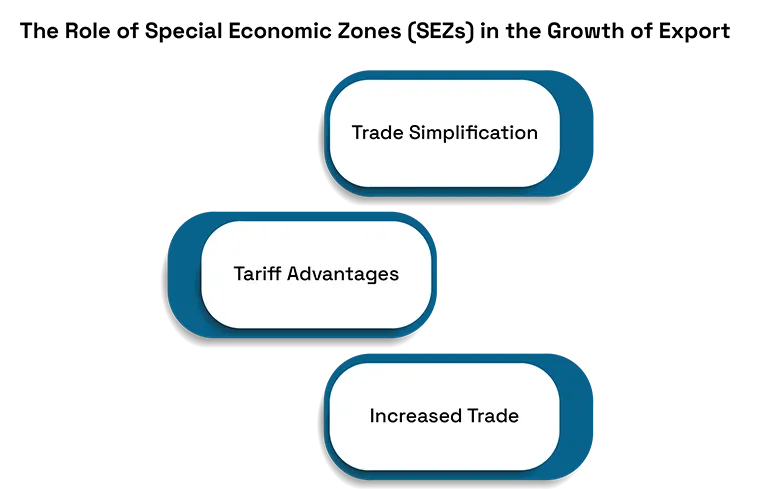
The Role of Special Economic Zones (SEZs) in the Growth of Export
SEZs directly contribute to export growth by reducing costs and allowing faster production-to-market cycles. Industries such as IT, aviation, medical equipment, and automotive manufacturing benefit from SEZ-based operations where harmonized system codes (HS Code) and HTS harmonized tariffs are applied efficiently. Simplifying trade through freight forwarding services and customs brokerage, SEZs make it easier for businesses to enter global trade. Also, SEZs complement systems such as the Generalized System of Preferences, which helps developing nations gain tariff advantages. These systems encourage businesses to adopt the SEZ for international shipping solutions and export customs brokerage, thereby increasing trade.
Benefits of Special Economic Zones in Boosting Exports
- Increased Logistics: Special Economic Zones are located near ports, airports, and routes, reducing shipping times for freight forwarding services. This confirms effective DAP and Delivered Duty Paid logistics.
- Regulatory Efficiency: SEZs provide simplified regulatory import management and customs clearance support, reducing delays and costs in global trade.
- Organizations gain tax benefits, duty exceptions, and simplified Incoterms approval, lowering overall trade fees.
- Support for Forwarders and Brokers: SEZs provide exporters and forwarders with comprehensive import-export support, making customs brokerage and exporter of record services smooth.
- Boost to International Competitiveness: By providing international shipping solutions and working with global supply chain services, SEZs allow businesses to expand globally with confidence.
- Tax and Tariff Incentives: Exporters enjoy release from duties, reduced tariffs, and preferential guidelines under systems such as the Generalized System of Preferences. These incentives reduce costs huge and encourage greater export volumes.
Conclusions
Special Economic Zones (SEZs) are a powerful method for boosting exports by using related guidelines, robust infrastructure, and international trade facilitation. They reduce hurdles through effective customs clearance, harmonized system code (HS Code) management, and export customs brokerage services. For businesses engaged in international shipping, SEZs support forwarders, exporters, and importer of record services alike. By combining logistics efficiency with regulatory flexibility, SEZs work as a growth in global trade, allowing nations to achieve long-term trade sustainability.
SEZs also encourage investment by offering tax incentives and simplified regulatory frameworks, attracting both local and foreign businesses. Companies benefit from faster shipping, lower costs, and easier access to international markets. By integrating advanced logistics and compliance services, SEZs help maintain supply chain reliability. Ultimately, they create a competitive environment where businesses can scale efficiently while supporting national export goals.
DID YOU KNOW?
Exports from Special Economic Zones reached $176.6 billion in 2024-25, making them an important part of India’s trading bloc.
FAQs:
Q1. What is the purpose of a Special Economic Zone (SEZ)?
SEZs are designed to attract investment, promote exports, and create jobs by offering tax incentives, simplified customs procedures, and business-friendly regulatory environments.
Q2. How do SEZs improve global supply chain efficiency?
By providing modern logistics infrastructure, streamlined customs processes, and reduced tariffs, SEZs accelerate the movement of goods and minimize delays in international trade.
Q3. Can SEZs benefit startups and small businesses?
Yes, SEZs lower entry barriers for startups and SMEs by reducing operational costs, simplifying export documentation, and providing access to global markets.
Q4. How do SEZs enhance compliance with international trade regulations?
SEZs work with freight forwarders, customs brokers, and IOR/EOR services to ensure shipments meet local and international regulations, including accurate HS code classification and tariff compliance.
Q5. What role do SEZs play in industry-specific trade strategies?
Industries like IT, aviation, healthcare, and automotive leverage SEZs to optimize costs, ensure timely deliveries, and maintain competitiveness in global export markets.