International shipping is becoming more critical as trade grows & customs rules keep changing. Even small mistakes in shipping papers can lead to costly delays at the end of the shipping process. To solve this problem, many companies are now using AI-powered predictive customs compliance. AI checks transportation papers before goods are shipped, verifies missing information, verifies HS codes, & identifies possible compliance issues. This helps importers, logistics companies, & customs brokers fix problems early, minimize delays, avoid risk, & move goods across borders more quickly & easily.
What Is Predictive Customs Compliance?
The connection of technology & foreign trade, Predictive Analytics in Customs represents an innovation that is transforming how customs & logistics operations are conducted.
Predictive customs compliance is an updated approach that uses data analytics, machine learning, & artificial intelligence to predict & resolve regulatory, classification, & delay risks before shipments reach the final location. It shifts supply chain management from a reactive “fix-it-at-the-border” defense into an early-stage quality control process.
Common Reasons for Customs and Shipping Delays
The majority of delays are preconditioned by several repeated causes that include: errors in the paperwork at customs, traffic jams at the ports, and changing rules that are hard to follow. Even the most excellent plans may meet roadblocks in the form of incomplete documents or documents that are full of errors. Delays can be enhanced by things like transport strikes or unexpected changes in the rules. This is particularly dangerous in the case of delicate or very costly machinery that must be delivered quickly and precisely.
The current trade flows are more active today. Recent research shows that imports in India have been growing at a rate of 16.7 percent in September 2025, which has highlighted the pressure that high levels of trade may have on the workings of customs and ports. The understanding of such pressures will ensure that one is ready and minimize possible delays.
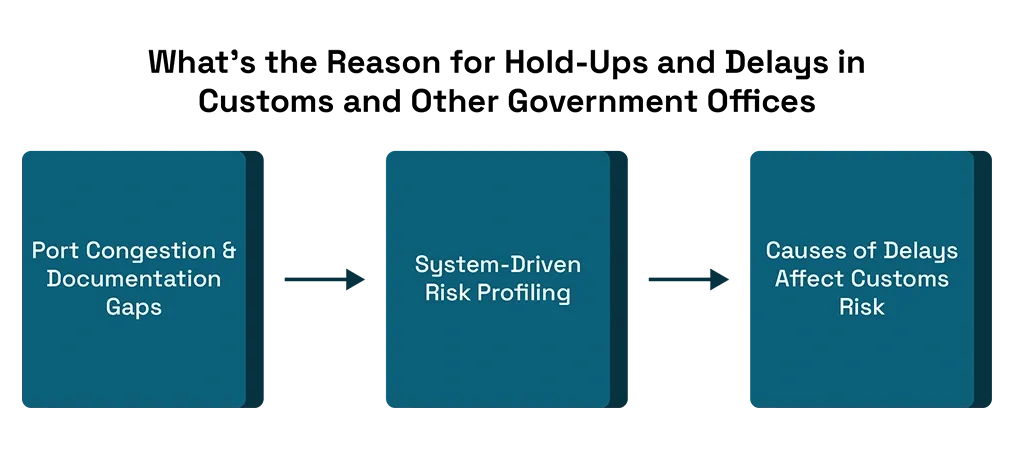
What’s the Reason for Hold-Ups and Delays in Customs and Other Government Offices
Port Congestion & Documentation Gaps
One of the most common issues for customs hold-ups is busy ports combined with incomplete or wrong documentation. When goods arrive late, documentation mainly fails to align with the updated arrival schedules, increasing the chances of system alerts. This can slow down customs clearance, even when the cargo itself is complete.
System-Driven Risk Profiling
Customs authorities now depend mainly on digital risk engines. These systems evaluate routing history, carrier dependability, timing consistency, & past agreement records. Delays disturb this data flow, which may lead officials to assign higher risk scores, quick physical checks, X-ray scanning, or extended review by government offices.
Causes of Delays Affect Customs Risk
Weather, busy ports, & Carrier Scheduling
Unpredictable weather, port labor shortages, & busy terminals are major contributors to delays. When schedules change repeatedly, customs systems detect anomalies. Even dependable shippers using freight forwarding companies near me can face increased scrutiny simply because the carrier’s route shows irregular performance.
Regulatory & safety verifications
Unexpected verifications at shipment ports or changes in port security protocols can slow movements. From a customs perspective, frequent delays on the same trade lane can be interpreted as growing risk, affecting future shipments under the same seller, shipper, or importer of record service.
The Impact of Customs Delays on Global Supply Chains
Higher Inspection Rates and Clearance Time
When a shipment is assigned a higher customs risk score, the first impact is usually inspection. This increases clearance timelines and disrupts delivery responsibilities under premium delivery service agreements. Repeated vessel delays can also increase long-term trade disruption, making future imports more likely to be held.
Inventory Disruptions and Cost Escalation
Delays that trigger customs reviews affect more than logistics time. They disrupt inventory and order management, leading to stock shortages, production stoppages, and missed sales cycles. Businesses focused on supply chain optimization frequently underestimate how customs risk scoring can increase the financial impact of vessel delays.
Impact on Global Shipping Commitments
Late shipments can cause issues with declared global shipping terms, increasing the risk of contract issues, demurrage, & warehousing costs. Over time, this can weaken relationships with buyers, carriers, & international partners who depend on predictable cargo shipments.

Conclusion
Predictive customs compliance is developing the way businesses handle global shipments. Instead of reacting to customs problems after goods arrive at the final location, companies can use AI to identify documentation errors, classification issues, & compliance risks before shipping. This proactive approach helps minimize customs delays, lower costs, & enhance the whole efficiency of international trade.
As customs regulations continue to develop & global shipments increase, businesses need faster & smarter ways to stay up to date. AI-powered predictive customs compliance with correct paperwork & updated customs processes helps importers, exporters, & logistics providers move goods more easily across many countries. By securing against delays before they happen, companies can secure their supply chains, improve customer satisfaction, & keep international operations running easily.
Did you know?
Global Less-than-Container Load Freight Forwarding Market size was USD 12.48 billion in 2025 and is projected to touch USD 13.24 billion in 2026, USD 14.05 billion in 2027, and USD 22.57 billion by 2035, exhibiting a CAGR of 6.11% during the forecast period (2026-2035).
FAQ
1. What is predictive customs compliance?
Predictive customs compliance uses AI to identify customs risks before goods are shipped. It helps businesses avoid delays by detecting errors early.
2. Can AI reduce customs delays?
Yes. AI checks shipping documents, validates data, and flags compliance issues before customs review. This speeds up clearance and reduces shipment delays.
3. What causes most customs delays?
Missing documents, incorrect HS codes, and changing import regulations are the most common reasons. Port congestion and customs inspections can also delay shipments.
4. Who should use predictive customs compliance?
It is useful for importers, exporters, freight forwarders, and logistics providers. Any business involved in international trade can benefit from it.
5. What is the biggest benefit of predictive customs compliance?
It improves customs accuracy and reduces the risk of shipment delays. This helps businesses save time, lower costs, and keep supply chains moving smoothly.